Global infrastructure spending to surpass $150 trillion by 2050

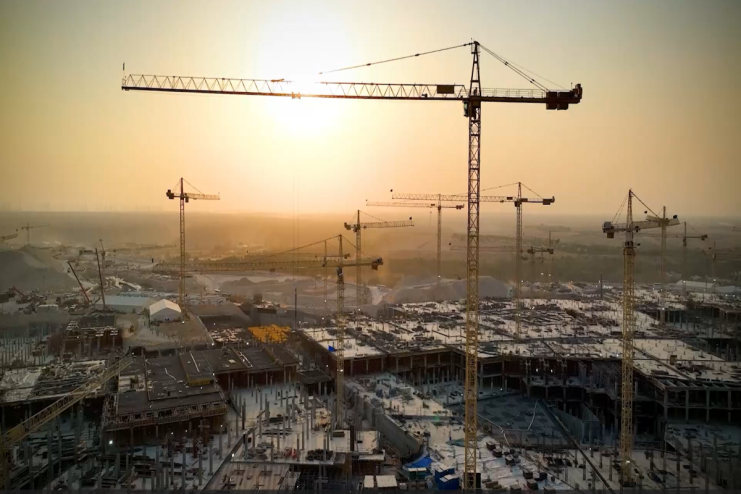
Global infrastructure spending is projected to surpass $150 trillion through 2050, as countries look to modernise systems to meet growing AI and electrification demands.
Annual global infrastructure spending is forecast to climb from $4.4 trillion (£3.2 trillion) in 2024 to $6.9 trillion in 2050, ultimately driving investment of $151.1 trillion, according to the latest findings from PwC.
The growth represents an increase of roughly 57 per cent in yearly spending over the period, and is expected to be caused by an increasing need to update and modernise transport, power and industrial systems to meet the demands of AI, electrification and urbanisation.
In real terms, the forecast suggests spending will be double that of the past 20 years.
Clara Cutajar, global infrastructure leader at PwC Australia, said: ““This is not a traditional construction cycle. This next generation of infrastructure will be intelligent, connected and adaptable.
“Systems will need to anticipate demand, allocate resources dynamically and optimise performance, delivering structural productivity gains across every sector.”
Transport and power
Transport and power will continue to be the biggest areas for investment, with PwC anticipating it to account for roughly half of infrastructure spending to 2050.
Annual transport spending will rise from $1.4 trillion to $2.4 trillion, while spending on power infrastructure will jump from $631bn to $1.1 trillion.
Intensifying geopolitical risks is also expected to boost defence to the fastest growing sector for infrastructure spending, with annual spending on physical installation to more than double in 2050 to $168bn.
Water and social infrastructure alongside digital and agricultural infrastructure are also expected to grow over the period.
Data centre boom
The AI race is also expected to cause a surge in spending on data centres, alongside other key infrastructures including ICT equipment, chips and servers.
Between 2024 and 2027, annual investment in data centres will rise from $113.8bn to $251.8bn, before escalating to $1.5 trillion by 2032.
Elsewhere, the rapidly growing aging population is also anticipated to trigger a hike in annual spending on health and social care, reaching $441bn by 2050.
Growth markets
Emerging and growth markets are forecast to continue their trend as the “engine of global infrastructure activity”, with the Asia-Pacific region set to account for more than half of total investment through 2050.
It will come as the region gears up to expand its urbanisation and industrial capabilities, including the build out of power and digital networks.
Elsewhere, Africa will see the world’s fastest infrastructure investment rate, nearly doubling, as the country looks to fill its “significant infrastructure gaps”.
Europe and North America will also undergo a renewal to remove and fix aging transport, water and energy systems in a bid to remain competitive.
Annual spending is forecast to rise 1.6 times by 2050 across the US and 1.4 times in Europe.
Cutajar said: “Without faster delivery…the scale of planned investment risks falling short of its economic potential.
“Those who move fastest to integrate planning, finance and delivery will define the next era of infrastructure and capture the returns that come with it.”