February showers dampen hospitality sales

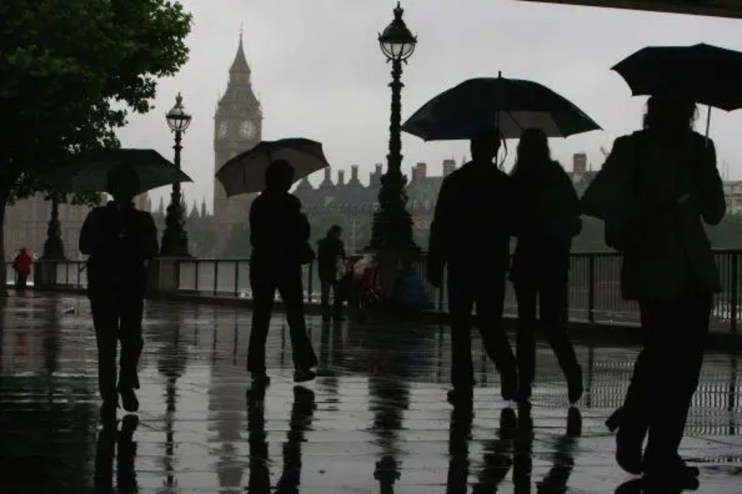
February’s wet weather kept Brits at home as hospitality sales fell compared to last year, extending a poor start to the year for the sector.
The rainy month meant total like-for-like sales were 0.2 per cent lower than in February 2025, with sales having dropped 0.1 per cent year on year in January, according to NIQ’s hospitality business tracker.
Hospitality endured a testy end to the year – dominated by a fiery row over business rate reforms – but the new year has so far failed to deliver a much-needed boost for the sector, as it braces for the Iran war to push up energy bills.
An unusually wet February, in which England was battered by 42 per cent more rainfall than average, hit restaurants harder than pubs.
Like-for-like sales at pubs grew by one per cent, marking the 13th consecutive month of growth for landlords.
But restaurants were unable to coax people onto the rainy streets as sales fell 1.1 per cent year on year, while bars fared even worse, seeing sales drop 4.1 per cent.
Hospitality managed to roughly keep pace with inflation – which eased to three per cent in January – despite the fall in sales, as overall sales growth including new openings stood at 2.9 per cent.
Karl Chessell, director of hospitality operators and food at NIQ, said modest overall growth and flat like-for-like sales are becoming the norm for UK hospitality firms.
He said: “February’s figures were more of the same, and they are another reminder of how much venues rely on the weather for footfall.”
Pubs and restaurants will be hoping that the current run of big spending events – including Mother’s Day, St Patrick’s Day and the Easter holidays – will deliver a boost to footfall.
Industry braces for energy hikes
Saxon Moseley, head of leisure and hospitality at RSM UK, said the conflict in the Middle East provides another unwanted threat to the country’s landlords and restaurant owners.
On Monday, industry figures warned hospitality could face “devastating” hikes to energy costs as independent firm’s short-term contracts leave them vulnerable to supply chain shocks.
The boss of JD Wetherspoon, the UK’s best-known pub chain, even suggested that his customers could see the soaring cost of energy passed on to the price of their pints.
Moseley said: “2022’s energy crisis tells us that consumer confidence can freefall quickly and be slow to recover.
“If the situation continues, we could see input costs increase across food, logistics and utilities, presenting potential headwinds of higher costs and a further slowdown in demand later this year.”