Business and Policy Leaders Call for Policies to Unlock London’s Full Economic Potential

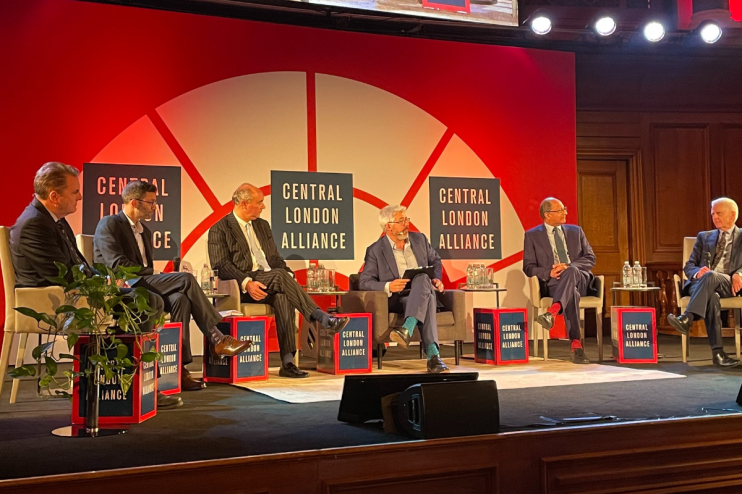
London, 24 October 2025 – Business leaders, policymakers, and industry experts gathered in London for London – Opportunities and Obstacles for Growth, hosted by the Central London Alliance CIC, to discuss the challenges and prospects shaping the capital’s economic future. The event featured six panel discussions covering the key drivers of London’s growth, including finance, infrastructure, hospitality, entrepreneurship, and retail.
The first Panel, London’s Economy and the Environment for Growth, brought together leading voices in business and policy — Professor Tony Travers (London School of Economics), Lord Dominic Johnson of Lainston CBE, Rt Hon Shailesh Vara, Peter Dunphy (Family Business Community), and Matthew Jaffa (Family Business UK) — in a discussion moderated by Christian May, Editor-in-Chief of City A.M.. The panel explored strategies to attract investment, rebuild confidence, and secure sustainable prosperity across the capital.
Panellists opened the discussion by highlighting three priorities to strengthen London’s economic growth: attracting high-net-worth individuals back to the capital to invest, spend, create jobs, and support the community; reviewing the current tax regime for businesses and overseas visitors; and tackling crime, which they identified as critical to restoring confidence and drawing inward investment.
Speakers emphasised that crime not only impacts residents’ daily lives but also undermines business confidence and discourages global investors.
Lord Dominic Johnson of Lainston CBE warned, “A number of current policies have created uncertainty and fear, driving both people and investors away from London.“

A recurring theme was the need to make London’s fiscal and policy environment more attractive. Panellists called for actions to encourage for the return of the 16,500 millionaires who have left the UK, taking their investment and spending power abroad. A globally competitive tax regime was seen as key to reversing this trend and stimulating domestic investment.
The discussion also addressed tax reliefs. Panellists urged the reinstatement of VAT exemptions for overseas visitors, noting that their removal has diverted significant spending to rival destinations such as Paris and Milan. Similarly, they called on the Government to restore tax incentives that previously encouraged private and family-owned businesses to grow, innovate, and hire. Business Property Tax Relief must remain without charge.
Rt Hon Shailesh Vara urged business owners to speak up on these issues, emphasising that “the voice of business is too silent.”
Local governance and funding were also central to the debate. Participants proposed a new model allowing councils to retain a greater share of business rates, enabling them to reinvest directly into essential infrastructure, transport, and housing. Panellists opined that creating a better living and working environment – better and more accessible public spaces, and vibrant, cultural and social hubs were essential for attracting talent and encouraging employees back to offices. They further encouraged greater collaboration among local authorities, investors and businesses who were anxious to see a reduction in costly delays to development. Reducing regulatory burdens was also highlighted as necessary to attract investors back to the capital.

Concerns were raised over the £35–£40 billion currently redistributed from London under the ‘levelling up’ agenda, which panellists said has weakened the city’s ability to invest in critical infrastructure. Enabling London to generate and reinvest its own income was seen as essential for the wider UK economy. London local authorities were collecting and losing £700 million a year in the redistribution agenda meaning less funds for essential public services in London.
Speakers warned that removing Business Property Tax Relief (BPTR) could result in the loss of up to 20,000 jobs across the UK over the next five years, with family-owned firms particularly vulnerable. The London Chamber of Commerce and Industry quoted between 23% and 27% of its members had indicated that they would either close down or sell their businesses as a result of the proposed cancellation of Business Property Tax Relief/ inheritance tax changes. Rising operational costs – driven by high energy prices, minimum wage increases, and higher National Insurance thresholds were cited as already placing significant pressure on businesses and incentives to create or retain new businesses had been replaced to numerous disincentives. It was noted that a number of large family-owned hospitality businesses had been sold to oversea private equity or global concerns – none of whom faced UK inheritance tax obligations.
Peter Dunphy stressed that increasing taxes on business disposals added further strain on family-owned companies. He called for policies that incentivise entrepreneurship and investment in London, warning that such incentives had rapidly disappeared.
The panel concluded by outlining the key policies and actions needed to unlock London’s full potential. Panellists urged the Government to establish a stable, competitive environment that fostered enterprise, attracts investment and enables the capital’s economy to thrive. They also called for close collaboration between government, local authorities, and the business community to implement reforms and invest in the capital’s future, ensuring London remains a vibrant global hub for innovation, business and growth and where UK owned and family businesses could compete on a level of playing field and have the opportunities to grow.