BBC should be aggregator of best free sports content – or risk sinking for good

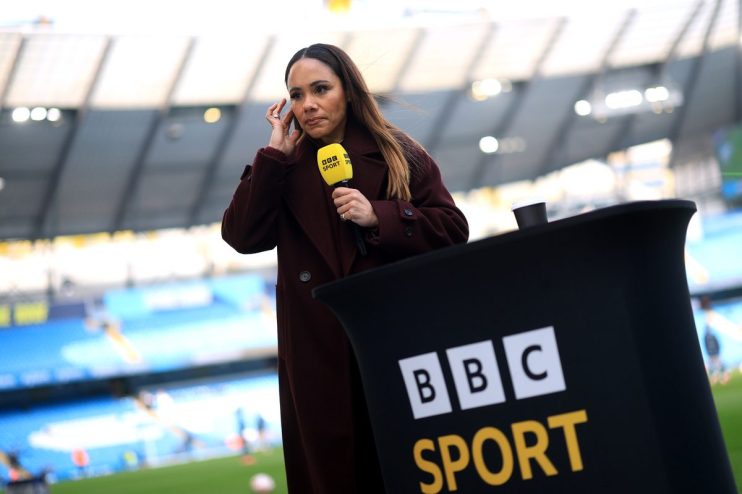
YouTube serves up live sport galore so why can’t the BBC do the same, with a more selective approach that fulfils its public service remit, asks Ed Warner.
I’ve no problem with paying £180 for my annual TV licence. Gets me Celebrity Traitors and Blue Lights, after all. Plus the Shipping Forecast to wake up to every morning. I could do with more and better sport on the BBC, though. Instead, both its quantity and quality are in decline.
International football breaks are a challenge for ingrained sport-watching habits. Sky’s Sunday afternoon offering suddenly looks skinny without the Premier League, especially when – as last weekend – the Formula 1 Grand Prix starts around breakfast time for European viewers.
Eyes on the BBC, then, no longer home to England football but still with an opportunity to reclaim a piece of the sport-loving nation’s heart.
Our public broadcaster’s response? Wales v Denmark in the Nations League, prime time evening slot on BBC2. Tick. SWPL afternoon football on the BBC Sport app. Tick. But otherwise the only ‘live’ sport I could find on its platforms was Major League Baseball – the Braves at the Dodgers in the first of their National League Division Series games.
‘Live’ in inverted commas because the billing on iPlayer that afternoon actually referred to a contest that had taken place the night before in LA. Seeing the score at 0-2 to the Dodgers in the fifth, I couldn’t resist the temptation to check out the final result. And so curiosity killed my ‘live’ experience. (3-5 to the Dodgers, in case you were wondering).
We’re in a race to not be swiped, up against people selling you holidays, or clothes companies, or two-for-one chicken breasts on sale from the supermarket, or football teams, or athletes.
Alex Kay-Jelski, BBC Director of Sport, February 2026
I’m all for access to live baseball on my various screens. I’m just not sure that the BBC is the rightful home. Its five-year MLB deal ends next year. However little the broadcaster is paying for these TV rights, given the current austerity era within BBC Sport with sports and staff being cut, surely baseball can’t be a priority going forwards.
But how can we outsiders second-guess the baffling strategic decisions of leadership seemingly increasingly distant from its public service obligations?
Short of mainstream sport-watching options on Sunday, I turned instead to the broadcast platform that is gobbling up traditional telly – and not just in sport. YouTube became my window onto the global sporting world for the day. Well, until my brain scrambled and my iPad’s battery ran down in sympathy.
Angered by the BBC’s dwindling interest in broadcasting Olympic sport (having abdicated its Paralympic throne long ago ahead of London 2012), the leaders of many British governing bodies have had to take to promoting access to major championships in their sports on YouTube.
Their problem is that all promotion comes down to the work of the sports themselves. There is no breadth and depth of awareness on YouTube that comes naturally with a slot on mainstream TV.
The Commonwealth Games organisers are maintaining a robust defence of their decision to broadcast Glasgow 2026 on TNT Sports after the BBC apparently showed scant interest with a low bid to match. But the viewing figures on the streamer must have really hurt, especially when compared to the numbers who tuned into athletics’ European Championships on the BBC only a few weeks later.
While ‘needs must’ in deploying YouTube is the consequence of lack of interest in many major champs among traditional broadcasters, the platform is also an opportunity for lesser events to seek out an audience. Scroll through YouTube’s chaotic menu – as I did for much of Sunday – and the wacky wonderfulness of sport across the world is laid out before you.
So what did I watch?
China Smash table tennis in Beijing, both Formula Drift and MotoGP in Japan, women’s KLPGA Tour golf in Korea, the World Triathlon Mixed Relay Cup in Rome, FIBA U18 Women’s Asia Cup basketball in Malaysia, motocross in France, a full roster of WSL and WSL 2 football matches in England plus Poland v Italy in the Nations League and Scotland FC v Bulawayo Chiefs in Zimbabwe’s Munhumutapa Challenge Cup, Pro20 Cup cricket in South Africa, a Kabaddi Cup from Punjab, rugby league’s Championship Grand Final in London, SCCA road motor-racing in Wisconsin, and NFL games in London and the US. Plus F1 with a foreign language commentary I couldn’t quite fathom.
Most bizarre, and the only sport new to me, was Formula Drift. Here drivers put their cars into controlled slides, side by side, competing for accuracy and style points. On Sunday it was raining cats and dogs at the Okayama International Circuit, adding to the driving challenge no doubt, but not helping the viewing experience. I didn’t dwell long.
Truth is I didn’t dwell long anywhere. The paradox of choice. Indeed, I doubt I could tell you the winner in any of the contests I glanced at in the list above (although I do know Crystal Palace women picked up a point at Aston Villa).
Nor did I have many fellow viewers anywhere – typically no more than a couple of thousand at any one time (although the bigger events will have had additional eyeballs via other methods of distributing the same streams). In some cases, crowds at the venues themselves looked healthy; at others as thin as the online viewing figures.
Which brings me back to the chaos on YouTube and the reach of the BBC.
There are copious amounts of compelling sport available to view online at no cost – both in the UK and globally – whose owners crave an audience. Stream quality and commentary are often poor, but nothing that a little investment couldn’t fix (witness the continuing improvements in county cricket streams).
What an opportunity for the BBC to act as an aggregator of content of greatest relevance to a British audience, either on its own platform or by striking a deal with YouTube to create a platform within its platform.
Create the offering, signpost upcoming events, give them journalistic context and highlight their relevance to the competitors, making it clear why viewers in turn should care about the outcomes. Then promote the hell out of the platform across the BBC’s various channels.
Wouldn’t that be a service to the public? And at low cost too. A better service, surely, than a move to highlights clips and soundbites, an apparent strategic focus likely to condemn BBC Sport to be drowned in the sea of online trivia and possibly, in time, sunk for good. Might beat two-for-one chicken breasts for public attention, too.
LIV Golf 3.0+
Back in the ‘90s it was often said that it was only when Canary Wharf in time came out of a second bankruptcy into a third set of owners’ hands that the huge development project in London’s eastern reaches would make investors any money.
Depends how you define bankruptcy, but those financial sages weren’t far wrong. Makes me wonder whether LIV Golf might yet follow the same path.
It’s reported that a mooted cash injection of $300m to rescue LIV from collapse is dependent on key golfers committing to the second incarnation of the disruptor tour. Something in me hopes they do, if only so we can enjoy the venture’s second financial crisis when it arrives – as it surely would.
Canary Wharf at least had land and buildings on which to build its refinancings. Without star golfers, LIV is just a broken dream with intellectual property protections and tax losses attached.
Read ‘em and weep
“This is, believe me, the purest of truths.”
Thus endeth Cristiano Ronaldo’s statement about his role as a warmed-up but unused sub for Portugal. Boil the kettle, grab a biscuit and enjoy reading it in full here.
Ed Warner is chair of Sussex Cricket and GB Wheelchair Rugby and writes his sport column at sportinc.substack.com