Tottenham Hotspur facing demands from Greens for percentage of revenue

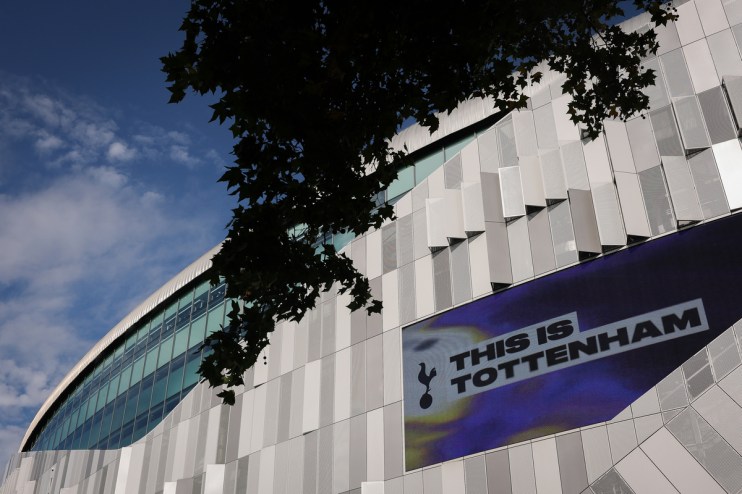
Tottenham Hotspur are facing pressure from Haringey Council leaders to sacrifice a fixed percentage of revenue for residents of Northumberland Park, the seat of their £1bn stadium.
Spurs CEO Vinai Venkatesham has held talks with the Haringey Green Party, who told City AM the club had been “allowed to default on their planning obligations” attached to the stadium by the previous Labour administration.
Both parties are said to be engaging in good faith and are due to meet again before the end of the month to further discuss the proposal.
The Greens, who run the borough as its largest party, want Spurs to give up around 0.1 per cent of turnover for a “popular assets commission”, a type of community investment fund co-administered by residents and the council. In the last documented financial year, that would have equated to a £565,000 commitment.
“Tottenham Hotspur Stadium sits in one of the most deprived wards in England,” a Haringey Green Party spokesperson said. “The record-breaking events it hosts seem to be a good deal for Spurs, but a bad deal for Tottenham.
“The previous Labour-run Haringey Council allowed the club to default on its planning obligations, including social housing and employment support. All while residents adapt to growing numbers of non-football events, generating tens of millions in revenue.”
Spurs were released from £16m in obligations attached to the new stadium in 2012, before construction began. In 2024, they were granted a new license to raise the number of major non-football events held annually at the 62,850-capacity arena from 16 to 30.
A club spokesperson said: “Any suggestion that Tottenham Hotspur has defaulted on its planning obligations, or was allowed by Haringey Council to do so, is wholly inaccurate. All relevant planning obligations were formally agreed with Haringey Council and the club has complied with them.
“The club has invested more than £1.2bn in the stadium and surrounding area, delivering new affordable homes; a new primary school; restoring heritage buildings; and investing in local infrastructure.
“We recognise the challenges facing Northumberland Park but it is important that any discussion about the club’s contribution to the area is based on an accurate account of the planning history and the significant contribution the club already makes.”
Spurs earned £33m from non-football events
While Spurs’ fortunes on the pitch have been mixed since they moved out of White Hart Lane, income from the stadium, brand deals, retail and other commercial streams is up 300 per cent over the same period.
The club grossed £32.5m across 2024-25’s programme of non-football events as the likes of Beyonce and the NFL sold out the stadium, before the full rollout of the 30-event license. Broadly speaking, revenue is expected to increase linearly under the new deal, though so too will costs.
Northumberland Park is one of London’s most economically deprived wards. A study from Place Matters, a social charity, marked the child poverty rate as 27 per cent, while benefit claimant rates are also among the highest in the capital.
Spurs’ accounts reveal they supported their charity, the Tottenham Hotspur Foundation, to the tune of £500,000 last year. The foundation – which is also funded through grants, donations and external contracts – delivered £3.25m in programmes across unemployment support, mental health and community initiatives, among other areas.
A club-commissioned report produced by EY in 2023 estimated that Spurs and their 62,850-seat stadium contributed £296m in gross value added to Haringey’s economy in the preceding financial year, as well as supporting the equivalent of 2,800 full-time jobs.
It does not, however, delineate between the wider borough and Northumberland Park, where the Greens’ 2026 manifesto said residents report “little benefit” from the stadium while simultaneously dealing with road closures, public transport issues and huge crowds.