Business rates cut will ‘backfire’ for Soho and West End

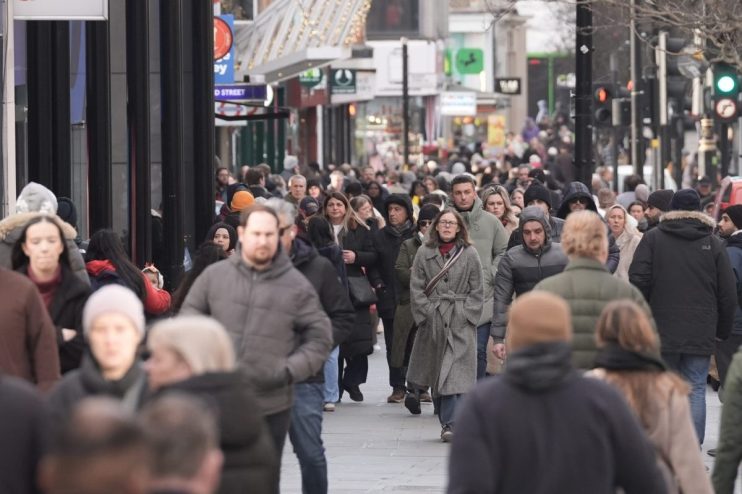
John Healey’s plans to deliver an emergency tax cut for high street businesses would fail to boost most firms in London’s busiest areas like Soho and the West End, analysis suggests.
The Chancellor is reportedly planning to cut taxes for pubs, shops, cafes and restaurants by hiking the threshold for small business rates relief (SBBR).
The SBBR currently exempts all businesses with a ratable value – which is based on their property – of less than £12,000. Healey is considering hiking the threshold in line with inflation to £17,096.
But analysis shared exclusively with City AM has shown that this tax break would mainly benefit retail and hospitality firms on the outskirts of London, having almost no effect on the areas of the capital which currently face the highest rents and tax burden.
Out of London’s 110,000 retail, hospitality and leisure businesses, 17.5 per cent have a rateable value between £12,000 and £17,096 and would therefore benefit from the new relief, according to data from knowyourrates.co.uk.
Tax cut ‘for Sutton, not Soho’
While this proportion rises to 26.5 per cent in Sutton and 26.2 per cent in Barking, only 3.8 per cent of premises in Westminster, which includes famous shopping and hospitality districts like Soho and the West End, would benefit from this relief.
Only seven of Soho’s 1,102 shops, cafes, pubs and restaurants would have their business rates scrapped under the change. In the West End, 43 of the area’s 8,974 premises would benefit from the tax cut.
Just six businesses on Oxford Street – out of 256 retail, hospitality and leisure firms in Europe’s busiest shopping destination – would see their bills cut by the change.
The tax cut would apply to only 3.9 per cent of premises in the City of London, 4.3 per cent in Kensington & Chelsea and 9.3 per cent in Camden.
Alan Fang, the creator of knowyourrates.co.uk, said this data shows that the tax cut is an “outer-London measure”. He added: “Raise the threshold and you help the parade in Sutton and do almost nothing for Soho. That may be the right call, but nobody should think it is a West End rescue.”
A number of top retail and hospitality bodies told City AM this data proves that Healey must go further to tackle the tax burden facing high streets. Dee Corsi, chief executive of the New West End Company, said that the cut to thresholds would “backfire” for the district’s retail and hospitality firms.
“We need a policy framework that recognises the significant value of these businesses to our national economy, as when flagship stores perform, high streets across the country benefit,” she said. The West End generates £17bn in tax each year and pays eight per cent of the UK’s business rates, she added.
Healey must ‘fix the flaws of business rates’
Ros Morgan, chief executive of the Heart of London Business Alliance, told City AM: “Raising the small business rates threshold may provide welcome support for some premises, but it will do little for the vast majority of businesses in central London and other town and city centres, where property costs and rates bills are particularly high.
“The West End is a major economic engine for London and the UK, supporting hundreds of thousands of jobs and generating billions in economic activity. We cannot afford to leave businesses in these vital centres behind.”
The data also reveals that the hike to business rates thresholds would fail to deliver tax cuts to most of London’s pubs.
Around 84 per cent of pubs in the capital sit above the £17,096 threshold, with an average rateable value of £58,500. Nine per cent of hospitality businesses in London would be caught by the tax relief, compared to 20 per cent of shops.
Allen Simpson, chief executive of UK Hospitality, said: “These figures show why business rates reform needs to work for businesses of all sizes. Pubs, restaurants and hotels of all shapes, sizes and rateable values employ significant numbers of people, with hotels particularly exposed to rising rates costs.”
HM Treasury was contacted for comment.