Pre-season tours: Inside the economics of football’s summer money-spinners

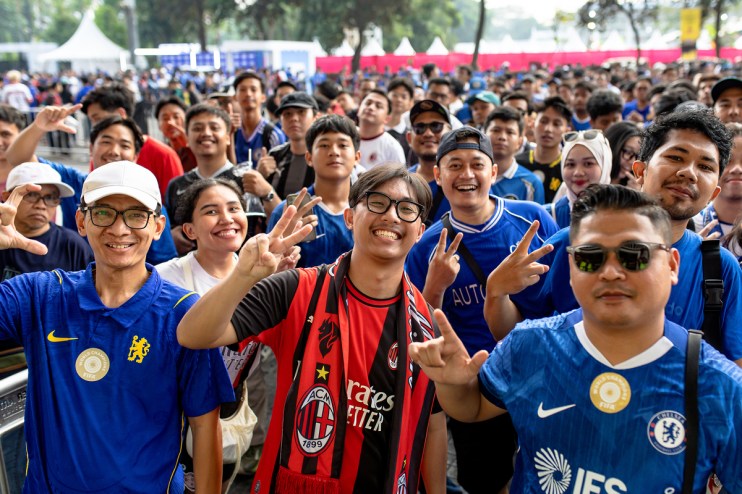
Football’s summer tours have turned into travelling commercial platforms bringing together big fees, sponsors, merchandise, media and global fan growth, explains Simon Dent.
For most football supporters, pre-season used to mean low-key friendlies against a local non-league team, some heavy-legged players and a chance to see the new signing for 30 minutes. For clubs, it was essentially a kickabout in the sunshine.
Look at the world map again this summer and Premier League clubs are traversing the United States, Australasia and Asia. Manchester City in Hong Kong and Seoul, Aston Villa in Indonesia, Thailand and Hong Kong, and Tottenham Hotspur in New Zealand and Australia.
These are still football tours, of course, but they are also carefully constructed travelling commercial agenda.
The reason is simple: big clubs are no longer only competing for trophies but also for attention, consumers and commercial partners in every major market in the world. Pre-season is one of the few moments when they can physically take the product to those audiences.
Deloitte’s 2026 Football Money League puts the scale of the opportunity into perspective. The world’s 20 highest-earning clubs generated a record €12.4bn in 2024-25. Of that, €5.3bn came from commercial revenue – more than broadcasting or matchday income and, for the third year running, the biggest revenue category.
That changes how clubs think about the summer “break”. Broadcast income is largely dictated by competitions and collective deals. A club has much more control over sponsorship, retail, licensing, content, direct-to-consumer products and the markets in which it builds its brand.
How pre-season tours drive lasting commercial returns
Real Madrid generated €594m of commercial revenue in 2024-25 alone, according to Deloitte. Manchester United reported £333.3m of commercial revenue for the year to June 2025. A summer tour will only account for a fraction of those numbers, but it can support almost every line within them.
That said, Manchester United’s two-match post-season trip to Kuala Lumpur and Hong Kong in May 2025 was reported as being worth more than $10m in revenue. Liverpool’s 2025 trip to Hong Kong and Japan reportedly earned fees of £8m-£10m.
The economics normally begin with a promoter or local organiser, who is effectively taking the event risk. It needs ticket sales, sponsorship and media income to cover the club fee, venue costs, production, marketing and logistics.
The club’s return can include any fee as well as a share of ticketing or other revenues, incremental merchandise and licensing, hospitality, local partner activations, and content that can be monetised on club-owned channels. Manchester City’s three 2026 Asia friendlies, for example, are being streamed through CITY+, its paid direct-to-consumer service.
Then there is sponsorship. A global sponsor wants access, stories, customers and memorable experiences in priority markets. Liverpool’s 2025 Hong Kong match against AC Milan was the Standard Chartered Trophy, while official airline partner Japan Airlines transported the squad and used the tour as part of its own global marketing.
Consider what can sit around a single friendly in New York, Hong Kong or Sydney. There is the ticket, hospitality, an open training session, retail pop-ups, sponsor events, supporter-club gatherings, player appearances, community programmes, social content, local media, subscription broadcasts and data capture from fans who may never visit the club’s stadium.
How the Premier League and Wrexham do it
The 2025 Premier League Summer Series in the US shows the scale. Four clubs – Manchester United, Everton, West Ham and Bournemouth – played six matches across the MetLife Stadium, Soldier Field and Mercedes-Benz Stadium. Tickets started at $77, with each matchday sold as a double-header. It shows how a competition can turn several clubs into a packaged live-entertainment product for a market rather than simply stage isolated friendlies.
That last point matters. The immediate cheque is attractive but the more valuable prize may be lifetime value. A child in Chicago who sees Liverpool for the first time can become a shirt buyer, app user, streaming customer and sponsor audience for decades. In markets where supporters cannot regularly get to Anfield or Old Trafford, physical proximity is very powerful.
TEG Sport, one of the world’s leading promoters and organisers of major live sporting events, works with clubs and rights holders to take football to audiences across international markets.
“The starting point must be creating a great occasion and giving supporters around the world the opportunity to see their club and players up close – particularly fans who may never have the chance to watch them at their home stadium,” says Alex Anderson, TEG Sport’s UK managing director.
“What has changed is the scale of the opportunity around that. We have seen that opportunity across the game, including through our work with Wrexham in the United States, where the club has used its growing international profile to build a presence and engage supporters on a scale comparable with Premier League clubs, connecting directly with existing fans while attracting a rapidly expanding new audience.”
North America has become particularly strategic. The World Cup has accelerated interest, stadium infrastructure is world-class and the commercial market is enormous. Premier League clubs are not only trying to sell out one summer fixture; they are trying to win a bigger share of the US sports consumer before habits harden around a club, league or player.
Tours monetise global attention in way home games can’t
The Premier League itself now behaves in much the same way. Its 2026 Coast to Coast initiative is taking all 20 clubs into US fan activations around the opening weekend of the season. That is a powerful signal that strategic growth is a project for the league itself.
None of this makes pre-season free money. Touring is expensive and the economics can be very different for the promoter and the participating club. A huge crowd does not automatically mean a huge profit.
There is also an increasingly uncomfortable sporting question about growing player workload. Coaches want controlled preparation, sensible travel and fit players. Commercial departments want New York, Tokyo, Hong Kong and Seoul, where fans want to see the star players.
The smartest clubs will stop thinking about a pre-season tour as three friendlies and start treating it as a market-entry campaign with football at its heart.
The questions should be commercial as well as sporting: which market matters most to our sponsors? Where can we grow retail? Which fans can we convert into registered, addressable customers? What content can we create? Which local brands could become long-term partners? And what is the value of returning to the same market consistently rather than chasing the biggest one-off guarantee?
That is why these tours have become such big business. They monetise something football clubs possess in extraordinary abundance but cannot always exploit from their home stadium: global attention. Pre-season may still be where players get fit. But for the business around them, it’s crucial.
Simon Dent is founder and chairman of Firmative and has more than 20 years’ experience across sport, entertainment and the creative industries.