London’s Leaders Demand Fairer Policies to Protect Central London’s Beating Heart
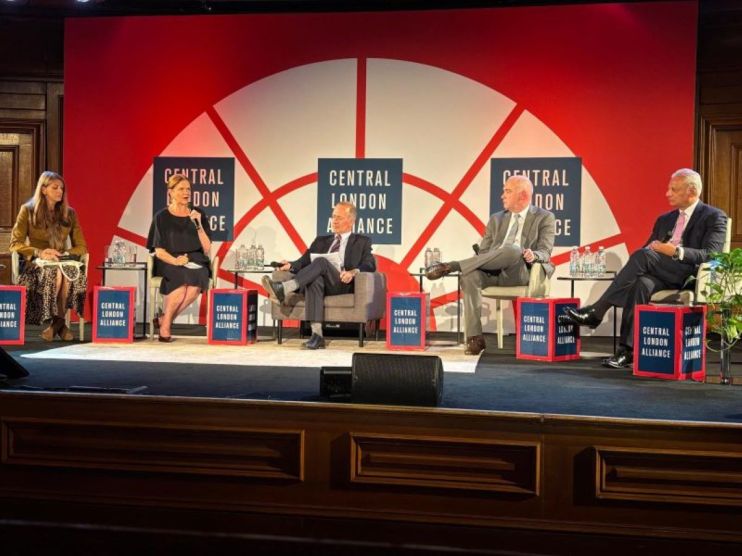
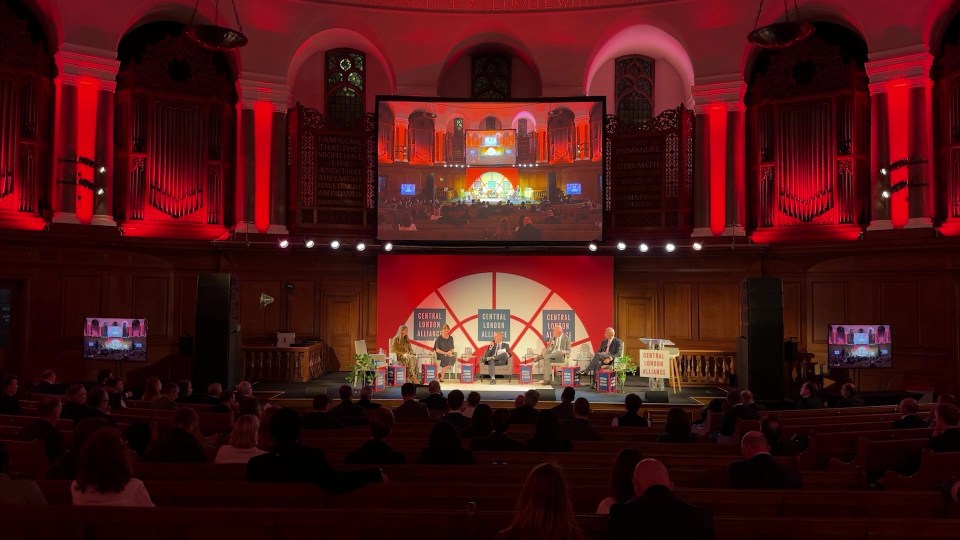
At the “London – Opportunities and Obstacles for Growth” event hosted by Central London Alliance CIC at The Emmanuel Centre, Westminster, leading voices including from across hospitality, travel and tourism united in a powerful discussion on the future of one of London’s most vital economic sectors. Chaired by Christian May, Editor-in-Chief of City A.M., the panel brought together industry leaders Kate Nicholls OBE, Tony Matharu, Jessica Ross and Piers Brown to examine the pressures reshaping the capital’s visitor economy – from rising operational costs and taxation to international competitiveness, talent shortages, planning and infrastructure needs.
Kate Nicholls OBE, Chief Executive of UK Hospitality, described the hospitality industry as “the flagship industry of the UK economy,” contributing £3.4 billion to the Exchequer – equivalent to 75% of its total profits – making it “the most highly taxed sector in the country.” Nicholls warned that the current policy environment has “failed to recognise the true value of hospitality,” cautioning that government measures have disproportionately targeted a sector that remains one of London’s biggest employers and tax contributors. She noted that the Mayor of London has recognised hospitality as a growth sector for London and its experience provision, underscoring its strategic importance to London’s and the UK’s economy.
Panellists emphasised that hospitality is not just a service sector, but a critical engine for employment, economic activity and cultural vibrancy: “The hospitality industry is a cornerstone of London’s economy”. Despite strong demand, the sector faces substantial pressures including rising business rates, increased energy costs and higher national insurance contributions.
Nicholls outlined the human and economic impact of recent fiscal measures, post-COVID: 90% of hospitality businesses have been forced to raise prices, 60% have reduced staff, and a third are still unable to operate at full capacity. Approximately 100,000 jobs have been affected, with 25,000 fewer summer positions. She concluded emphatically: “You can’t balance the books on the back of hospitality. You need hospitality firing on all cylinders. It underpins business, living, and leisure – it’s what makes London thrive.”
Building on Nicholls’ remarks, Tony Matharu, leading hotelier, investor and Chairman of the award-winning Blue Orchid Hospitality and Central London Alliance CIC, reinforced hospitality’s economic and social importance: “Hospitality is central to London’s identity and to the UK’s success. When hospitality thrives, so does employment, community engagement and investment. It’s a virtous cycle. We cannot afford complacency.”
He highlighted how investors and operators are being squeezed by a combination of rising business rates, high energy bills, employer national insurance contributions and an elevated cost of borrowing resulting from global market perception of the UK’s economy. He argued these pressures together with the proposed removal of Business Property Tax Relief which only affects private, family-owned businesses (and not global concerns or private equity entities) have undermined investor confidence and risk pushing family-owned and long-term businesses into the hands of private equity and/or global concerns with shorter term goals.
“We are seeing bricks-and-mortar businesses penalised while digital models are effectively insulated,” Tony said. “When you penalise the very enterprises that create jobs and places, you erode ambition the city’s future.”
He also cited industry analysis that an estimated 11 hospitality venues have closed daily since the budget announcement – a statistic used to underline the immediacy of the risk to London’s hospitality landscape.
He urged policymakers to approach London’s economic ecosystem holistically, ensuring that businesses, workers and visitors alike benefit from strategic investment and balanced taxation and regulation.
Piers Brown, CEO of International Hospitality Media Limited, emphasised the importance of quality tourism and extending visitor stays to maximise economic impact: “London must focus on experiences, culture and longer stays, rather than relying solely on mass tourism. This helps spread spend more evenly and strengthens the local economy.” The reinstatement of tax free stopping for overseas visitors would result in a positive economic outcome according to the OBR and result in higher spending, longer staying visitors contributing to London and not Milan and Paris.
Bringing a global lens and citing the complacency witnessed in other, mostly American cities, Jessica Ross, Managing Partner at FINN Partners, urged a strategic rethink. She warned that without a cohesive industrial policy for travel and tourism, the capital risks being outcompeted by cities that invest more heavily in experience-led marketing and infrastructure and where destination marketing funding has resulted in positive results.
“We are in a period of transformation – travel, technology and work habits are changing. The risk is siloed policy. The opportunity is a convergent strategy,” Ross remarked. “London must tell deeper stories: neighbourhoods, culture, history and lived experiences.” “By bringing together finance, policy and hospitality stakeholders with support from planners and regulators, London can create an environment where the city and its people thrive.”
The panel concluded with a call for partnership between industry and government to sustain and grow London’s hospitality, travel and tourism sectors. Kate Nicholls concluded with a clear message for stakeholders and policymakers alike: “We cannot take London’s hospitality sector for granted. It underpins jobs, economic growth, and the city’s global reputation. The time for strategic action is now.”
Speakers agreed that hospitality is London’s beating heart, sustaining employment, investment, and vibrancy, and that meaningful recovery depends on coherent, pro-growth policies that allow the industry to innovate and expand.
About the event:
London – Opportunities and Obstacles for Growth brought together over hundreds of business leaders, policymakers, innovators and members of the public to examine London’s economic future. The forum included six panel discussions covering the economy, finance, hospitality, entrepreneurship, retail and property, and aimed to inform debate ahead of the Autumn Statement and Budget.
Moderators: Christian May, City A.M.; George Sell, International Hospitality Media
Panel 3 (Hospitality, Travel and Tourism) Speakers: Kate Nicholls OBE, Tony Matharu, Jessica Ross, Piers Brown
Organised by: Central London Alliance CIC – supporting sustainable recovery and growth of central London’s business, hospitality, cultural, tourism and retail sectors.
Website: www.centrallondonalliance.com