Why Westminster’s finest keep ending up on Big Tech’s payroll

There is a sense of irony in that the employees Silicon Valley’s tech giants most want to hire, are actually the ones who spent years in the public sector trying to work out what to do about them.
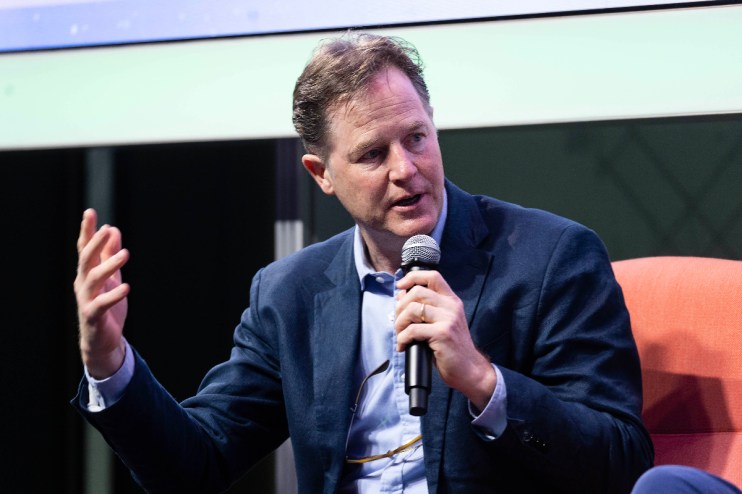
Nick Clegg, who served as deputy Prime Minister sat through more than one anxious Whitehall discussion about the power of social media platforms, ended up running global affairs for the most powerful of them.
Meanwhile Rishi Sunak, who hosted the world’s first AI Safety Summit and built a taskforce to scrutinise frontier AI, now advises Anthropic and Microsoft.
The poacher-turned-gamekeeper story is, in Westminster, increasingly running in reverse. But this is not as paradoxical as it sounds.
The Clegg blueprint
Clegg remains the defining case, with what looked in 2018 like an unusual career pivot actually turning out to be something closer to a proof of concept.
He spent six years reporting directly to Mark Zuckerberg, accumulated shares reportedly worth north of $19m, and served as the company’s most credible interlocutor with governments on both sides of the Atlantic through some of the most politically turbulent years in the platform’s history.
Less a lobbyist then, more a one-man diplomatic corps.
He has since moved on. Earlier this month, Clegg stepped down from Meta and joined the board of Nscale, a UK-headquartered AI cloud provider that last week closed a $2bn fundraise, the largest Series C in European tech history, according to Dealroom.
Sheryl Sandberg sits alongside him, and the company holds a $14bn Microsoft contract to build an AI data centre in Texas.
Clegg’s framing was that the world needs credible AI players beyond the US west coast and China. He is not wrong about that and he is also, it should be noted, rather well placed to benefit from being right.
The names that have followed his 2018 move only seem to be multiplying. Sunak now advises both Microsoft and Anthropic, whilst George Osborne has joined OpenAI.
Liam Booth-Smith, Sunak’s former chief of staff at Number 10, is Anthropic’s external affairs chief, at the very company his former boss hosted in Downing Street in 2023.
Cassian Horowitz, once the architect of Brand Rishi and the man behind the government’s memorably ill-fated TikTok influencer scheme, has relocated to the United States to run executive digital communications at Google. What began as a curiosity has become, with some pace, a bit of a pattern.
The market for political fluency
What exactly are these companies buying? The obvious answer is access, to ministers, to civil servants, to the informal networks that shape how regulation gets written.
And while that is partly true, which is why the advisory committee on business appointments imposed two-year lobbying bans on both Sunak and Booth-Smith.
But access alone does not explain why these roles are growing in seniority and substance.
The more interesting result is that the largest tech companies are operating in a genuinely novel regulatory environment, where the rules are being written in real time.
Their politics are intensely national even as the technology is inherently global, and where a misreading of governmental mood can translate into billions of pounds of liability.
In that environment, someone who has sat in cabinet meetings, navigated a prime ministerial transition, or run communications out of Downing Street becomes a source of institutional intelligence that cannot easily be replicated.
Sunak’s dual roles at Microsoft and Anthropic are instructive here. He is being hired because he has sat at the intersection of geopolitics and AI governance at the highest level, at a moment when all three are converging.
His experience chairing the 2023 AI Safety Summit and building the Frontier AI Taskforce also becomes relevant to questions that Anthropic and Microsoft are facing every day.
The same logic applies further down the hierarchy. Booth-Smith’s value to Anthropic is that he understands, from the inside, how Whitehall processes policy on AI.
He also has a good grasp of what the civil service’s genuine anxieties are, and how a company like Anthropic should position itself as it builds a UK presence and pursues government contracts.
The more concerning answer
The more uncomfortable issue, which tends to be dressed up in the language of ‘transparency’ or ‘public trust’, is what this pipeline does to the quality of political decision-making while it is still happening.
Amber Rudd, who served as home decretary during a period of significant cyber security policymaking, now sits on Darktrace’s advisory board alongside former MI5 director general Lord Evans of Weardale.
Baroness Joanna Shields, the UK’s first minister for internet safety, has held leadership roles at Google, Facebook and BenevolentAI.
These are not necessarily improper arrangements, but their cumulative effect becomes one that is genuinely difficult to measure.
None of this is unique to Britain, with the US having its own well-documented revolving door between government and tech.
But there is something particularly acute about the British version, partly because the talent pool is small, partly because the regulatory environment here is relatively nimble.
And alsom partly because London occupies a peculiar position; English-speaking, globally networked, and close enough to Brussels to matter in European policy discussions, and just far enough from Washington to be useful as a second base.
Big Tech knows this, while Westminster, slowly seems tyo be working it out. The pipeline is not going to close any time soon, but the only question worth asking is whether the terms on which it operates are transparent enough to be held to account, and whether ‘two years and no lobbying’ is a sufficiently robust answer to that question. On current evidence, the jury is still out.