‘What if a blind person falls over an e-bike?’: The untenable rise of whataboutism

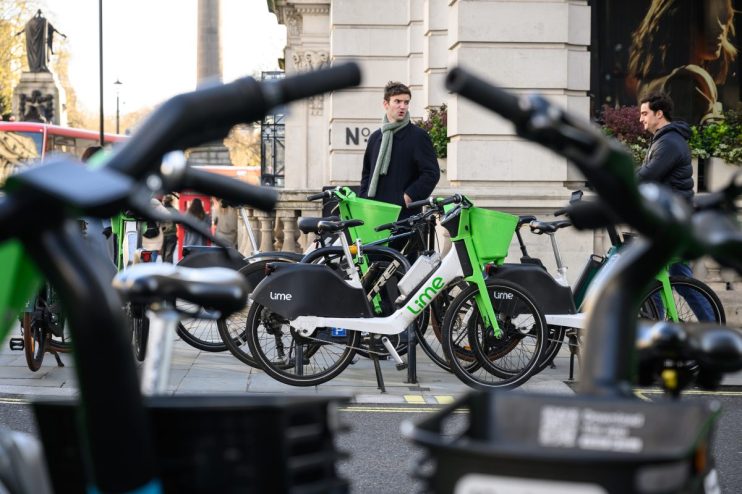
Rowing about hypothetical dangers like e-bikes on pavements is turning London into a febrile City, scared of anything that might denote progress, writes Michael Martins
The plight of whataboutism: A response to my first piece of fan mail
Earlier this month, I received my first piece of City AM fan mail. Starting “no offence” and taking umbrage with my defence of e-bike popularity, it was an unexpected joy to receive.
[RE: Beware the NOMPTYs (Not On My Pavement, Thank You), Notebook by Michael Martins, 19 Jan]
Dear Sir,
No offence but maybe you should stick to your day job.
I read your article about cycling, your now preferred mode of transport; that was fine until I got to the part where you were complaining about so-called NOMPTYs – the people who get upset about “a bit of clutter which can easily be stepped around” [e-bikes on pavements]. My question to you is: what if you’re a BLIND person? Now look who’s the nompty, or words to that effect.
Mrs E Wardale
P.S. No offence again but maybe you should look at the bigger picture first. Think first, write later.
City AM has kindly allowed me to write a response.
Dear Madam,
I am flattered you took the time to write to me, but I respectfully disagree with your view that all e-bikes should be banned in case a visually impaired person may stumble over one. Whilst I obviously and firmly believe visually impaired people should be able to traverse the city freely and that we should enable this wherever possible, I also believe that the constant war cry of those practicing whataboutism is near irreversibly gumming up our city’s functioning whilst also infantilising those seeking to overcome adversity.
Seemingly any popular change or improvement London embraces inevitably prompts letters like these that persist in throwing the baby out with the bathwater. Nevertheless, a few counterarguments: perhaps some carers cycle to their patients? Perhaps more cyclists on our streets means more space on public transport for carers and the visually impaired? Perhaps more active lifestyles will lead to fewer NHS visits, freeing up time and money to better care for them?
My primary reason for this response, though, is because our debate boils down to which type of city we want to be, one that embraces change and dynamism, or one that lives in fear masquerading as virtuous concern and reaches for the Ban Button at the earliest inconvenience.
London is at its best when we pull each other up through our shared creative and innovative instincts, rather than drag each other down through lazy bans, restrictions and the whole thicket of nonsense brought on by being too sensitive to social justice trolls.
So, thank you again for your feedback, but I still believe that responsible Londoners, if given the opportunity, will be considerate to their fellow city-dwellers, whilst also playing nice with their new toys. No intervention from the fun police necessary.
No offence,
Michael Martins
Toronto’s taxpayer acknowledgements should inspire London
A Torontonian civic advocacy group recently went viral for calling on Toronto’s City Hall to start every budget meeting with a taxpayer acknowledgement. Although their city councillors looked shocked by the idea, the intervention prompted audits which found millions in misappropriated funds and fraudulent contract awards. The principle of taxpayer acknowledgments should be taken up here, so our local councillors keep Londoners front of mind before deciding to close another pub or raise our taxes yet again. Who knows, local accountability may even end up leading to more stolen phones being recovered.
11 per cent of the UK’s wealthy left in a year
A fact slightly glossed over in the Sunday Times’ Tax list was that 11 per cent of the biggest tax contributors left the UK over the past year. This should worry everyone because public spending hasn’t fallen by a parallel amount, meaning we will be the ones paying higher taxes to make up for these departures. This is not a love letter to the billionaire community, but it is a reality that our tax policies are actively driving many of the most successful businesspeople I know elsewhere, leaving us to foot the bill.
First rule of politics: Learn how to count
To quote Omar Little from The Wire, “if you go after the King, you best not miss.” The same can be said of Labour MPs who recently followed Anas Sarwar over the parapet trying to defenestrate Keir Starner without doing the math or reading the instruction manual. It has become clear these rebel MPs were unorganised and unaware they only get one leadership challenge a year. As result, I think listlessness will sadly remain for the foreseeable. Silver lining? Another example of the importance of teaching STEM subjects in schools.
My favourite time of year: Olympic curling season
If you are a fan of high stakes, low intensity sport, say hello to curling.
My love for curling is possibly the most Canadian thing about me, but my god, every four years it takes up a disproportionate chunk of my life.
This year’s Olympics is no different. There was high drama as one Canadian curler clumsily tried to cheat with a fingertip push to advance to the next round, a HUGE no-no in the curling community. I did chuckle at his full-throated, expletive-ridden defence when confronted by his excessively polite Swedish accusers, only to fall victim to VAR. I only hope the Canadian Olympics team can recover from this stroke of shame.
The men’s final is on Saturday and the women’s final is on Sunday. I recommend you make time to enjoy both.
Michael Martins is a partner at Overton Advisory and formerly a staffer at the US Embassy London