UK must ‘urgently’ reopen North Sea drilling amid global volatility

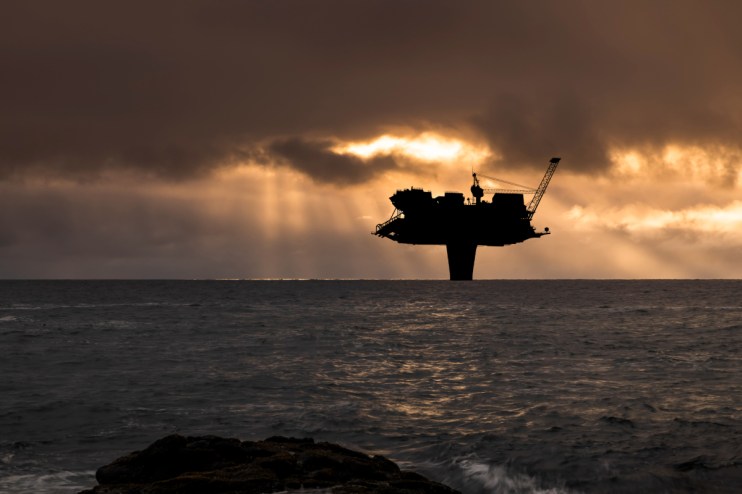
Households and businesses will be left even more exposed to geopolitical shocks like the one playing out in the Middle East unless the government “urgently” reopens the UK’s North Sea oil fields to new drilling projects, an industry body has warned.
In its annual temperature check of Britain’s energy industry, Offshore Energies UK (OEUK) called on ministers to abandon the moratorium on new licences for the UK’s oil fields, arguing it would boost high-value jobs and reduce our exposure to volatile global markets.
By 2035 as much as half of the UK’s liquified natural gas (LNG) will come from international suppliers, according to the paper’s authors who blamed falling production on a years-long windfall tax and the ban on new drilling to replace expiring projects. Last year, the UK imported just 14 per cent of its LNG from international markets.
“We urgently need greater supplies of secure, domestically produced energy including oil and gas, which will remain a critical part of the UK energy system and economy for decades,” said David Whitehouse, chief executive of OEUK. “As demand rises and electricity use accelerates, weakening domestic supply would only increase our reliance on imported LNG, leaving consumers more exposed to global volatility and higher emissions.”
Energy heavyweights call for North Sea to be reopened
The intervention adds to a crescendo of calls from energy industry heavyweights for the government to revisit its flagship pre-election promise to ban all new North Sea oil and gas projects in the wake of the conflict in the Middle East.
Octopus founder Greg Jackson and Chris O’Shea – the chief executive of British Gas-owner Centrica – have both urged ministers to reopen the UK’s reserves to new drilling since the onset of war in Iran.
Meanwhile, the Chancellor is said to be mulling the extent and nature of a major intervention into the energy market in a bid to keep bills down should tensions not dissipate in the coming weeks.
Starmer told a group of MPs on Monday that Rachel Reeves will update lawmakers about the emergency Cobra meeting in Whitehall on Tuesday after weighing up the “appropriate levers” to support households.
Due to Britain’s energy price cap, households’ bills are in fact due to fall over the next three months. But if the energy market isn’t calmed substantially between now and July – when the next energy price cap is due to be determined – then families can expect to face substantially higher energy costs without a state intervention.
Authors of the OEUK paper added that ramping up North Sea fossil fuel production would not just boost the local economy but also serve to reduce the UK’s overall emissions footprint, thanks to a decreased reliance on energy-intensive imports shipped to the UK.
“Recent events have shown how quickly energy markets can tighten and how easily cargoes can be diverted away from the UK when other buyers bid higher,” Whitehouse said. “Energy security means backing homegrown oil and gas alongside renewables.”
IEA: Middle East conflict could be worse than 1970s crises and Russia-Ukraine combined
Separately, the boss of the world’s largest energy body warned on Tuesday that the scale of disruption to the global energy market following events in the Middle East could be more severe than those of the 1970s and Russia’s invasion of Ukraine combined.
Fatih Birol, executive director of the International Energy Agency, said the crisis engulfing the region was “very severe” and would still get continue to compound unless “vital arteries of the global economy” were opened up.
Both the US and Iran have chosen to target energy facilities in the region in a bid to gain the upper hand in the conflict. The IEA has judged that at least 40 assets across nine countries in the region have been “severely or very severly” damaged since the war began.
“And, if I may, not only oil and gas. Some of the vital arteries of the global economy, such as petrochemicals, such as fertilisers, such as sulfur, such as helium,” Birol said. “Their trade is all interrupted, which would have serious consequences for the global economy.”
A government spokesman said: “Issuing new licences to explore new fields cannot give us energy security and will not take a penny off bills.
“Regardless of where it comes from, oil and gas is sold on international markets, which set the price for British billpayers – making us a price taker.
“The only way to truly protect ourselves from these price spikes is to get off the rollercoaster of fossil fuel markets.”