UK house prices see modest growth amid London slump

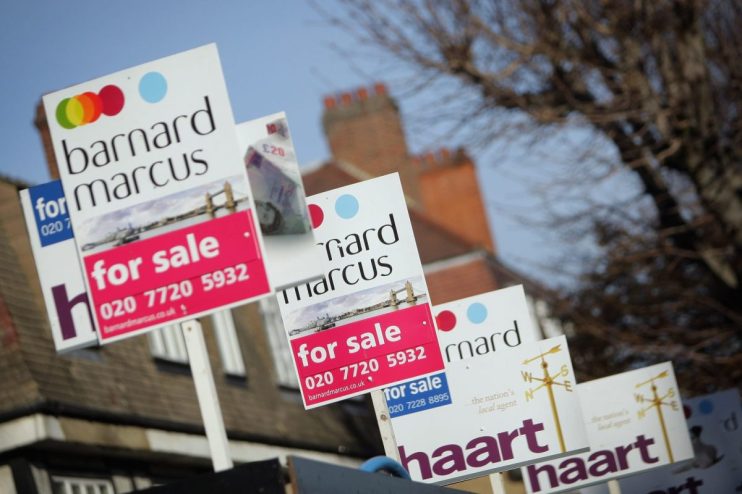
UK house prices ticked up last year, but the London market continued to lag after property tax speculation and high mortgage rates constrained affordability.
The average UK house price increased by 2.4 per cent annually in December 2025, slowing from 2.8 per cent growth in the year to November, according to the latest data from the Office for National Statistics.
Monthly prices suffered a 0.7 per cent drop in December, bringing property values to £270,000. Regionally, England reported the slowest growth, jumping just 1.7 per cent to £292,000.
By contrast, Wales increased 5.0 per cent to £215,000, while Scotland saw 4.9 per cent growth to £191,000.
Analysts credited the end of year dip to a market “slowdown” following months of speculation leading up to the Autumn Budget.
Paige Tao, economist at PwC UK, said: “While December is typically quieter for the housing market, this slowdown was more pronounced than usual.
“The delayed Autumn Budget left buyers waiting for policy clarity, with many pushing decisions beyond the festive period to the New Year.
“At the same time, a backlog of previously delayed listings returned to the market, giving buyers more choice and putting modest downward pressure on prices.”
London slump
The North continued it upward trajectory of property prices, with the North East reporting the highest annual house inflation at 4.6 per cent.
This was closely followed by the North West and Yorkshire and the Humber, at 4.5 per cent and 3.3 per cent respectively.
However, Londoners continued to feel the strain as prices slipped one per cent, off the back of affordability constraints, increased supply and low buyer demand. It was also a sharper fall than the 0.7 per cent decrease in the 12 months to November.
Despite house prices dipping, the capital boasts the highest house prices nationally, with the average price reaching £551,000.
Jonathan Hopper, chief executive of Garrington Property Finders, said: “This is due to the conjunction of two factors, too much supply and not enough demand.
“With plenty of homes for sale, buyers in the south could afford to be choosy, take their time and drive hard bargains.
“London’s softer performance is also the product of stretched affordability, higher borrowing costs and more cautious sentiment at the upper end of the market. The capital’s more pressured labour market adds another headwind, but it is part of a broader picture rather than the sole cause.”
Rental prices inch up
The average UK monthly rent reached £1,367 in January, a 3.5 per cent annual increase.
However, while rent in England increased 3.5 per cent year on year, it represented a 3.9 per cent slowdown and the lowest annual growth rate since March 2022.
Similar to house prices, North East recorded the highest annual rent inflation, increasing 8.0 per cent. The North West saw rent prices rise 6.0 per cent, while the West Midlands reported a 5.4 per cent increase.
Annual rent inflation remained the lowest in the capital, increasing by just 1.1 per cent in the 12 months to January, down from 2.1 per cent in the year to December.
Despite the drop, London still averaged the highest rent prices at a staggering £2,253, while the North East reported the lowest at £767, even though inflation soared.
Nathan Emerson, chief executive of Propertymark, said: “A slowing in the annual growth of rents may offer some relief for tenants but can also be attributed to localised shifts in demand or changes in supply dynamics.
“However, month on month, rent levels continue on an upward trajectory, therefore, policymakers must focus on creating conditions that encourage investment and maintain adequate rental stock to ensure the sector remains stable and able to meet housing need over the long term.”
Not all doom and gloom
In spite of the subdued end to the year, the market has got off to a “slightly better start” in 2026, with Halifax reporting the average house price crossing the £300,000 threshold.
However, industry figures have noted that affordability remains an issue, particularly for first time buyers.
Ian Futcher, financial planner at Quilter, said: “While mortgage rates have eased from their highs, affordability remains a key issue and many are still facing the prospect of a sharp jump in their monthly repayments when they come to remortgage or secure a new deal.
“However, lenders are increasingly competing for the limited custom, and we are regularly seeing pricing tweaks and new product launches which could bring more options for prospective buyers.”
Industry figures also noted that the next Bank of England rate cut, which could potentially come in March, will also shape the outlook for the housing market.