The manosphere’s dangerous ‘get rick quick’ promise

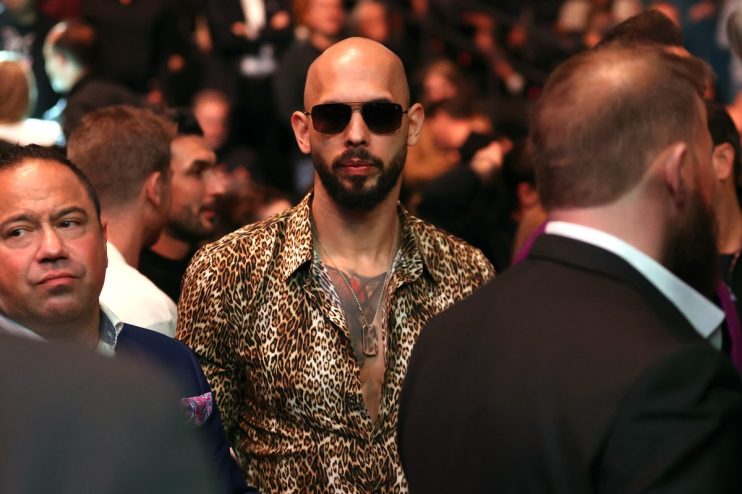
Online influencers like those highlighted in Louis Theroux’s Inside the Manosphere documentary are framing trading as an easy route to financial success and masculine dominance. That’s not education, it’s manipulation, says Lewis Crompton
The promise of quick wealth has always had a powerful pull. But today it is being repackaged and amplified through social media, where trading influencers present financial markets as the ultimate shortcut to success. Luxury lifestyles, screenshots of profits, and promises of financial freedom are broadcast to millions of young viewers every day.
Recent cultural conversations, including Louis Theroux’s documentary Inside The Manosphere highlight a deeper issue beneath the spectacle: how financial aspiration itself is being packaged and sold.
Trading and investing can be legitimate ways to accumulate wealth.
Many people use financial markets to build long-term financial security and independence. But for most individuals, markets tend to work best as a complement to a stable career initially, rather than an immediate replacement for one.
The version promoted by many online influencers reframes trading as something very different: a “get rich quick” escape from ordinary work. That framing is deeply misleading.
Consistent profitability in markets rarely comes from luck or overnight insight.
It usually requires learning and mastering new skills, understanding risk management, developing discipline and building experience over time. Professional traders spend years refining strategies and managing psychological pressures that come with risk and uncertainty.
When influencers present trading as something anyone can master instantly, it becomes less about financial education and more about capturing attention and monetising aspiration. The narrative is designed to be compelling rather than realistic.
This dynamic can be particularly harmful for young men. The messaging taps directly into economic anxiety, concerns about rising living costs, housing affordability, and uncertain career prospects. For many, the traditional paths to financial stability feel increasingly out of reach.
Instead of offering practical financial education, the narrative often wraps trading in ideals of hyper-masculine success: dominance, independence and rapid wealth. Trading is portrayed not simply as a financial activity but as a measure of personal strength and status.
Financial success becomes proof of ambition and capability. Failure, meanwhile, is framed as weakness or a lack of discipline, rather than the statistical reality of highly competitive markets
In that world, financial success becomes proof of ambition and capability. Failure, meanwhile, is framed as weakness or a lack of discipline, rather than the statistical reality of highly competitive markets where losses are common and even experienced traders endure setbacks.
Monetising audiences
It is also worth looking closely at where many of these voices are actually generating their income. In numerous cases, the loudest promoters of trading are not primarily making their money from trading itself. Their real business model sits within the attention economy, monetised audiences, paid subscriptions and online communities.
For many influencers, selling the idea of trading can be more profitable than trading itself.
Some even build “teams” of loyal followers who contribute time, promotion and labour without pay, hoping proximity to success will eventually translate into opportunity. In this environment, aspiration itself becomes the product.
None of this means trading is inherently harmful. When approached realistically and responsibly, it can be a valuable financial skill. Understanding markets, managing risk and learning how to invest can help individuals build long-term financial resilience and independence.
But the key word is responsibility. Markets reward patience, discipline and risk awareness far more than bravado.
When trading is packaged as a measure of masculinity or as a fast-track escape from ordinary life, it stops being education and starts becoming manipulation.
People deserve better than that. They deserve honest conversations about financial literacy, career development and long-term wealth building. They deserve mentors who emphasise patience over hype and resilience over spectacle.
The real lesson of financial markets is not how quickly wealth can appear, but how discipline, consistency and steady progress often matter far more.
Sometimes the most powerful financial strategy – and one that we teach – is also the least glamorous one: little, but often building over time, and only risk what you can get away with.
Lewis Crompton is founder of STARTrading