The inside story of the controversial Southbank skate park

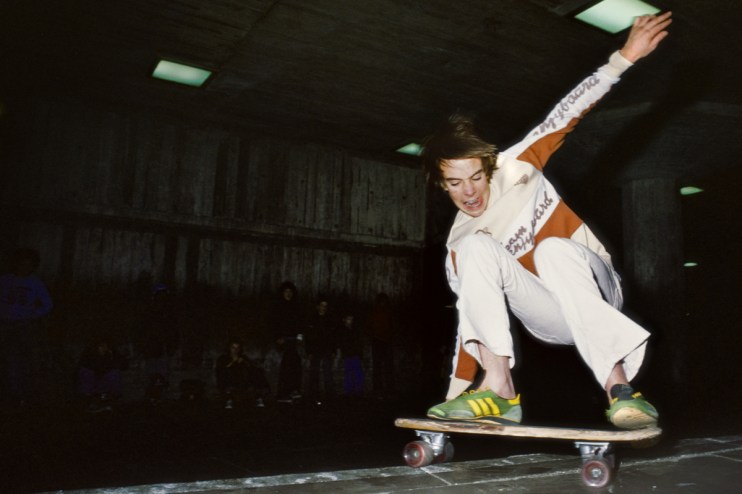
Beginning with the construction of the Royal Festival Hall in 1951, the Southbank Centre in its current form was completed in 1968. When the Queen Elizabeth Hall was added in 1967, the space (or undercroft) beneath the venue’s walkway was designed as somewhere for visitors to sit and take in the view across the Thames.
By 1976, however, the space had taken on another use altogether, and this year marks the 50th anniversary of the adoption of the area by London’s skateboard community, making it one of the world’s oldest skateboarding locations. Now widely known as the Undercroft Skate Space, the Southbank Centre is marking the anniversary with Skate 50, a multimedia exhibition exploring the location’s impact. Writer and urban art commentator Cedar Lewisohn is heading up the project’s curatorial team. “What’s so amazing about the Undercroft – and skating in general – is that it’s about so much more than skating,” he says. “Skateboarding really is all about having a creative life.”
As the skateboarding boom spread from America to the UK in the early 1970s, skateboarders were drawn to the Undercroft’s smooth, fast concrete surfaces, steps and ramps. The site quickly became a shrine to their sport and the culture surrounding it – graffiti, music, zines and fashion – working as a destination for like-minded people to hang out and exchange ideas.
Streetwear label and board-making brand Palace started life as a vision shared by skate crew Palace Wayward Boys Choir (PWBC) in the Undercroft. Spike Jonze worked with British filmmaker Winstan Whitter to make short skate videos featuring the location before he became a film director. An Undercroft regular from an early age, UK graffiti artist D*Face attached spray cans to his board and skated across the space to create abstract paint trails as a tribute to its importance in 2013.
Photographer and original PWBC boy James Edson learned his trade in the Undercroft, and his 2023 book Rabbit Hole includes photos of Undercroft skaters from the late 1980s to the early 2000s. Video games acknowledged the space’s iconic status, with the Undercroft featuring in 1999’s Thrasher: Skate and Destroy and legendary American skateboarder Tony Hawk’s 2002 title, Pro Skater 4. In 2019, former Dirty Sanchez (the UK equivalent of the US TV stunt show team, Jackass) member and skater Dan Joyce made You Can Make History, a film celebrating the Undercroft’s history.
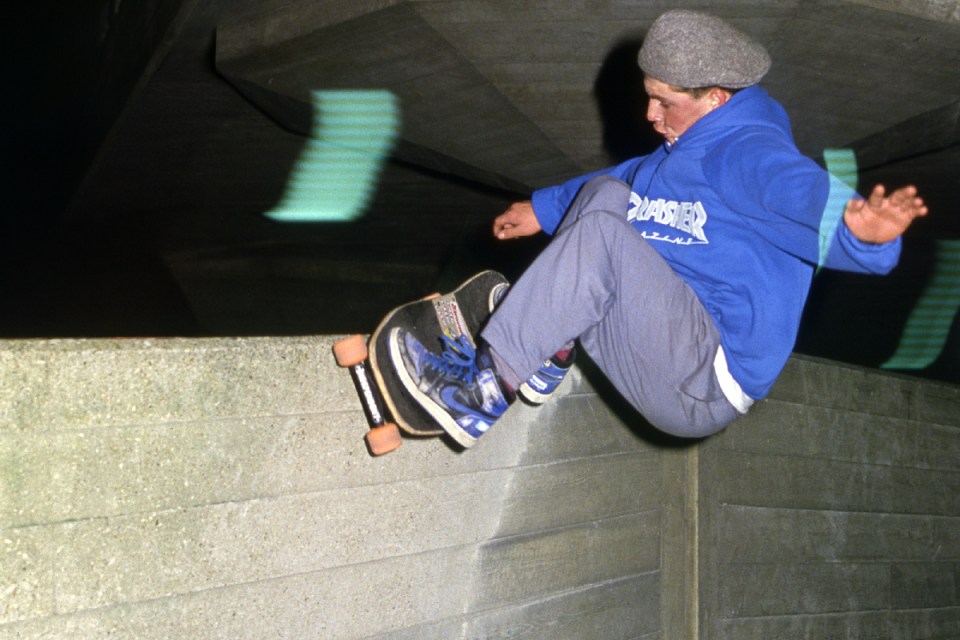
Skate 50 is set to reflect this cultural energy. Palace founder Lev Tanju will be contributing artworks and artefacts, and Winstan Whitter’s exhibition preparations included working with Cedar to ask generations of Undercroft users what they thought the exhibition should include.
“At the start of the project, we did a series of workshops and spoke to skaters, listened to their stories and heard what they think is important,” Cedar says. “We’ve been very lucky to have lots of great advisors.
The films Winstan put together as a result will be on show, alongside footage from UK skate video makers Dan Magee and Jack Brooks. Animator Sofia Negri, skate collective Keep Rolling Project and sound artist Beatrice Dillon are also taking part. Sofia is delighted to be taking part. “I skated the Undercroft many times, and every time it was a different experience because of its ever-changing nature. To be asked to depict its history and energy is definitely a great honour for me,” she says. “I started making skate-related animations a few years ago to make fun of my inability to land tricks. I’m really grateful to be contributing.”
The early days of the Undercroft
Winstan started skateboarding at the Undercroft in the 1980s and is keen to celebrate the sense of inclusivity the place fostered. “I call it a sort of self-policed environment because we’d always look out for each other,” he says. “People are calm, safe and respectful. Kids aged ten could be skating and having conversations with people who are in their sixties. It’s a very peaceful spot because it’s away from the busyness of London. It’s by the river. There are no roads. It’s undercover. It’s dry. It’s got lights. It’s just like the perfect place to go, whatever the weather. It brings people together. It’s a spot where you can become a local.”
Events in 2013 revealed London’s strength of feeling towards the Undercroft. After the Southbank Centre announced plans to replace the park with restaurants and shops as part of a £120m redevelopment, the skateboarding community united to form Long Live Southbank (LLSB), a non-profit organisation formed to save the Undercroft from destruction.
LLSB lobbied local planners at Lambeth Council, asking them to designate the Undercroft as an ‘asset of community value’ (and therefore protected from development) to avoid the plans. Lambeth Council agreed, and the skate park was saved. “I’m pleased that Lambeth council was able to work with both sides and find an imaginative solution to resolve this,” Lambeth Council leader Lib Peck said at the time. “Shared public space in London is precious, and the Southbank Centre is a great asset to the country’s cultural life.”
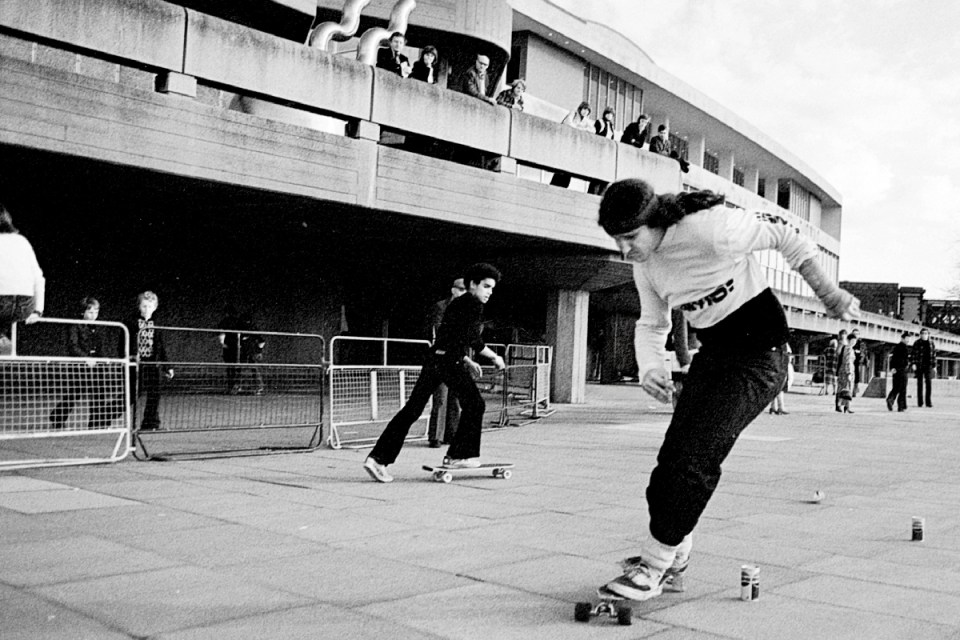
Even Boris Johnson – then Mayor of London – signalled his support for the decision, saying in a City Hall statement, “The skate park is the epicentre of UK skateboarding and is part of the cultural fabric of London. It helps to make London the great city it is.” Sofia agrees with the sentiment. “The Undercroft’s development into the biggest stage of skate culture in the UK has been determined by skaters themselves,” she says. “And it’s this fierce opposition to established authority and its symbiotic relationship with the city that helps make it so unique.”
LLSB has continued its role as the Undercroft’s guardian. Their differences smoothed over, in 2017 the organisation collaborated with the Southbank Centre’s management in a crowdfunding campaign that eventually raised more than £850,000 to restore sections of the space that had been boarded up or fallen into disrepair.
Cedar has been checking in with one of LLSB’s founders, Stuart Maclure, to get his thoughts on the Skate 50 project. “It’s really been about speaking with different communities and individuals linked to the space,” Cedar says.
Undercroft: From skating by the Thames to the Olympics
The exhibition’s curatorial team also listened to feedback and ideas from Skateboard GB, the team behind Britain’s Olympic skateboarders, and Cedar is proud that the exhibition will include an essay from Iain Borden, a Professor of Architecture and Urban Culture and staunch supporter of the Undercroft.
A key element of skateboarding’s urban existence lies in claiming locations that are ripe for use – even though skating has nothing to do with their intended purpose. Artist Charles Daudelin’s L’embacle Fountain sculpture in Paris has also been adopted as an impromptu skate space, as has The Hook housing development in San Francisco and the voids beneath New York’s Brooklyn Bridge. Professor Borden’s research links the Southbank Centre’s brutalist architecture with skaters’ ability to appropriate and repurpose urban landscapes.
The Southbank Centre’s Undercroft continues to function as a playground, safe space and education centre for casual skaters and the next generation of stars keen to follow in the wake of international figures like Olympians Sky Brown and Bombette Martin. “How cool is it that you might have come to the Undercroft when you were, say, 12 years old and started skating?” says Cedar. “Eight years later, you’re a professional skateboarder, travelling around the world and making your living through skateboarding. I’ve spoken to several skaters, and that’s their story. The Undercroft is important because it’s a place that has made so many people’s dreams come true.”
• Skate 50 takes place at the Undercroft, Southbank Centre, Belvedere Road, SE1 8XX from 30 April – 21 June 2026. Visit the website here.