‘Thai fantasy’: the 7 best hotels in Thailand (one for every mood)

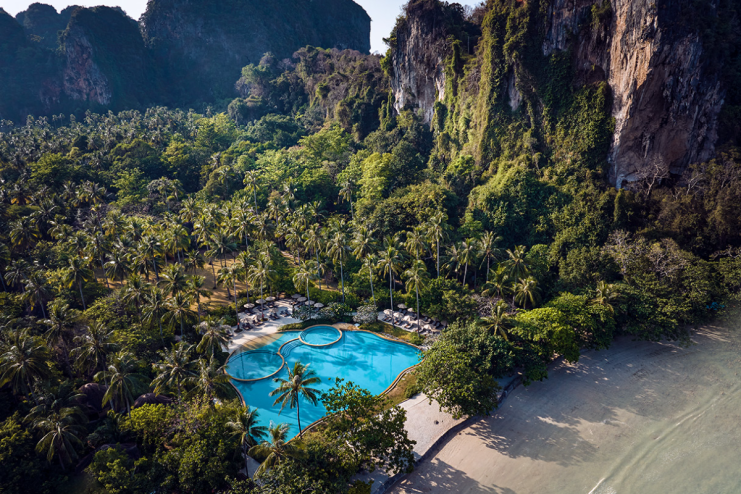
Thailand has more hotspots than I have excuses to go back, with a stay for every mood. You can come to explore or to retreat, to detox with conviction or undo it just as efficiently. Between the Andaman’s limestone-framed bays, Bangkok’s kinetic sprawl, and the mist-slicked jungles of the north, it is Southeast Asia’s great shapeshifter.
Consider this your definitive guide to Thailand’s most unforgettable stays, from the supreme luxury of the White Lotus hotel to elephant experiences, spas, and world-leading food and design. But mostly, it’s about switching off in possibly the most storied exotic locale on Earth.
Best for lovers of Thailand’s beaches: Rayavadee
Whenever someone asks me which Thai island to visit, I always say Railay. It’s a slightly problematic answer, since this slice of paradise is technically on the mainland. Sitting around 500 miles south of Bangkok, near Krabi International Airport, Railay is one of Thailand’s most arresting coastal enclaves.
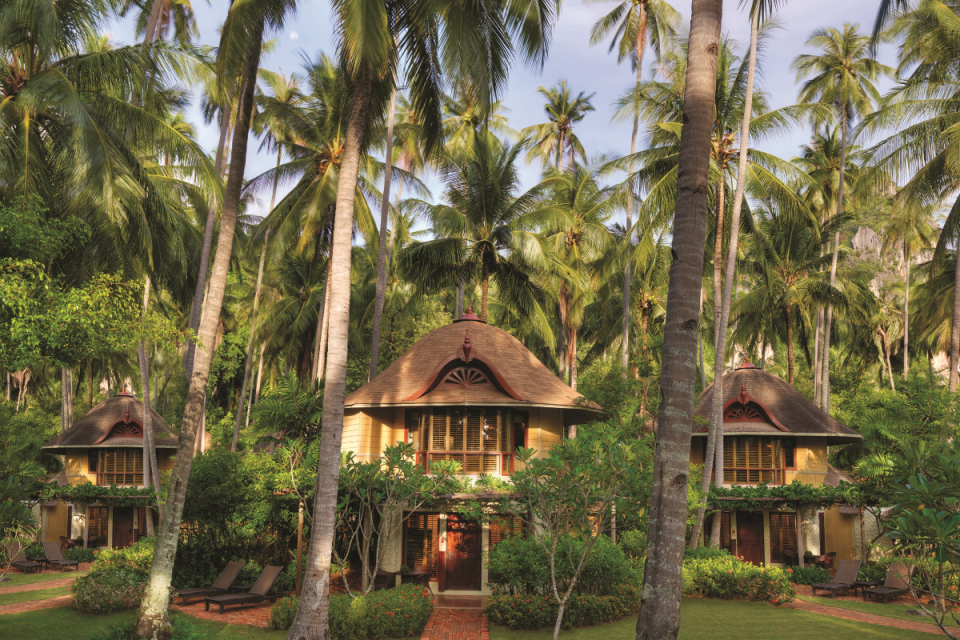
A limestone-framed peninsula cut off from the mainland by jungle and sea, accessible only by boat. A longtail from Ao Nang takes ten minutes, with views of limestone karsts rising sharply out of the water. Rayavadee occupies a privileged position, straddling all three beaches, and is nothing short of stunning, wrapped in tropical gardens, with curved-roof villa pavilions carefully threaded through the existing palms and lush jungle foliage.
The result of a build that left the landscape intact, great for the dusky leaf monkeys that live here. The crown jewel is Phra Nang Beach, which can draw in day-trippers, but Rayavadee’s guests experience it differently: unhurried and undisturbed, stretched out on shaded sun loungers by the beachfront pool. Being the only hotel here makes a difference.
As day slips away, the sun drops between the rock towers and, on rare evenings – particularly in Thailand’s dry season – guests witness diagonal beams of molten gold shoot into the sky, a phenomenon called crepuscular rays. The best place to watch is from The Grotto, the hotel’s cave-set restaurant beneath a vast limestone overhang, and the nearby Phra Nang Cave.
My day-trip recommendation is to take a 30-minute speedboat to the emerald lagoon on the Hong Islands. It’s even prettier than Phi Phi, which takes just under an hour, and is much less busy.
Rates for the Deluxe Pavillion start at £600 per night
Best for calm in the chaos: Capella Bangkok
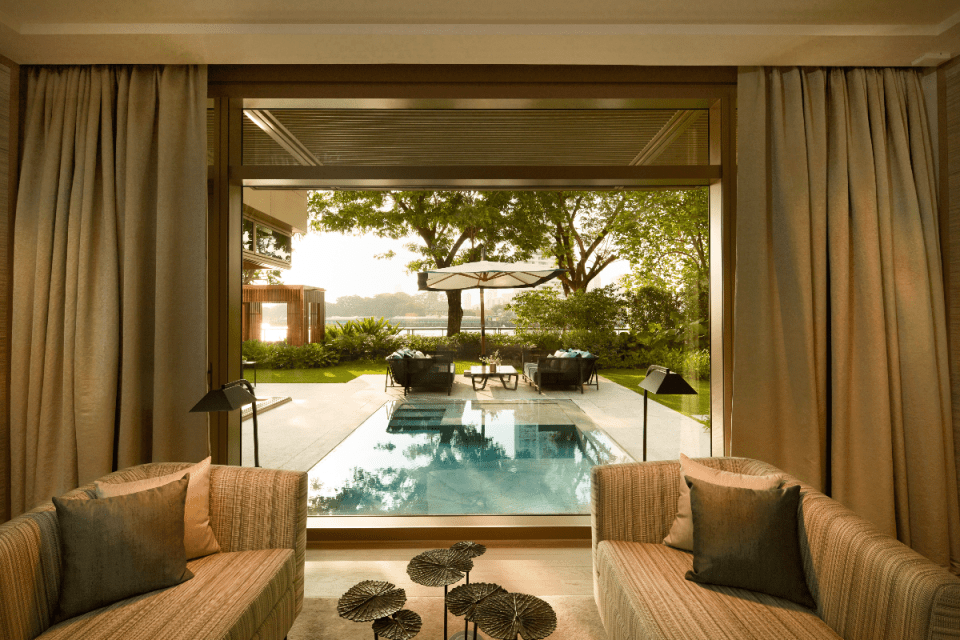
This city retreat feels like it was immaculately conceived by a monk, an architect and Gwyneth Paltrow. It is improbably serene and frequently ranked among the world’s most lauded hotels. In a city defined by momentum and colour, Capella’s genius lies in its ability to tone things down without dulling the edges. It sits on an exclusive stretch of the Chao Phraya, next door to the much larger Four Seasons. With just 101 rooms, all facing the river, it’s deliberately scaled back. Floor-to-ceiling windows flood the space with light and turn the river into a moving canvas.
The dining options span contemporary Thai, as popular with locals as much as with guests, and fine dining at two-Michelin-star Côte by Mauro Colagreco, with a menu inspired by the French and Italian Riviera. But it’s Stella that stays with me. Herbaceous cocktails, cut clean and cold, in a candlelit bar made for watching the steady stream of characters that sip martinis in pale linens and razor-sharp tailoring. The spa flips the mood entirely. Auriga is all dark marble, detox rituals, thermal baths and chakra balancing. If this all starts to feel very virtuous, head to the riverside pool for an outstanding hamburger. Gwyneth will forgive you.
Rooms from around £460 per night; go to capellahotels.com/en/capella-bangkok
Best for foodie Thailand: Iniala Beach House
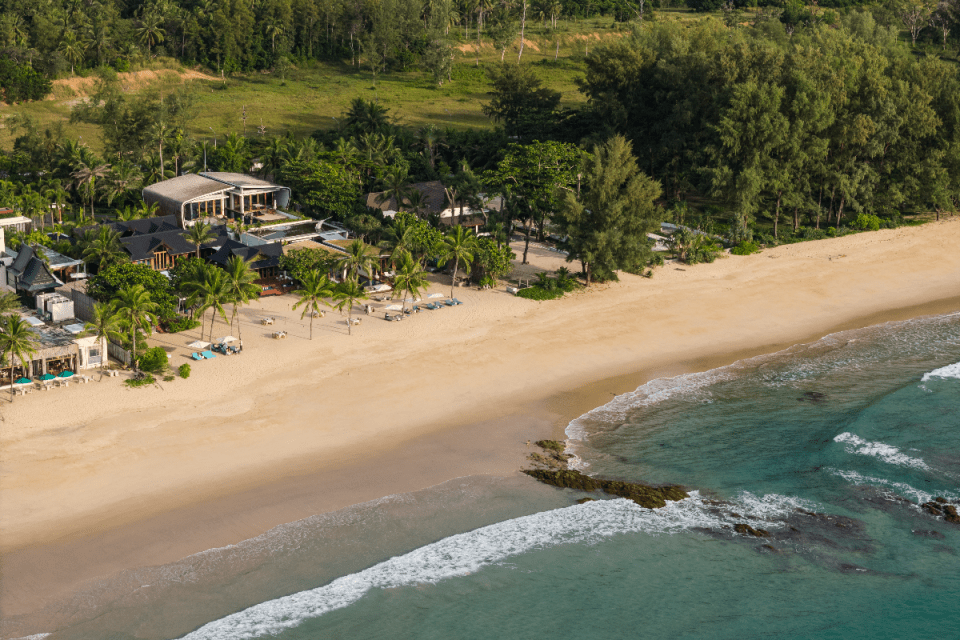
If you thought Phuket was all about sunset cruises and laminated excursion menus, Iniala has other ideas. Set on the sugar-white sands of Natai Beach, this boutique hideaway has long attracted those in search of serious privacy, even the Kardashians once decamped to its beachfront villas. These days, the headline is Aulis, a 15-seat chef’s table from British chef Simon Rogan MBE, a pioneer of hyper-seasonal cooking who built his reputation on farm-led dining in the Lake District.
Since then, Aulis has travelled – to London, Hong Kong and now southern Thailand. Phuket may seem like an unlikely next chapter as you arrive via a sleepy road 30 minutes north of the international airport, but the leap makes more sense once you see how fluently the idea has been translated. Rogan’s team led me through the kitchen gardens, heavy with Thai basil, native herbs, regional citrus and oversized tropical greens. His ethos – a devotion to local terroir and the disciplined use of every part of an ingredient, with menus shaped by what’s harvested, foraged or landed that week – has become the spine of Aulis Phuket too.
There are just ten accommodations and most open onto private pools overlooking the Andaman Sea. From sculptural beachfront villas to a penthouse with memory-foam carpets that mimic warm sand, a white leather bed that hangs from the ceiling, and a sunken splash-shaped bath positioned conspicuously next to it.
Rates at Iniala Beach House start from $1,050 (£825) per night (Pool Residences) per night. For more information, visit inialathailand.com.
Best for skyline views: The Standard, Bangkok Mahanakhon
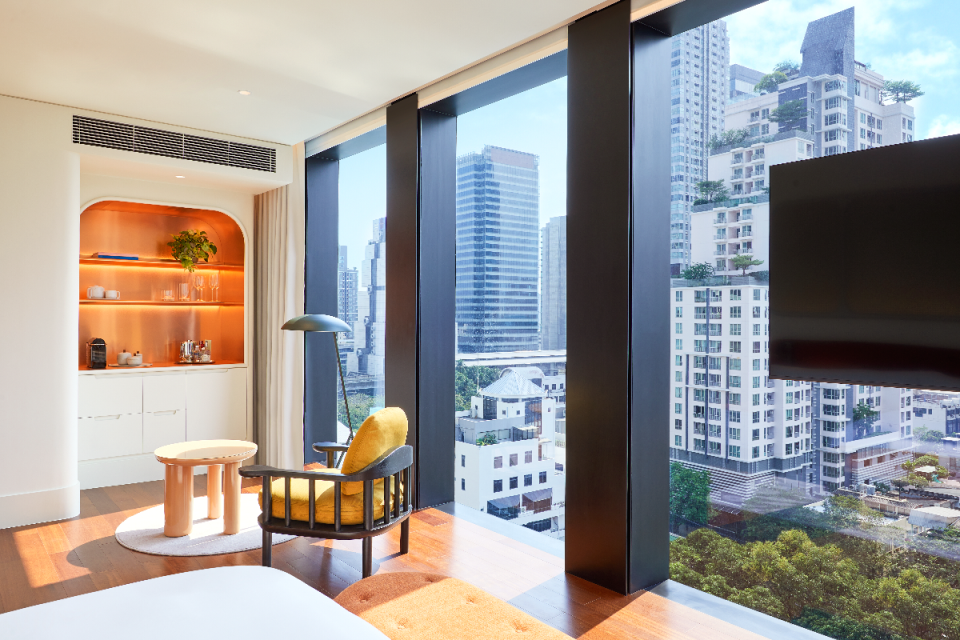
The hotel opened in 2022 inside the King Power Mahanakhon in Silom, which was briefly Thailand’s tallest building, before losing the title by a petty four metres. The ascent ends at SkyBeach, the highest open-air rooftop bar in the city with 360-degree views. At sunset, all the phones come out; by nightfall, they tend to disappear, as visitors sink into the low-lit seats or assemble on the rising steps to take in the city.
Hotel guests have complimentary access to the SkyWalk, a glass-floored platform that hangs hundreds of metres above the streets. Even the unflappable hesitate before stepping on. The reward is a city that reads like a circuit board, reduced to pattern and light. Inside, the hotel embraces sensory maximalism: rainbow-bright décor, bold prints and commissioned artworks. The terrace pool, animated by daytime DJ sets, is positioned to look back up at the tower’s pixelated façade. While rooms don’t reach the giddying heights of some super-towers, floor-to-ceiling glass delivers a richer perspective.
Rather than hovering above Bangkok, you feel threaded into it, watching layers of life unfold horizontally and vertically at every level. The Standard makes a persuasive case for trading in the islands, at least for a few nights.
Rates for the Deluxe King start from around £240 per night; go to standardhotels.com
Best for Thailand’s ultra luxury: Four Seasons Resort Koh Samui
Best for design on a budget: StandardX, Bangkok Phra Arthit
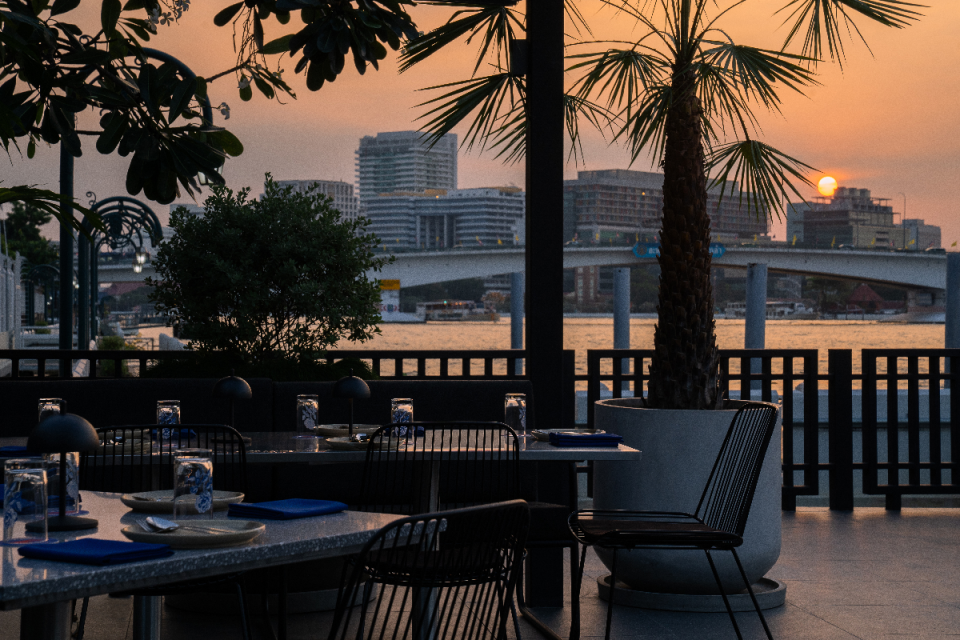
StandardX is the no-frills younger sibling of the brand’s Bangkok flagship, and a neat return to The Standard’s original DNA. When the hotel first opened in West Hollywood in the late 1990s, it set out to be deliberately anti-luxury: pared back and culturally plugged in.
As the brand expanded out of the US over the past decade, the hotels inevitably became glossier. StandardX seems to be the course correction. First launching in Melbourne in 2024, it was quickly replicated on the banks of the Chao Phraya, in a neighbourhood teeming with independent cafés, casual bars and eateries.
The industrial bones of the building are left deliberately exposed, with the lobby doubling as a gallery and café that hosts rotating exhibitions and pop-ups, including HER Market, which showcases women artisans alongside live performances. Think Bangkok by way of Bushwick or Brixton: creative, community minded and admittedly gentrified.
Rooms are compact and designed for guests whose mission is to explore rather than loiter around the roof-top pool in the hotels’ signature blue bathrobe, tostada in one hand, margarita in the other. The hotel is a ten-minute walk from the old-school energy of Khao San Road, making it an excellent gateway for first timers, and a fuss-free base for veterans nostalgic for their backpacker heyday, now with slightly better taste.
Doubles start from around £80 per night
Best for curious minds: Anantara Golden Triangle Elephant Camp & Resort
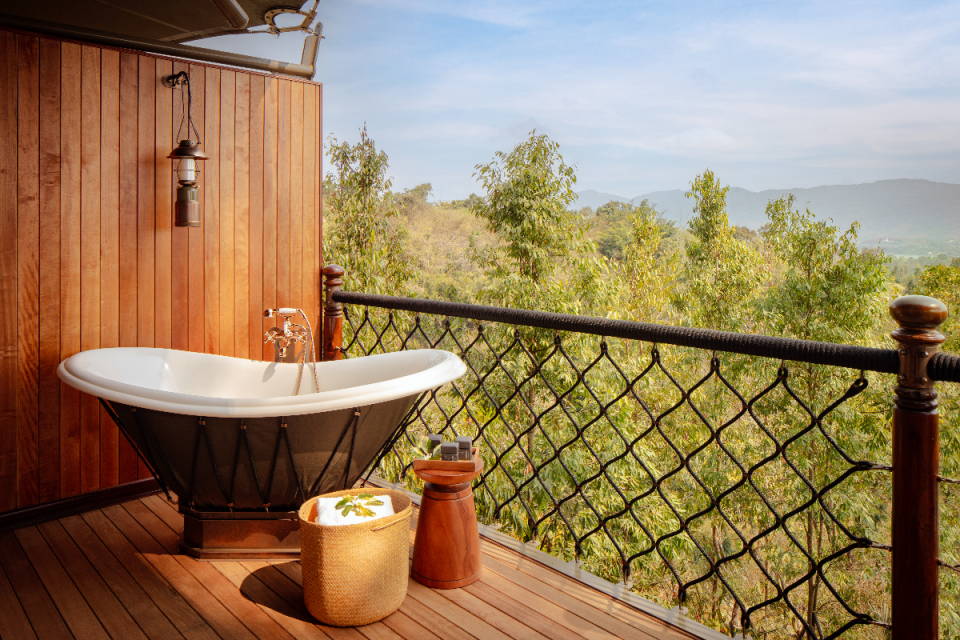
At first glance, Anantara Golden Triangle looks like a familiar Thai luxury proposition: a hilltop infinity pool suspended above jungle and river, with spa treatments delivered in open-air yoga pavilions set among rice paddies. But its location gives it an added dimension.
Perched high above the Mekong River in the north, the resort overlooks the meeting point of Thailand, Laos and Myanmar – a borderland shaped by centuries of trade, conflict and cultural exchange. Accommodation across the resort is notably spacious, all with uninterrupted views and designs inspired by northern Thai Lanna traditions. The most coveted stay is the Mekong Explorer Tent, set apart from the main building and reached by vintage Land Cruiser. This khaki and beige dome is redolent of mid-century exploration, recalling the era of Jim Thompson’s travels and 1930s safari camps. Days can be as active or reflective as you like: Sky Bike rides over the canopy, vintage sidecar trips through rural landscapes and river journeys down the Mekong.
The headline draw is the herd of rescued elephants, cared for by the Golden Triangle Asian Elephant Foundation, the on-site non-breeding sanctuary founded by the hotel’s parent group to support animals retired from logging and exploitative tourism. Guests can meet and walk alongside the elephants and learn from experienced mahouts and veterinarians navigating the complexities of elephant welfare in modern Thailand.
Doubles in a Mekong Explorer Tent from £2,850, full-board anantara.com