Sun, money and missiles: The dilemma facing British lawyers in the UAE

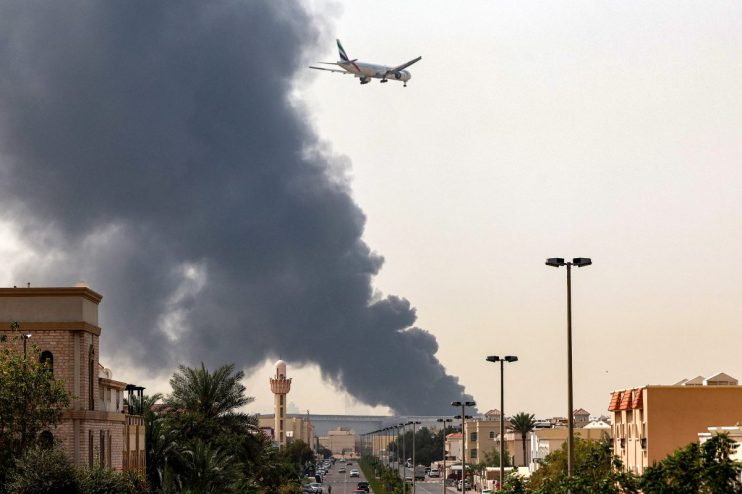
The United Arab Emirates (UAE) ranks among the most popular international destinations for British lawyers, to say nothing of influencers, but has the Iranian war burst the bubble?
Based on the latest reports from the Law Society and the Solicitors Regulation Authority (SRA) for 2025 and early 2026, there are around 500 to 700 English and Welsh qualified solicitors practising in the UAE, with plenty of other Brits working in and around the sector.
With the amount of money circulating in the Gulf region through economic diversification and sovereign wealth, there has been a drive among UK and international firms in recent years to have boots on the ground in the Gulf.
And after significant government investment in the region to make it more attractive for law firms to establish a presence, most recently in Saudi Arabia, these Gulf states have moved from being ’emerging market’ to prime market outposts for many international firms.
But while the year-round sunny climate is an attractive feature, and the pool parties can be appealing, there is no denying that the biggest benefit of living in the Gulf is not having to pay personal income tax.
It is well known that lawyers in London are paid very well at top law firms, yet even with a six-figure salary in the City, life abroad has become appealing.
Drone attacks have become common
However, recent tensions in the Middle East have sparked concern amongst expats in the Gulf, with many considering their options – whether that’s a private jet to a more peaceful jurisdiction or a cold, hard look at where to base themselves in the future.
Since the US-Israeli surprise attacks on Iran began in late February, many of the Gulf countries have faced Iran’s retaliatory strikes, especially the UAE. The sounds of missiles being shot down and fighter jets intercepting drones have become common.
Due to concerns about safety after at least eight people were killed, and with the Burj Al Arab hotel and Dubai’s International Financial Centre among the sites targeted by Iranian drones, people have been told to remain at home. When the advice is to stay away from windows, that sunny view can lose its premium, while those with children have also seen schooling return to the covid days.
Not surprisingly, and despite complicated logistics, some expats have been scrambling to secure seats on available flights, while others are either booking private jets or taking lengthy bus rides to the border to seek flights from Oman or Saudi Arabia back to the UK.
Taking a second look at London
Among these numbers are lawyers, as legal recruiters are seeing a surge in inquiries from lawyers considering moving back to the US or UK. Maximilian Campbell, senior consultant at MRA Search, explained, “Although very few have been decisive about moving immediately, there is widespread concern about the situation and partners and associates in law firms are monitoring events carefully.”
James Lavan, executive director at Buchanan Law, added that “firms are seeing a growing number of individuals seeking to return to the UK and other regions from the Gulf, and employers have generally been very understanding, offering increased flexibility around both working from home and temporary relocation.”
However, true to their risk-averse nature, many lawyers will sit back and wait to see how this war plays out in the region.
Dubai won’t go quietly
The power of money cannot be underestimated in how quickly the region can rebuild its reputation once this conflict calms down. It’s not a like-for-like scenario, but if we look back at the Qatar diplomatic crisis of 2017, where Saudi Arabia led a blockade on the country over Qatar’s alleged support for terrorism, we can see how quickly apparent obstacles can be overcome.
In the days and months that followed, the country was quiet as all UAE, Saudi, Bahrainian and Egyptian citizens were ordered to leave. The shelves in the shops were empty after a country that was so heavily reliant on its neighbours for imports, suddenly faced the full force of the blockade.
For other countries, this would have been a problem, but for Qatar, one of the richest countries in the world, it bounced back, with diplomatic ties (and a lot of help from Turkey), the crisis ended in 2021 and people began to flock back to Doha.
Emerging Strategy‘s Adil Husain said the issue for Dubai is not one of immediate crisis, but in how its perception will change from now on.
“The damage falls on the decision not yet made: the multinational evaluating a first-time regional HQ, the next cohort of millionaires choosing where to base themselves, the fund manager deciding which city to expand into. These are the decisions made on the margin, and marginal decisions are made on probability distributions rather than current conditions.”
Husain adds that Dubai “sold itself as impervious to the region [and] will now need to sell a more realistic product: exceptional infrastructure and genuine opportunity in a volatile neighborhood. That is still a compelling offer for many, but it is a meaningfully different one.”
Places like Abu Dhabi and Dubai have poured substantial financial resources into positioning the cities as financial hubs, and firms have flocked to the region to gain from the work they expect to generate as the economies pivot to international financial services.
The UAE authorities have already indicated they will allow expats to spend more time abroad without losing their cherished tax status, and we shouldn’t expect the rulers in this region to let their reputations go without a fight.
Eyes on the Law is a weekly column by Maria Ward-Brennan focused on the legal sector.