Starmer: ‘Viable plan’ needed for Trump’s Strait of Hormuz request

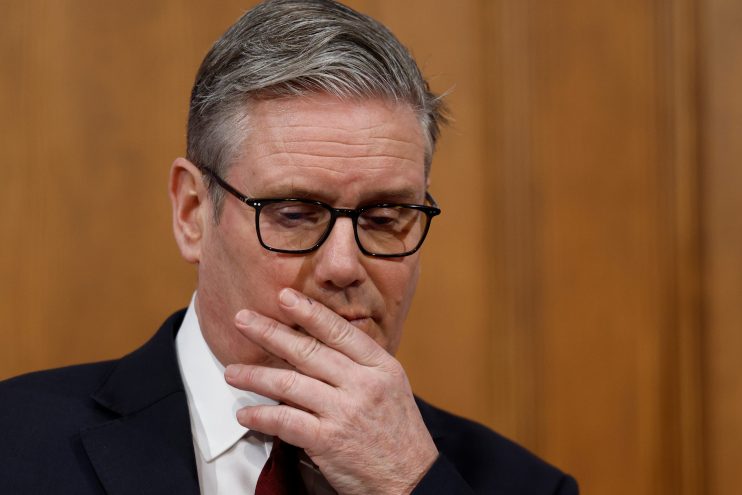
Sir Keir Starmer has said he is still in discussions to draw up a “viable, collective plan” with European allies in response to President Trump’s call for help in the Strait of Hormuz.
In a press conference on Monday, the Prime Minister insisted that the country would “not be drawn into the wider war” in the Middle East and suggested the government had not taken a decision on whether to send war ships to the critical oil trade passage, which has faced disruption over the last fortnight.
Starmer said he was speaking to European allies to discuss a plan to defend ships passing through the stretch, which is off the coast of Iran.
“We have to open the strait of Hormuz to ensure stability in the market,” Starmer said.
“We’re working with all of our allies, including our European partners, to bring together a viable collective plan that can restore freedom of navigation in the region as quickly as possible and ease the economic impacts.
“It’s never been envisaged to be a NATO mission. That will have to be an alliance of partners, which is why we’re working with partners both in Europe, in the Gulf and with the US.
“It’s important that we continue that. It is not straightforward.”
Trump told the Financial Times that a lack of support in the strait would be “very bad for the future of Nato”.
Japan and Australia said they would not send ships to the region. A Chinese government spokesman said it was speaking to “all sides”.
On the morning of the speech, the Brent Crude Oil price jumped higher to $104, a rise of over 40 per cent since the start of the war.
At the beginning of the conflict, Treasury analysis indicated that a 20 per cent rise in oil and gas prices would add a single percentage point to inflation and knock around 0.5 percentage points off GDP growth.
Starmer used his speech to announce a £53m package to support households in rural communities that use heating oil.
The Prime Minister held back from announcing a wider subsidy package, adding that the next change in the energy price cap would only come in June while fuel duty was already slated to be left frozen until September.
However, Starmer emphasised that the government had brought “stability” to public finances while the UK economy was in a “better place than it otherwise would have been”.
Starmer’s Trump problem
The UK’s response to the crisis in the Middle East has frayed relations with the US administration.
Downing Street said on Sunday that Starmer spoke to Trump in a phone conversation lasting 15 minutes.
Trump has held firm on continuing the war in the Middle East, urging allies including the UK to join forces protecting ships passing through the Strait of Hormuz.
US and Israeli forces also attacked Kharg island, key to around 90 per cent of Iran’s oil exports, though energy infrastructure was not targeted.
On Monday morning, work and pension secretary Pat McFadden insisted the government was not a “protagonist” in the war.
While Trump has attacked the UK over its delayed military response on the war, McFadden suggested the relationship between the two countries depended on deeer ties.
The escalation of the war in the Middle East on the weekend has now set the scene for crucial decisions on the UK economy, with Chancellor Rachel Reeves set to deliver a speech on Labour’s next set of growth policies on Tuesday.
McFadden also delivered a speech on Monday setting out an employment subsidy scheme to address the rising number of young people not in education, employment and training.
Policymakers on the Monetary Policy Committee at the Bank of England are expected to hold interest rates in a crunch meeting this week, which could leave public finances on shakier ground and dampen hopes of an economic turnaround.