Six Exchange boss: London was always punching above its weight

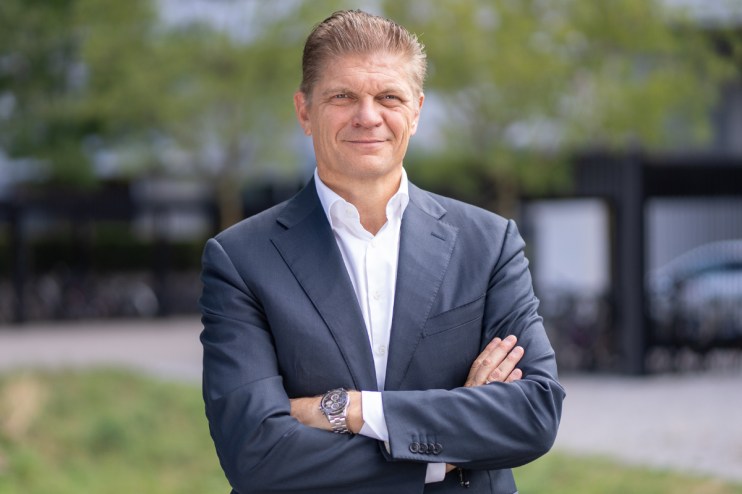
Bjorn Sibbern’s Six Group has, so far, weathered a bruising 2026. But, Ali Lyon asks, can its approach to running two of Europe’s largest bourses – which look markedly different to that of its UK counterpart the London Stock Exchange – survive its continent’s fabled regulators?
Life at the top of a European stock exchange can be a thankless one.
Constantly courting non-committal IPO prospects. Worrying that one of your most-cherished and lucrative blue-chips might be bought by a foreign competitor or – worse still – desert you for an American counterpart. All the while, fruitlessly lobbying for a more functional pan-European exchange to ensure the continent’s capital markets ecosystem can compete with your shinier, larger rivals across the pond.
But for Bjorn Sibbern, the chief executive of Six Group, 2026 has – “knock on wood” – been one of the best he can remember. Over a 20-year career working in public exchanges, the most recent of which he has spent running the flagship Swiss and Spanish stock exchanges, the square-jawed, straight-talking executive has rarely seen performance “so super strong”.
“Equity trading volume is surprisingly strong – stronger than last year and, everything equal, looks set to continue,” he tells City AM on what is becoming, in his mind, an all-too-rare visit to the UK capital. “We also – despite the volatility – still see a relatively strong pipeline in terms of IPOs for the rest of this year and into ’27.”
That “volatility” has been, to put it lightly, not insubstantial. Fears abound on trading floors that the AI bubble could burst at any minute. Concerns that the $4 trillion sovereign debt market might finally capsize have also come hurtling into view. All the while, Donald Trump’s assault on Iran has upended energy markets and global trade.
On one level, a motion-sickness-inducing economy can bring tailwinds for the operator of two of Europe’s largest exchanges. In the case of Six, which boasts two large clearing houses as well as its marquee exchanges in Switzerland and Spain, the year’s uncertainty has triggered a wave of news-based trading that Sibbern says has beaten even 2025’s tariff-induced whipsawing. That, in turn, has generated both transaction fees for its exchange business and clearing fees from those trades having to be processed and rubber stamped at Six Clearing.

Pension funds’ ‘scarily’ low allocation to UK equities
On another level, the barrage of macroeconomic shocks is a mighty burden. Across the continent, big ticket debuts have been waiting for calmer waters that sometimes never arrive. Sibbern, however, has hosted five IPOs of a respectable size on Six’s flagship Swiss exchange so far this year. And at its Spanish bourse BME – which it acquired in 2020 for €2.8bn (£2.41bn) – as many as 17 companies have floated onto an exchange that Sibbern says has been propped up by the Iberian country’s buoyant economy.
“Volatility, of course, always puts at least a pause on planned IPOs,” he says. “But in the second half of last year, you saw also IPOs kicking in, and this year has also been a positive surprise.”
Sibbern’s report card stands in sharp contrast to the bruising period suffered by the Square Mile, where is offering his rosy assessment. This year has, so far, been another calendar year to forget for Six’s main UK rival, the London Stock Exchange, which has extended its barren run of listings and suffered a string of high profile departures.
Despite last week being given a much-needed shot in the arm by the planned listing of Airtel Money, so far there has been just one completed IPO of note – that of the Uzbekistani national investment fund, Uznif. All the while, household names ranging from Schroders and Beazley to Easyjet and Tate & Lyle have all accepted bids from foreign rivals and investors who have capitalised on the market’s bargain prices.
To Sibbern, the woes afflicting London, which onlookers have put down to a dearth of liquidity, persistent outflows and lowly valuations, have become something of a fascination.
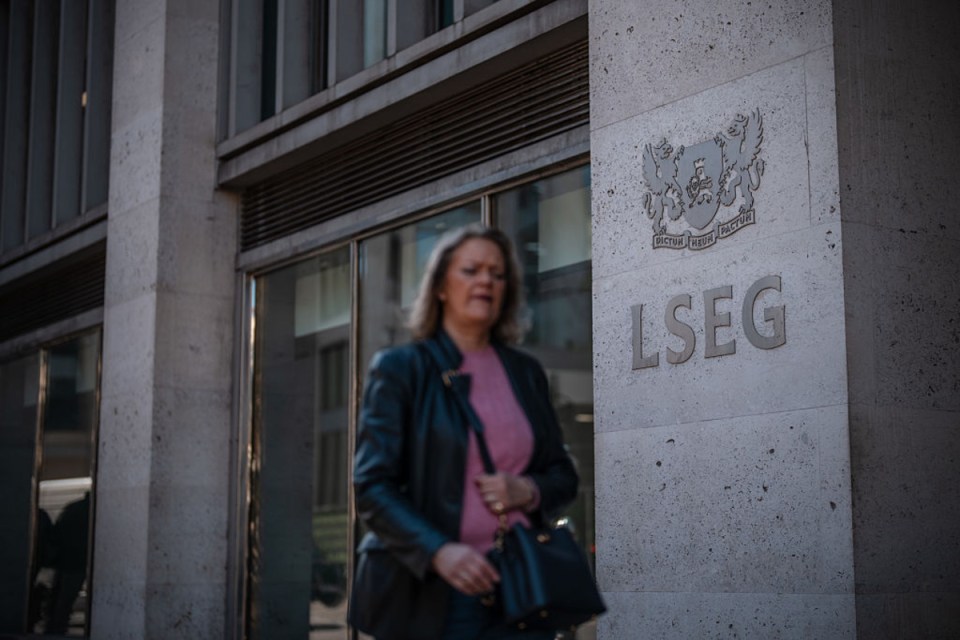
“The UK challenge, we don’t see that at all,” he says. “The liquidity pool is so strong, the connection and the closeness to the companies is great. And to defend LSEG [London Stock Exchange Group] a bit, maybe they were, for many years, punching above their weight.”
Part of the reason for London’s woes has been UK pension funds’ slow abandonment of their domestic stock market in favour of bonds and companies on foreign exchanges. As little as four per cent of UK institutional cash is currently put to work in firms listed on the LSE. Even the MPs’ own pension scheme – the Parliamentary Contributory Pension Fund – invests just three per cent of its assets under management into UK equities.
By contrast, in Switzerland – the market where Six is headquartered and which generates the lion’s share of its revenue – annuity giants allocate roughly a third of their public equity exposure to Swiss-listed firms, representing some 10 per cent of their total portfolios. Asked how severe he feels the situation is in London, Sibbern is unequivocal.
“The connection [between pension schemes and their domestic market] in Switzerland is a bit stronger than in the UK,” he says. “When I see the pension funds there – it’s super scary numbers,.
“People say pension funds’ job is to give the best return – so you have to start with that. With that said, it seems strange to me that, in the UK, it does not make sense to invest a bit more.”
Six boss sees ‘no demand’ for 24-hour trading
In the absence of an influx of pension fund cash, the London Stock Exchange has been engaged in a major modernisation push on three fronts at once. First, the bourse’s operator has launched its eagerly anticipated Private Securities Market, the LSE incarnation of the government’s Pisces drive aimed at helping match private companies up with investors off the main stock market. Then there’s its tokenisation drive, where the LSEG is building out blockchain-backed digital infrastructure to trade tokenised funds and stocks, and its experiment with 24-hour trading.
Six has opted against pursuing any of the three innovations, choosing instead to “look closely at” the way pilots in London and New York pan out before committing vast sums to similar schemes. With 24-hour trading in particular, significant downsides would come with an ill-thought-out or misjudged execution, Sibbern says.
“There’s not a strong demand for trading 24-five or 24-seven,” he says. “You have to make sure you do not spread liquidity out too much. So you want to obviously make sure that you centralise liquidity in a certain period of time during the day.”
A Pisces equivalent is also something Six has no plans “on having an offer on now”, with Sibbern pointing to the vast sums associated with setting it up, and the lack of reliable dealflow compared with public markets.
Tokenisation, meanwhile, is not something he sees “a strong need for in the equities space in Europe”.
All of which, Sibbern says, leaves Six in a position of cautious optimism. Its acquisition drive, which last year saw the group snap up London’s challenger stock market Aquis, will continue at a pace of “a couple a year”. And there is even scope for a Six-run pan-European exchange, though that is more “a long-term vision than a plan” to launch in the coming months or years, he cautions.
There is a sense that for Sibbern, who before joining Six in early 2024 spent several years running Nasdaq’s European operation, life at the helm of Six could certainly be worse, until he addresses the barriers to his cross-market pipe dream ever becoming a reality. Its fate, he says, is beyond his or Six’s control, sitting instead with the bete noire of many a European markets executive: the European Commission.
A pan-European exchange has been a key plank of the sweeping changes to European competitiveness that many in Europe’s private sector, spearheaded by former European Central Bank and Italian Prime Minister Mario Draghi, have been calling for. Is it enough to risk upsetting Six’s steady march across the continent?
“The problem is, I don’t think Europe has really realised that we are falling so far behind,” he says. “And it’s not just the US – it’s Asia too. We have to wake up and think about the tons of regulation we have put on companies. Draghi is the one being vocal about it, but I’m not seeing the actions that we need.”