OBR chief: Public ‘have not lowered their expectations about what the state can do’

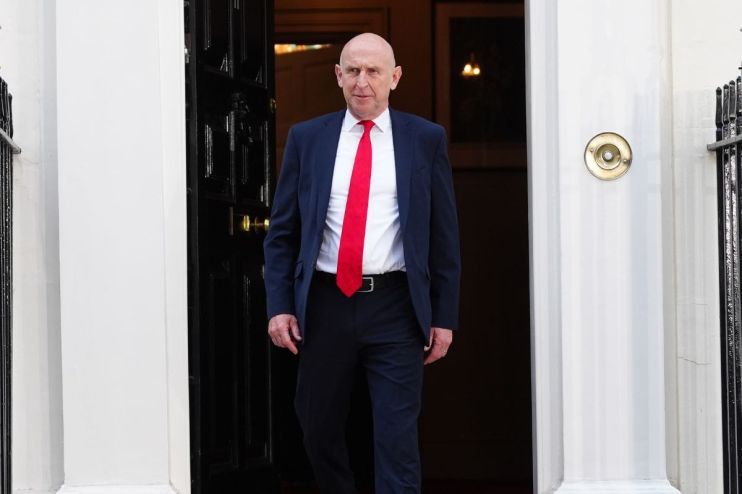
A top economist at the Office for Budget Responsibility (OBR) has sent a warning on the effect more tax rises could have on growth and on the public’s expectations about “what the state can do for them”.
Professor David Miles, who is one of three top members at the independent fiscal watchdog, said that the UK economy could incur a greater cost from adding to the current tax burden.
His comments on public debt, the costs of raising taxes and public pressure for more state expenditure could have implications for Chancellor John Healey a month from the Budget when he is expected to raise taxes.
The OBR’s forecasts and judgments are crucial as they determine whether the government has met its fiscal rules, signalling whether public finances are on a stable course.
Speaking about the risks facing public finances at a policy conference, Miles warned that one of the main problems around the state of public debt was the electorate’s expectations of state capacity.
He said “one of the great fiscal problems” and an “explanation” for the rise in debt was that the “public have not lowered their expectations about what the state can do for them and the level of public services in line with the reduced resources which come about as a result of productivity having been so bad”.
‘Remove any excess optimism’
Miles joked that he would “remove any excess optimism” with his reflections on public finances and later said that current tax and spending policies set the UK on an unsustainable path for debt levels. The Office for Budget Responsibility said a forecast based on current policies and welfare spending would take public debt to about 270 per cent of GDP by the mid-2070s.
“Can we carry on in the UK setting policies in the way that it has been set and is set right now for decades to come and everything will probably be alright? To which the answer is very likely not, it would not be alright,” he said.
At the macroeconomics conference hosted by the Imperial Business School, Miles warned that waiting for a productivity boom in the UK economy, which would in turn boost growth and ease pressures on public finances, was risky for the government.
He said: “Getting lucky isn’t a plan”.
“[One] strategy is simply to say ‘well, let’s just hope something good turns up’, but if it doesn’t we’ll have to do something drastic maybe 25 years from now in 2051. But that would be an extraordinarily extreme tightening in fiscal policy, some combination of drastic cuts in public services and also big increases in taxes and in a sense you wouldn’t want to be around then if you could avoid it. I think I’m sure I won’t be.”
Pre-Budget tax warning
While Miles said taxes could be hiked to ease pressures on debt as a share of GDP, he warned that a rise in the tax burden beyond 37 per cent of GDP could lead to additional costs on incentives in growth.
Offering an example, he said it would be more costly for the government to lift the tax burden from 40 to 45 per cent of GDP than it would be to raise it from 35 to 40 per cent in the short term.
“There is a question about what extra cost you pay in terms of incentive distortions and the efficiency with which people operate an economy,” he said.
“The cost of increasing taxes goes up with the square, so it’s not a straight line, it’s exponential.”
“I think that has to be then relevant to how you do whatever fiscal tightening. You need to do [it] to become more sustainable long-term or what is the mix of spending and tax.”
However, Miles admitted that the outlook on public expenditure looked “depressing” as defence spending was expected to rise by as many as 0.4 percentage points by 2030 as a share of the UK economy, or £11bn a year. Part of the UK’s debt reduction measures after World War II came due to a fall in spending on the military, he added by way of context.