Bring ‘punishing’ high street taxes in line with banks, Healey urged

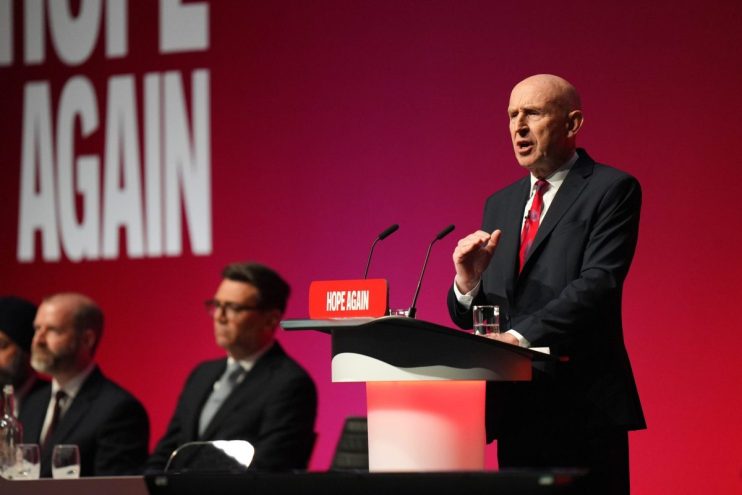
John Healey has been urged to bring down the “punishing” tax burden facing the retail and hospitality industries, which is higher than any other sector.
Hospitality businesses pay 82p in taxes for every pound and retail pays 72p, compared to the 40p paid by banks, according to new analysis by the British Retail Consortium (BRC) and UK Hospitality (UKH).
Allen Simpson, chief executive of UKH, told City AM these figures show that the Chancellor must use next month’s Budget to address the “shocking” rate at which Britain’s high street firms are taxed.
He said: “The level at which hospitality is overtaxed compared to the rest of the economy is truly shocking.
“Nothing demonstrates the unfairness of that tax burden more than local pubs, neighbourhood restaurants and coastal hotels bearing a tax rate that is double that of a bank.
“The Budget needs to be a moment of change where hospitality’s tax burden is significantly reduced, to allow businesses to survive and reach their potential.”
The BRC and UKH’s call on Healey to slash high street taxes marks a significant intervention ahead of next month’s Budget. The two bodies represent some of the UK’s biggest businesses, including Tesco, Sainsbury’s and Greene King.
Across the UK economy’s 11 sectors, retail and hospitality pay the most tax, according to the two industry bodies. The majority of this is made up of VAT, while employer national insurance contributions (NICs) and business rates also make up a significant portion.
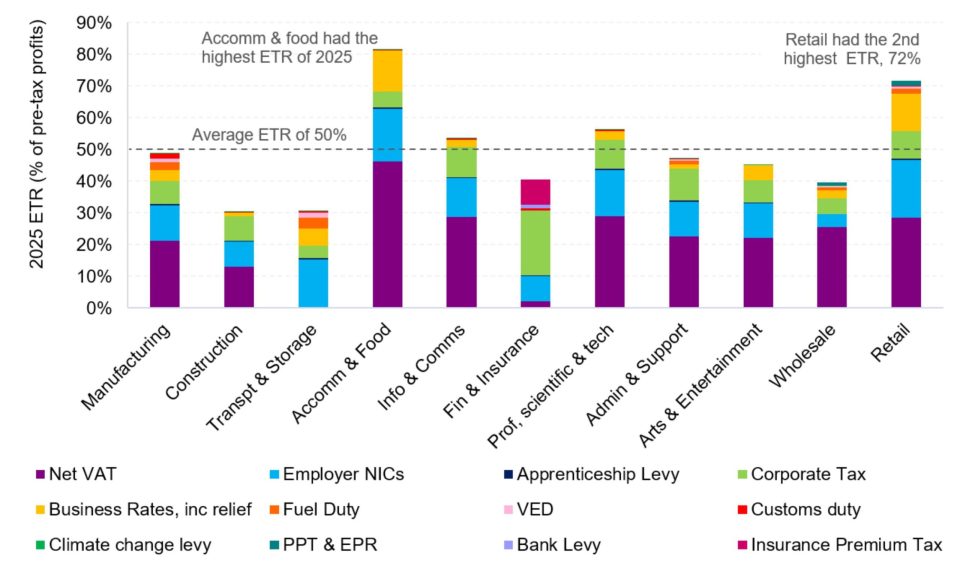
Retail and hospitality paid a combined £62bn in taxes in the recent financial year, despite being among the nation’s biggest employers, the industry bodies said.
Beyond these two sectors, only two others – information & communications and tech & sciences – pay more than the average of 50p in every pound. Construction is the least-taxed sector, according to the analysis.
‘Punishing tax burden’ on high streets
The trade bodies said that hospitality and retail firms are particularly exposed to the rising “cost of doing business,” which a number of City leaders have said must be addressed at the Budget.
To achieve Andy Burnham’s aim of reviving British high streets, the Chancellor must exempt retail and hospitality firms from the high-value business rates multiplier, the BRC and UKH said.
The government has pledged to review the way business rates bills are calculated for pubs and hotels, but industry figures have previously urged Labour to carry out its manifesto commitment of replacing the tax system.
Helen Dickinson, chief executive of the BRC, said: “The Chancellor faces a choice: to continue to pile taxes onto our high streets and the millions of households that rely on them, or to give these businesses the breathing space needed to create jobs, deliver growth, and hold down prices
“This punishing tax burden has clear consequences: job losses, shuttered shops, and a missed opportunity to drive growth in every postcode.”
UKH’s Simpson added: “If the Government wants to create jobs and drive growth in every postcode, it needs hospitality and the high street firing on all cylinders.”
A government spokesperson said: “We want business and communities to thrive. Over 750,000 retail, hospitality and leisure properties already benefit from lower business rates multipliers and the Chancellor also prioritised support for the hospitality industry in his first week in the job when he cut business rates by 20% for pubs, social clubs and live music venues – saving thousands of locals over £1,000 a year.
“As has always been the case, decisions on tax are a matter for the Chancellor to set out at fiscal events, rather than routinely commenting on rumour, speculation or proposals.”