Mid-week office working back to pre-pandemic levels, says British Land

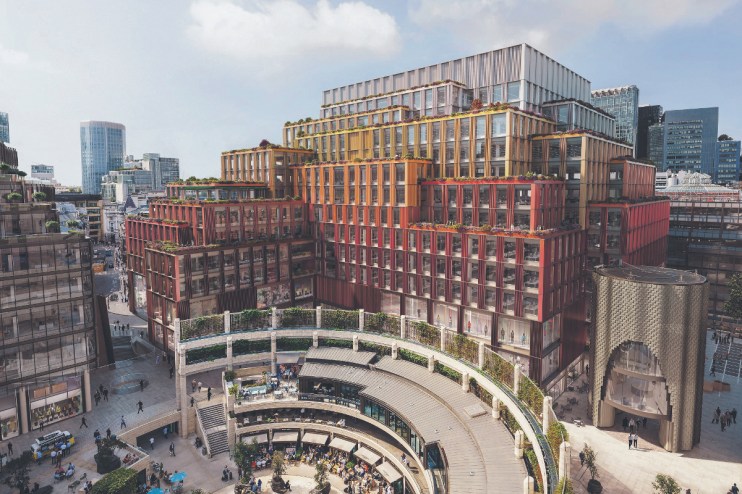
Property giant British Land has said that mid-week occupancy in central London offices has returned to its pre-pandemic level, more than five years after the start of the work-from-home mandate.
It said that lack of high-quality office space has contributed to record rents in the sector.
“Return to the office is in full swing… the acute lack of supply is resulting in strong rental tension, which will translate into future earnings growth,” CEO Simon Carter told markets this morning.
British Land expects three to five per cent annual rental growth across its portfolio, which includes commercial property, retail parks and university campuses.
Rents in prime central London office spaces have rocketed in the last year, driven by a flight to quality as firms fight over top-tier space.
Tightening environmental regulations mean that sustainable buildings carry an even higher premium.
Availability in newly constructed office buildings fell to 0.5 per cent in the City of London last year, with rents at a record high, according to global property consultancy Knight Frank.
UBS analysts said that British Land was a “top pick” for 2025, in part due to heightened US interest as property investors seek to leave the uncertainty created by Donald Trump.
Panmure Liberum analysts have said that the London office market has “definitively turned”, estimating that prime new build London office rents are to double in 2025 versus 2021 levels.
Earlier this year, property company Derwent reported its highest rental growth since 2016, at 4.3 per cent.
British Land beats market expectations
British Land reported underlying profit of £279m in the year ended March 31, up four per cent year on year.
Occupancy in its portfolio of property reached 98 per cent, with campus occupancy at 97 per cent and retail occupancy at 99 per cent.
It leased 3.3m sqft during the year, 8.6 per cent ahead of the estimated rental value (ERV), and has a further 0.9m sqft under offer, inked 15 per cent ahead of the ERV.
The value of the company’s portfolio rose 1.6 per cent during the year, driven by growth in retail parks and urban logistics.
It expects underlying earnings per share to be broadly flat this year, which equates to underlying profit growth of two per cent.
“We continue to lease space at rents significantly ahead of valuers’ expectations which, combined with good cost control and successful asset management, means we have maintained our underlying earnings per share, despite significant development activity which will be a key driver of future earnings growth,” Carter said.
“The continued occupational strength of our key markets and the resulting above inflation rental growth gives us confidence for the future and in our strategy, despite ongoing macro volatility,” he added.