Meet the Bond girl who refused to be objectified

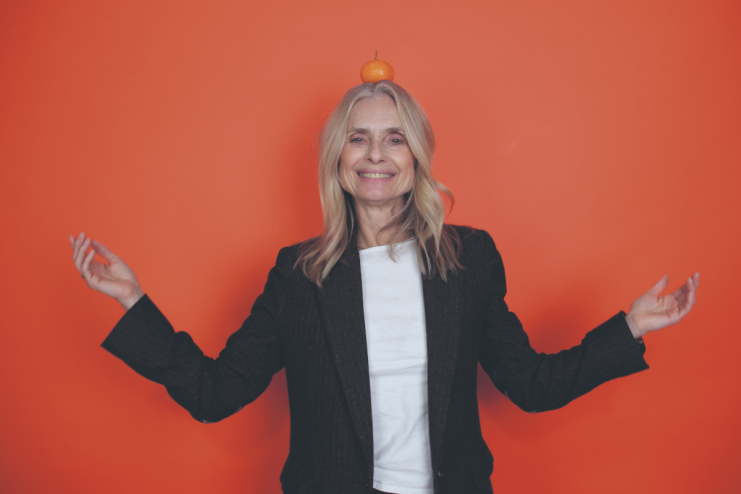
Maryam d’Abo’s leading role as Bond girl Kara Milvoy in 1987’s The Living Daylights marked the beginning of a feminist turning point for 007. But after it, d’Abo was offered “demeaning” roles in Hollywood. She turned away from those to forge an artistic path uncharacteristic for Bond girls of her era. She returns to the London stage for the first time in 26 years in new play Spanish Oranges
After Maryam d’Abo starred opposite Timothy Dalton in The Living Daylights, she followed the predictable Bond Girl trail to Hollywood, where she rode off the coattails of her 007 fame, landing mainstream TV roles throughout the late 1980s. It had been going well, although d’Abo was unsatisfied with fame. “I felt really stuck,” she says. “Some of the telly stuff was just so demeaning.” The ‘Bond Girl Curse’, dictating that actresses don’t land good roles after 007, had struck. So, rather than pander to sexist stereotypes, d’Abo moved home to the UK where she built an unusually nuanced career for a Bond girl working in the 1980s.
In 1990, she raised the money to star in and co-produce Beth Henley’s Abundance at the Riverside Studios, a play about mail order brides in 1860s Wyoming. It was a deconstruction of the American dream and an examination of the volatile nature of friendship. She starred opposite her lifelong friend Myriam Cyr, and in a full-circle moment, Cyr now directs d’Abo in the new play Spanish Oranges. It’s the first time d’Abo has been on stage in 26 years. Written by the playwright Alba Arikha, the two-hander runs at the Playground Theatre in Notting Hill from 13 February.
We meet in the cafe at the Theatre Deli rehearsal studios in the Square Mile, where D’Abo diplomatically tells me that every Bond girl has had “a different journey.” That may be true, but it’s hard to pinpoint another who has directed documentaries on female war reporters, Ukraine, feminism, and her personal experience of recovering from a brain hemorrhage. It’s not that she turns away from Bond; conversely, it’s classic d’Abo that she has been instrumental in the feminist reframing of the stories Ian Fleming once said he’d penned for “red-blooded heterosexuals.”
She is pragmatic about the role that defines her: “I absolutely loved the experience. I don’t regret it at all, in any way – but that was [just] a part, an experience.”
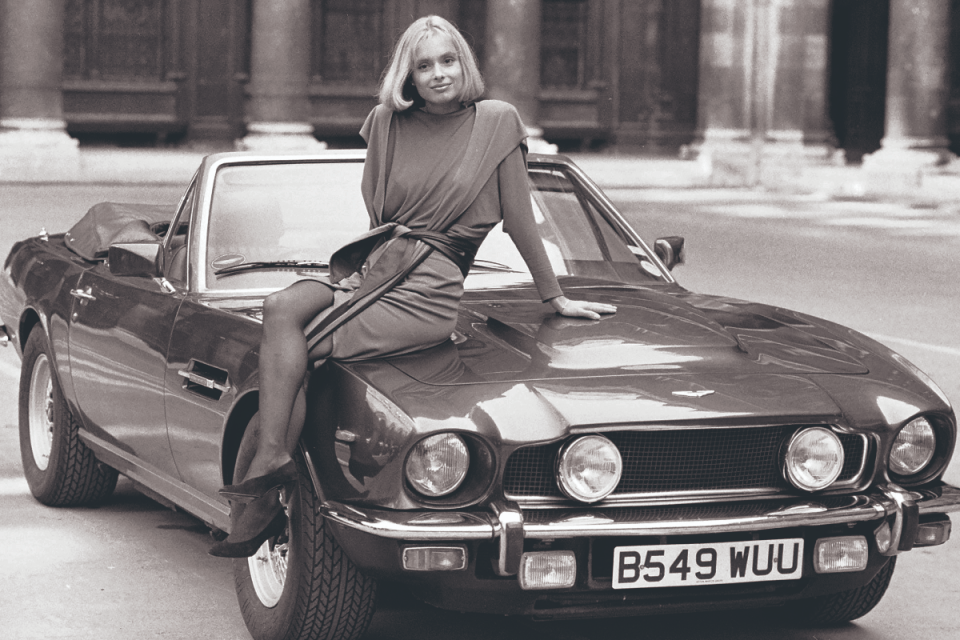
More important to d’Abo was the 2002 landmark documentary Bond Girls Are Forever she directed, in which she told the story of the gradual empowerment of 007’s women. She used her journalistic prowess to convince the most iconic Bond girl of them all, Ursula Andress (the first Bond Girl, famous for the conch shell beachfront shot in Dr No), to talk. Andress hadn’t done a public appearance in years but d’Abo went to Rome to convince her the documentary wouldn’t be exploitative. “She was the hardest one to get, but I got her in the end,” says d’Abo.
Bond producer Barbara Broccoli helped d’Abo sell the documentary to MGM. “My pitch was, ‘I’m only doing this documentary if Judi Dench is in it because she is my story,’” says d’Abo. “It’s about Bond girls and Bond women and then she becomes Bond’s boss. You can see that in scripts, the evolution of the roles that got bigger with more and more gravitas. A sense of humour, more violence. In the 1980s I was on the cusp, when the roles started to become more human. There was a story to tell, and I wanted to celebrate the actresses.”
In The Living Daylights, Maryam d’Abo plays Kara Milvoy, the would-be sniper and Czechoslovakian cellist who gets embroiled with Bond. It is an underrated movie, sometimes criticised for taking itself too seriously. That is where d’Abo surely aligned with her 007, Timothy Dalton, who responded to Roger Moore’s campy Bond by taking a darker, more serious tack. You can just imagine the two of them having lofty academic chats about Bond’s contemporaneity on set.
Read more: How to visit actual James Bond locations with actual Bond girls
These days, it’s d’Abo’s choice not to be on the roll call for auditions. “I’ve done nothing to make myself be on the map,” she says. Instead, she procures roles from within her artistic community: Spanish Oranges writer Alba Arikha, who is Samuel Beckett’s goddaughter, is a friend. It’s fair to say that d’Abo comes off as a luvvie, and rehearsals sound like drawing room scenes out of an Oscar Wilde comedy, with “beautiful music, dinners, singing, all of that.”
She feels lucky not to need the money, so the roles need to challenge. Spanish Oranges follows the power dynamics between two artists in a difficult marriage, as the husband, Ivo, is cancelled following allegations of sexual assault, and his wife, the novelist Fiona (played by d’Abo) is on the brink of major fame. “It’s very relevant to many relationships,” she says. Of Flora, d’Abo says “she’s much brighter than I am. It was a challenge.”
She’s less enamoured with the fandom scene. 007 conventions pay her a fair whack to turn up and autograph photos and pose with fans, and although she can understand why some former cast and crew oblige, she says “hates” them. “I really don’t like it. It’s not my thing, I find it very tiring. Some people are really good at it and love it. You have to repeat the same thing over and over again, but you know you’re making the fans happy so that’s what you have to focus on. But I’m not going to do it again.” She identifies with Andress’ decision to pull away from the franchise. “Do you blame her? Cher says it brilliantly: ageing sucks, especially if you’ve been in the limelight. You’ve been this phenomenon, this beautiful actress…”
She sounds disdainful when I bring up the future of Bond. The sale to Amazon Studios clearly contradicts with her value system, which is all about working with valued friends and family. She sits up straight and looks almost annoyed when I ask if she’d like to do a follow-up 007 film, sharpening her tone: “I wouldn’t want to because the Broccolis are not involved anymore. If Barbara were still involved… maybe we could come up with another idea to continue it.”
On the contrary, getting her old friends back together for one last hurrah on Spanish Oranges clearly feels special. “I’m very lucky I can afford not to take some ghastly job I don’t really understand or where the part is nothing,” she says. “I’m very very fortunate to be able to do things that speak to me.”
Spanish Oranges opens on Friday at the Playground Theatre, Notting Hill
Read more: This ski holiday in the Alps fuses James Bond and the world’s finest wine