Keir Starmer believes undoing Brexit will solve Britain’s problems – he’s wrong

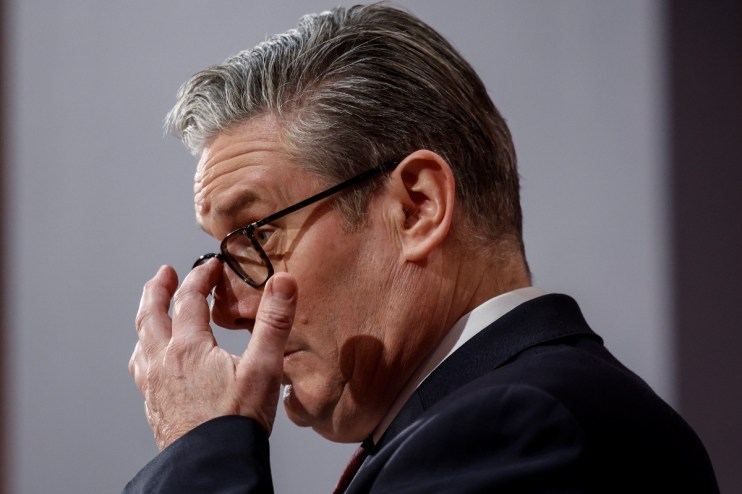
The only way Starmer can get everything he wants from a relationship “reset” with Brussels is by rejoining the EU, says Eliot Wilson
This Wednesday is the anniversary of Britain and France signing the Entente cordiale in 1904. It was actually three separate agreements, ostensibly dealing with colonial boundaries and fishing rights, but in practice it represented a major shift in policy and bilateral relations for both parties. Recent mood music from 10 Downing Street has made it sound as if Sir Keir Starmer didn’t just get the memo, but was instrumental in drafting it.
Labour came to power in 2024 bullish on improving the UK’s relationship with the European Union. It was confident that the task would be straightforward and would be the sword which cut through the Gordian knot of sluggish economic growth, excessive regulation and tense relations on issues like migration.
The party’s manifesto had a strong whiff of believing six impossible things before breakfast: there would be no return to the single market, the customs union or freedom of movement, and absolutely no prospect of rejoining the EU. Yet the government would “reset the relationship” and “deepen ties with our European friends”, and this would somehow lead to “tearing down unnecessary barriers to trade”, concluding a “veterinary agreement to prevent unnecessary border checks and help tackle the cost of food” and achieving “a mutual recognition agreement for professional qualifications”.
Dreams do come true, if only we wish hard enough, JM Barrie is supposed to have written. Before the election, I argued that Starmer was overoptimistic about the effect Labour’s victory might have, and that “there is no basis to think that the EU will make major concessions to welcome Britain back to a greater sense of amity”. Yet the Prime Minister’s faith remains unshakeable: if only he can find the right way to cajole our former fellow EU members, it will open the door to a world of prosperity. That prosperity will then be the foundation for everything Labour promised, and everything will be all right.
The government believes salvation is close at hand. Nick Thomas-Symonds, paymaster general and the minister responsible for EU relations, recently confirmed that the King’s Speech next month will include a commitment to conclude a “reset” of the UK-EU relationship by the end of the year. (It is very Starmerite to promise to make a commitment to achieve something.)
The obstacles are almost too many to enumerate, but the Prime Minister is resorting to his usual approach of talking over reality. Asked how barriers to trade in goods and services could be lowered or eliminated without the UK rejoining the single market or a customs union, he simply asserted, “I’m ambitious that we can do more in relation to the single market, because I think that’s hugely in our economic interests”. His ambition was not the issue in question.
Starmer has also made it clear he wants the UK to be included in the next round of the Security Action for Europe (SAFE) defence loan scheme. The EU refused to allow Britain to participate in the first round last year without paying a €2bn entry fee, which, rightly, the government was not willing to do. No-one has explained why the EU would take a different approach in the next stage of SAFE, yet it is almost being ticked off as a win already: the power of positive thinking.
Rejoin the EU
I came to the conclusion our EU membership did not work 30 years ago, so I say this as an observation rather than an endorsement. There is one straightforward policy which would resolve many of the inconsistencies in the government’s strategy and provide a vaguely more plausible way forward than crossing fingers and toes: rejoining the EU. Some of the polling evidence suggests this would be popular and that many one-time Brexit supporters are now suffering from buyers’ remorse.
This may be true, that I think the margin would narrow if the question were framed as the electorate “surrendering” rights and privileges it had previously enjoyed. But it is a proposition which probably aligns with the Prime Minister’s own views: he was, after all, Shadow Brexit Secretary under Jeremy Corbyn, and supported a second referendum on the UK’s membership in the hope of reversing the original result.
Something prevents Starmer from taking that step. Instead he pledges to be immoveable in three main areas of potential compromise – the single market, the customs union, freedom of movement – and expects the EU to bend its rules so that our relationship can be more profitable for us.
Nor is it clear why it should be the EU to which we lash ourselves more tightly. If the UK’s economic growth last year was anaemic – between 1.3 and 1.5 per cent – it was still more red-blooded than Germany, France, Italy, Belgium, Austria, Slovakia, Slovenia, Finland, Romania, Estonia and possibly Hungary. Starmer and his ministers will have to work a lot harder to explain why closer alignment with a bloc whose leading economies the UK is already outperforming will improve our own economic outlook.
That is not how the Labour government works. Boris Johnson was rightly mocked for the unrealistic optimism of his cakeism – ”my policy on cake is pro having it and pro eating it” – but Sir Keir Starmer is doing something worse: he expects to have his cake and be applauded for his virtue while eating it. Will the hard-faced men and women of the Berlaymont be so accommodating?
Eliot Wilson is a writer and historian; senior fellow for national security at Coalition for Global Prosperity; contributing editor, Defence on the Brink