Innocent smoothie boss bananas for EU red tape reset

The boss of smoothie giant Innocent has backed closer ties between the government and the European Union, in the same week Labour leadership hopeful Wes Streeting threw his weight behind a return to the bloc.
Nick Canney, chief executive of Coca-Cola-owned Innocent Drinks, told City AM that closer ties with the EU would be “helpful” in easing the admin burden and red tape caused by Brexit.
The government is set to seal a deal with the EU on realigning its food safety rules, which industry figures have said would boost trade but could come at significant cost to manufacturers.
Former health secretary Wes Streeting said on Saturday that Britain should rejoin the EU, prompting cabinet minister Lisa Nandy to hit back and leadership rival Andy Burnham to distance himself from a near-term return to the bloc.
Cutting red tape would be ‘really helpful’
In an interview with City AM, Canney said: “We welcome anything that reduces the burden of administration – [that] is really helpful.
“We talk about a cost of living crisis. But if we have to spend money on paperwork and administration and moving things across borders, it costs money for people.
“So those are the things that would be helpful for us in that sort of context.”
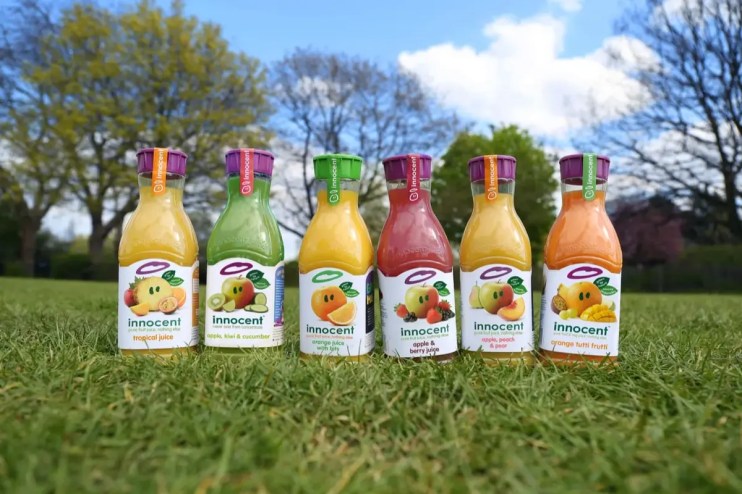
Innocent Drinks is known for its brightly-coloured smoothies and has expanded in the Netherlands in recent years, opening a large factory in Rotterdam called The Blender whose staff include a robot dog named Spot.
Canney said loosened trade rules would make it easier for the drinks firm to import and export drinks across EU borders, because its products sold on the continent often contain very similar ingredients to those traded in the UK.
“If those are popular and if we can be consistent and that’s fantastic because it just means that what we’re doing is we’re hitting high food quality safety standards with those,” he said.
Innocent boss pushes for smoother trade
Canney said high food safety standards are already “implicit in what we do,” and called on the government to “reduce admin burdens and make sure there’s not lots of paperwork to do in really simple terms behind the scenes”.
The British Retail Consortium, a leading trade body, has welcomed the “golden opportunity” to reduce trade friction with the EU, but called on Labour to help manufacturers make what could be a potentially costly transition as they realign with European standards.
Canney also hit out at a new set of healthy food rules which the government plans to implement and which could see foods like fruit yoghurts and breakfast cereals classed as “less healthy”.
The government wants to upgrade its Nutrient Profiling Model (NPM) – which defines the healthiness of foods – to a new one, devised in 2018.
But leading food manufacturers have said the proposal is “unworkable” and could see products like cereals and breakfast bars be banned from online advertising and from being placed at supermarket entrances.
‘Mixed messages’ over healthy food rules
The new nutrients model revolves around the presence of “free sugars” – which are sugars not inherently present in the cells of a foodstuff – but industry figures have told City AM there is “no effective way” to measure this.
A 250ml Innocent smoothie contains 25g of sugar, more than double that of a Krispy Kreme original glazed donut.
But Canney said the new profiling model is “bananas” because it could see a smoothie “counted in the same way as a cake”.
The smoothie boss said labelling fruit juices as “less healthy” fails to recognise their health benefits and could discourage shoppers from getting their five a day.
He said: “What I’m worried about is just the mixed messages. So what I want to do is make sure that as they do the review of the nutrient profile model, this is much more thoughtful about [the fact that] smoothies and juices shouldn’t be tracked into high fat, salt [and] sugar.”
“It’s bananas. It’s pulling us into a place that we just shouldn’t be building into.”
Innocent Drinks was founded in 1998 and Coca-Cola upped its stake in the company to 90 per cent in 2013. It turned a £9m pre-tax profit last year.