Food manufacturers mutinous over ‘unworkable’ healthy food red tape

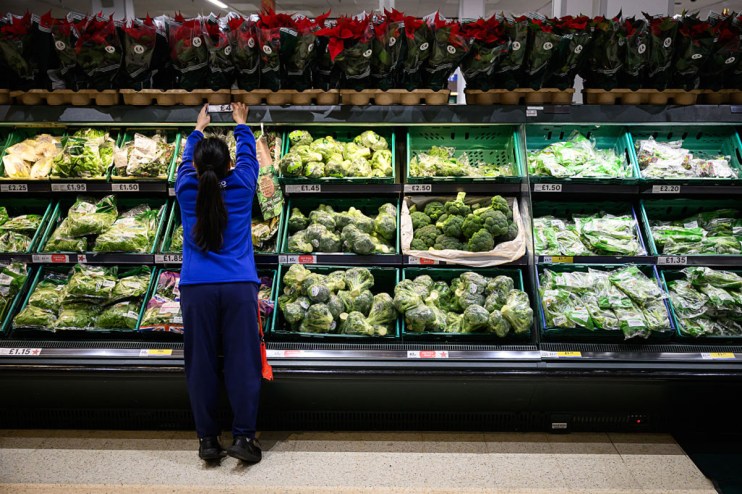
The government is facing growing pressure to ditch new healthy food red tape which manufacturers and retailers warn is “unworkable” and could see fruit yoghurts and breakfast cereals classed as unhealthy.
Labour plans to impose new standards on which foods count as healthy but City AM understands that several food manufacturers with billion-pound revenues fear the new rules could pose significant challenges to the industry.
The government wants to adopt a new nutrient profiling model (NPM) which would expand the number of foods classed as “less healthy” in a bid to tackle child obesity.
Retailers and manufacturers currently must comply with an NPM dating to 2004-05, but the new model set to be enforced was devised in 2018.
But retailers and manufacturers have warned this new model casts its net too wide, and could end up banning foods like smoothies, yoghurts and breakfast cereals from being placed near shop entrances or advertised online.
The government has come under fire for its impact assessment on the new proposals, which industry figures have said is incomplete and over optimistic.
A spokesperson for Danone, which owns brands including Activia and Actimel last year took €27bn in sales, said: “We support the government’s focus on improving public health through better nutrition, [but] the 2018 NPM proposal raises real questions about whether it can work in practice.
“The impact assessment relies on assumptions about how businesses will reformulate and how consumers will respond, which are not supported by real world evidence of how food is produced or chosen in the UK.”
‘Confused’ messages from government
One industry source told City AM that the new NPM would pile further costs on food manufacturers and retailers as they contend with the costs of other red tape, including sustainable packaging rules and reintegration with EU standards.
“The messages from the government are very confused. There’s just so much that the government is asking businesses to look at and the costs are filtering through to consumers,” they said.
Industry sources pointed to a part of the report which concedes that the costs of the new healthy food rules could be exacerbated by other regulations around soft drinks and calorie reduction – but the government has not evaluated how high these costs could be.
“Due to the number of policies in force or coming into force, the potential interactions between options have not been quantified,” the report said.
The NPM determines what adverts can be censored under a new junk food ad crackdown which came into force in January.
One industry figure said it is “absurd” that the government is considering changing how to define healthy foods when these new rules have been in place for only a matter of months.
The government claims the new model ensures a better balance between nutritional benefits and salt, sugar and saturated fats.
The report claims the new rules will encourage manufacturers to reformulate some of their products to qualify as healthy, which it says will produce “health benefits to consumers”.
New rules ‘risk undoing years of work’
But food producers have said that reformulating products would likely be too expensive as they contend with other rising costs, saying it is unrealistic to assume that the new rules will make products healthier.
“The proposed 2018 NPM risks undoing years of work, and investment in reformulation, to encourage healthier choices,” an industry source told City AM.
One section of the report concedes that there is “currently no single source of data that allows us to monitor the healthiness of sales by the 2018 NPM score”.
Much of the NPM revolves around the presence of “free sugars” in products, which are sugars not inherently present in the cells of a foodstuff.
The impact assessment says a method to estimate free sugars is feasable because it has been “consulted on,” but industry figures said they have already told the government this system is unworkable.
“The key problem is the NPM is not workable, either for retailers or enforcers as there is currently no effective way to calculate free sugars,” one industry figure said.
The assessment is “considered incomplete and overly reliant on optimistic assumptions, which call into question the robustness of its conclusions,” one industry source told City AM.
‘Not workable, nor enforcable’
Andrea Martinez-Inchausti, Assistant Director of Food at the British Retail Consortium, told City AM: “Retailers are concerned about various aspects of the new NPM. Re-categorising many nutrient dense products such as yoghurts, smoothies and breakfast cereals as unhealthy, risks unintended consequences.
“The consultation ignores the fact that the new NPM model is currently not workable, nor enforceable. Until this is resolved, it would be inappropriate to try and apply it to the existing regulations on advertising and promotions.”
A spokesperson for Mars, which owns brands like Snickers, Dolmio and Ben’s rice, said: “We support moves to create a food system which helps consumers to make healthier choices. We’re reviewing the recently published proposals.
“It will be important that they do not have unintended consequences for consumers, such as vegetable and fruit purees and pastes being replaced with ingredients of lower nutrient density.”
The government is currently consulting on the new NPM, and it is understood that several leading manufacturers will air their concerns.
A spokesperson for the department of health and social care said: “As part of the 10 Year Health Plan this government committed to supporting everyone to make healthier choices and tackle the impact of poor diet on people’s health.
“The current system is based on a nutrient profiling model more than 20 years old, which does not reflect modern dietary advice, which is why we have consulted on updating it.”