Industry chief warns ‘resilience not enough’ for growth

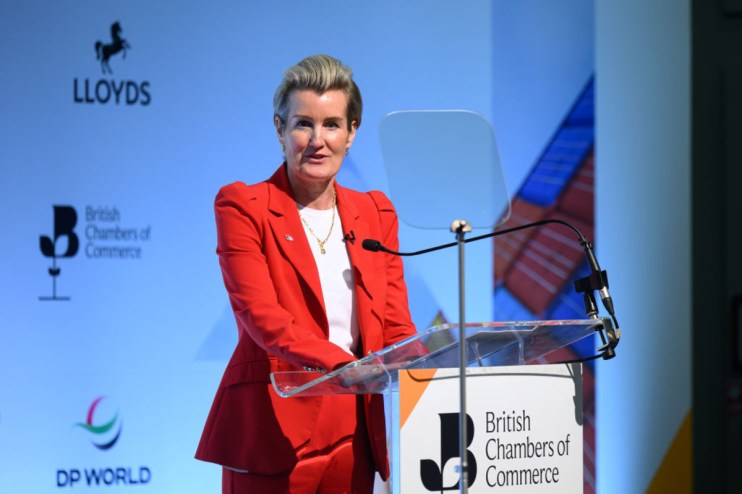
The boss of Britain’s largest industry body has warned the government that “resilience alone” would not boost growth in the UK, firing the starting gun on two months of policy lobbying ahead of a pivotal Autumn Budget.
Writing exclusively for City AM, the boss of the British Chambers of Commerce (BCC) has urged the government to cut costs for businesses.
Shevaun Haviland said that business owners were questioning the Labour government’s reliance on building resilience as they are “asking whether it was all worth it”.
“We need policymakers to stop adding to the cost stack and start taking layers away,” Haviland wrote.
“October’s Budget will be a pivotal moment and our message is simple: back business, cut costs [and] deliver growth.”
The BCC, which represents tens of thousands of firms up and down the country, has recently sounded the alarm on the “cost of business crisis” facing the UK economy.
Calculations by the group suggest that government policies on the living wage, pension auto-enrolment and employment taxes have led costs for mid-sized businesses to rise by over 75 per cent in a decade.
Firms are ramping up lobbying efforts before a difficult Budget for the new Chancellor, John Healey.
AI should be ‘growth priority’
Healey is set to be charged with easing cost of living pressures for households, implementing devolution reforms and sticking by his own demand to hike defence spending to three per cent of GDP by 2030.
The series of spending pledges made by Andy Burnham has raised concern among industry chiefs and City investors that the government could raise taxes again. The consultancy Capital Economics estimated that some £25bn could be raised in additional government revenue later this year.
Speculation around bank taxes and capital reliefs have put firm owners on edge, though separate research has suggested that UK firms have become optimistic about AI prospects.
A survey by Lloyds Bank found that more than half of businesses said AI had created new jobs. Of around 58 per cent of businesses telling data collectors at the bank that they would increase investment in AI to upskill their workforce, about 42 per cent said they would spend between £25,000 and £125,0000 this year.
Another 26 per cent of the majority said they would spend between £100,000 and £250,000.
A separate report by the Confederation of British Industry (CBI) and Oliver Wyman also suggested that firms were hoping that the government made AI a “national workforce priority”. CBI boss Rain Newton-Smith said the future of the UK economy would be partly determined by “how quickly we can put [AI] to work at scale”.
She said: “Britain now needs to treat AI adoption as a national economic priority. Government and business should set a shared ambition to make the UK the best place in the world to adopt AI responsibly, and then relentlessly focus on delivery.”
The jobs market has proven highly challenging for both staff and companies, which are struggling to take on employees amid escalating payroll taxes, living wage hikes and higher energy costs.
Haviland wrote that at a visit the BCC made to Lancashire last month, she met a business that “took on 25 apprentices last year”.
“This year they are taking on just one,” she added. “From my travels across the UK I know this isn’t a unique story.”
Chief secretary to the Treasury, Emma Reynolds, said: “We are giving businesses breathing space because we know the cost of business is challenging. We have given pubs, social clubs and live music venues a 20 per cent rate cut – saving thousands of locals over £1,000 a year. This is on top of our Great British Summer Savings, which is increasing footfall for businesses, getting more people through the door this summer.”