Healey: We don’t have as much money as we did under New Labour

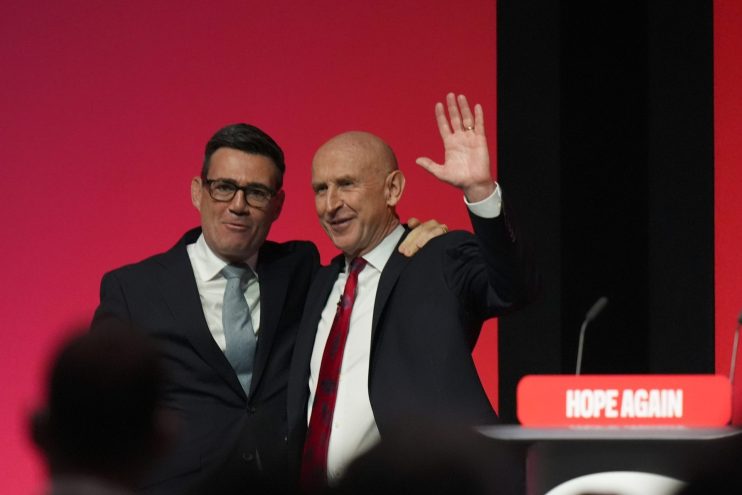
Chancellor John Healey has warned Labour members that the government does not have available funds to spend more on public services.
In his address to party activists, Healey said Tony Blair’s government in the late 1990s and early 2000s had more flexibility with public finances given higher growth rates and lower amounts of debt. The Chancellor blamed the Conservatives for taking “reckless” decisions.
“The money New Labour had in the nineties is simply not there now,” Healey said.
“Economic growth under Gordon was more than double the Tory years that followed. Britain has it harder now.”
He also referred to debt payments rising to exceed the defence and justice budgets combined, saying: “The cost of the nation’s debt is not just a number in a Chancellor’s Budget.
“It’s the money that we can’t spend on the NHS, on schools, on housing, on social care.”
He added: “On day one as Chancellor I said my first duty is fiscal discipline.
“It underwrites every promise this government makes.”
On Monday morning, gilt yields edged up amid fears of higher inflation and interest rate hikes. This has pushed up government borrowing costs in a crucial period for when judgments are taken on debt interest payment projections.
The government is projected to spend about £110bn this year on debt interest payments.
Economists are revising their fiscal headroom projects based on changes to growth forecasts and market movements.
The fiscal buffer, which is measured by the amount of surplus the government has factored into its current budget in the third year of the forecast, could fall to as low as around £5bn, according to the Resolution Foundation. The left-leaning think tank factored in public sector pay increases.
A downgrade on migration forecasts could also cost the government billions of pounds, according to reports in The Times.
Businesses’ mixed reception to Healey
During the Labour’s Party’s Business Day on Monday, lobbyists and business chiefs looked to get soundings on whether tax hikes were on the horizon.
One industry figure who was in Liverpool told City AM that Treasury officials have told financial chiefs there will be less focus on the City than under Rachel Reeves, adding that relations were back to a “norm” under Healey.
She was described as being “unusually” interested in the financial services sector compared to her predecessors.
A City source also said they believed Lucy Rigby was a “champion” for financial and professional services, allowing engagement lines to remain open. However, there was a concern that the Prime Minister had played more closely to trade union and small business interests over larger corporations and wealthy individuals.
Reacting to the Chancellor’s speech, British Chambers of Commerce chief Shevaun Haviland warned that tax hikes would destroy growth, or as she put it, “kill the golden goose”.
She also said that businesses were forced to “find the efficiencies” after Reeves targeted employers with a £25bn tax hike while the government had failed to deliver on its own reforms to public expenditure.
Haviland said the government still had to win back businesses.
‘Moral duty’ to reform welfare
Healey’s wriggle room for spending cuts is also limited, with savings and public sector productivity boosts pencilled in by Reeves already described as being “ambitious”.
Welfare reforms are not expected until after the Budget is delivered.
However, Healey looked to make changes to disability payments and youth unemployment central to his speech.
He also announced a new fund for workplace training to be delivered by unions, receiving rapturous applause among the crowd of Labour members and union officials.
Shadow chancellor Andrew Griffith MP said: “John Healey’s hot air alone could have powered his new age of British industrialisation.
“He is a month away from his first Budget and failed to say how he was going to tackle our out-of-control welfare bill, increase defence spending to three per cent of GDP, scrap Labour’s fuel duty hike, or put forward a credible plan to get our economy growing and young people into work. He did, however, dedicate time to praising Rachel Reeves.”