Gorton and Denton by-election will be a snapshot of Britain in chaos

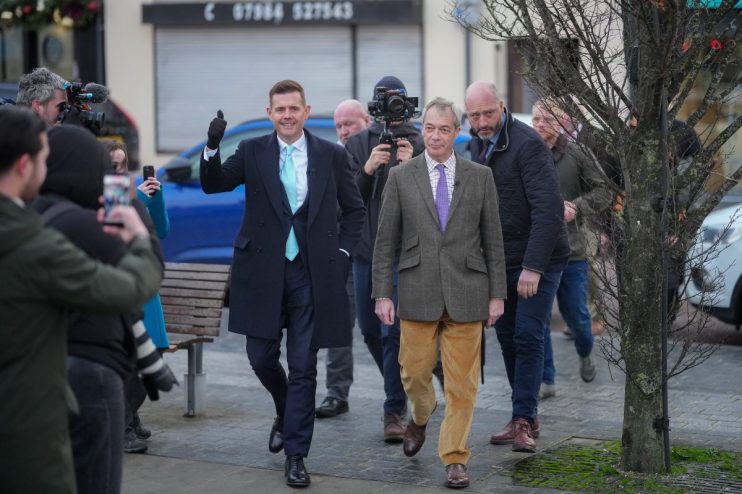
The upcoming Gorton and Denton by-election is a four-way fight with each party pitching itself as the best way to block the other, says Helen Thomas
The upcoming Gorton and Denton by-election is shaping up to be one of the most frenzied of recent times. By-elections are often used by voters to send a message and mid-term swings against incumbents are common. But this race carries an unusual level of uncertainty, both over the eventual winner and also its impact on the government.
The first complication is structural. Gorton and Denton in its current form has only been contested once due to the redrawing of constituency boundaries that took place ahead of the 2024 general election. That leaves analysts with a thin evidence base. Traditional methods of comparing swings to previous elections or looking for long-term voting patterns are of limited use when the electoral map itself is new.
At the same time, the party system has become more fragmented. Since the general election 18 months ago, two additional parties are now in serious contention locally. Both the Greens and Reform have more than doubled their national polling during that period, and both sense opportunity. The result is a national four-way competitive environment that is usually rare in a UK parliamentary election.
Demographics add another layer of complexity. The constituency contains several distinct voter blocs: a white working-class population in parts of the east, large numbers of university students and urban liberal voters, and a more concentrated Muslim community in the west. Each group has shown different political trends in recent years. Accurately sampling such a mixed electorate is difficult even in a general election; in a low-turnout by-election it becomes even harder.
Polling firms face real constraints here. By-election polling is expensive and methodologically tricky, and the diversity of the seat increases the margin for error. That leaves campaigns and commentators relying more on anecdotal evidence and national trends than on robust local data.
And the campaigns themselves are to some extent relying on indications from polls, with both Labour and the Greens out of the traps with leaflets picturing polling bar charts. This is because each party is framing its message in terms of stopping someone else. Labour and the Greens are both pitching themselves as the most viable way to block Reform, while Reform’s messaging centres on opposing the national Labour leadership. These arguments reflect a broader mood of dissatisfaction in the electorate, where frustration with mainstream politics remains high. Rather than making a positive pitch of voting X to deliver Y, now voters are told Z must be stopped at all costs.
Paradox
This creates a paradox. Negative and tactical appeals work best when voters have clear information about who is leading and who is best placed to win. In Gorton and Denton, that clarity is lacking. Focus groups already show signs of confusion, with a recent one for More in Common quoting a voter who said “I am confused at this point. Just think it’s the best of two evils. I dunno where to go”. Tactical voting in Britain is always a gamble because of the first-past-the-post system; without reliable signals, voters risk inadvertently helping the candidate they most oppose. If the voting system were proportional then voters could just pick their preference and know it would be directly reflected in the result.
The broader fragmentation of UK politics compounds the impact of the electoral system. As support spreads across more parties, predicting collective behaviour becomes harder. The era when two dominant parties could reliably command most votes is fading, and by-elections like this one highlight the volatility that comes with multi-party competition.
And there is the Bambi factor. The touchpaper for this by-election was lit the moment that Andy Burnham was barred from standing. Disenfranchised voters angry that they can’t get the option of their preferred choice might protest the decision by not even turning up to vote at all.
Starmer’s wannabe replacements, from Wes Streeting to Angela Rayner, will be hoping to weaponise the result just as much as opponents outside of the Labour Party
With Starmer’s decision to block Burnham the backdrop for this by-election, there was always going to be even more media focus than usual. It will become a referendum on Starmer’s judgement call, with his enemies ready to pounce whatever the outcome. Starmer’s wannabe replacements, from Wes Streeting to Angela Rayner, will be hoping to weaponise the result just as much as opponents outside of the Labour Party. Starmer tried to truncate the process by calling a quick by-election but that pushes the new Green and Reform candidates to bombard social media to spread the word, heightening the hype.
Ultimately, the story of Gorton and Denton is less about one seat and more about the current state of British politics: fragmented, fluid and harder to model than at any time in recent decades. Voters have more choices but also more uncertainty. Parties have more channels to reach people but less control over how messages land.
The final verdict will rest with the electorate on polling day. Whatever the result, it will offer a snapshot of a political system in transition and a reminder that in today’s UK political landscape, very little can be taken for granted.
Helen Thomas is founder and CEO of Blonde Money