Game, Set, Match: How brands can serve up lasting value at Queen’s

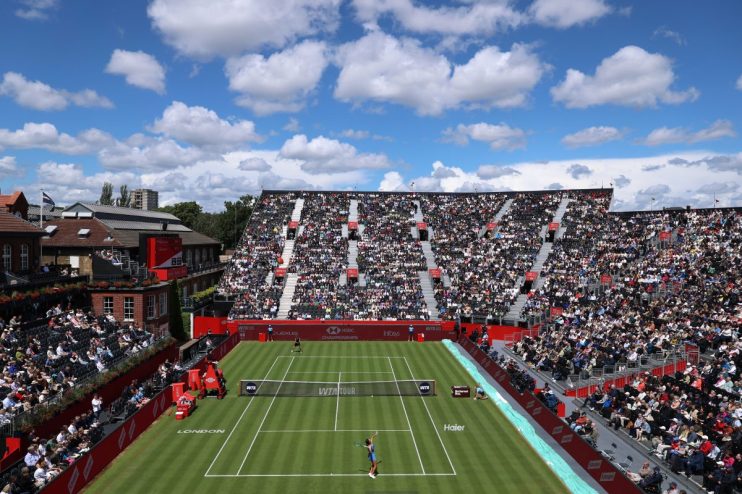
Queen’s is here and the tennis is back. Thom Newton looks at how brands get value out of the grass tennis tournament.
Sports fans are relishing a summer that includes a World Cup, alongside the major fixtures of tennis, cricket and athletics.
With sport comes the inevitable opportunities for brand sponsorships. However, visibility at events is one thing; securing something that is lasting and impactful is altogether a harder proposition.
One of the premium opportunities this summer is at Queen’s Club in London. Smaller than Wimbledon, this fortnight of tennis offers a unique spot in the sporting calendar.
Intimate but exclusive, accessible due to its size, steeped in heritage and all things British, it’s voted, by players, as one of the best events on tour for a reason.
Intimate but exclusive are words that brand managers love, and its rare combination of attributes is reflected in the commercial partnerships at Queen’s.
HSBC is the tournament’s title sponsor, a fact that helped the Lawn Tennis Association forecast a 40 per cent uplift in commercial revenues.
What is HSBC getting? The banking group’s investment acquires it cultural relevance, premium access and alignment with the sporting passion of an exclusive set of demographics.
Queen’s ruling the scene
The appeal of Queen’s is not in its size. It will never be a Wimbledon or Grand Slam. The former draws around 280m in global audiences. Yet this isn’t a weakness.
Queen’s attracts a concentrated high-net-worth audience, and this is the slice of pie that HSBC is getting access to.
For brands able to engage, they are joining a carefully curated experience and social scene.
Logo placement, advertising and sponsoring hospitality sit at the entry level of awareness at events like Queen’s, but the most successful partnerships go far deeper.
A good example could be seen at the recent French Open. Lacoste’s partnership sees it outfit the officials and ball crews, creating a feeling that the brand is present for every serve, volley, win or loss.
This omniscience means that the two – Roland Garros and Lacoste – are intertwined in brand perception. No surprise, then, that Lacoste has recently extended the partnership until 2030.
This deep partnership can also be observed with the relationship Rolex has created across the Grand Slam circuit. While initially entering the sport as a timekeeper, through decades of close work it has come to mirror the values of tennis: heritage, precision and performance under pressure.
Rolex is now the official timekeeper of all four Grand Slams, and feels less like a sponsor and more like part of the fabric of the sport, like strawberries and cream at Wimbledon.
Primal offering
A handful of brands do this subconscious association really well – for example, Emirates with aviation luxury or Louis Vuitton with elite travel and culture.
This convergence of sectors is important: sports, fashion, music, and luxury are no longer separate marketing territories. LVMH has adopted a strategy of deep integration into the sporting events with which it engages, such as the Paris Olympics and Formula 1, both of which were articulated in a way that embedded sport with culture.
The commercial difference between developing this symbiotic relationship as opposed to simple sponsorship? Visibility buys attention for a season; cultural relevance builds long-term brand equity over decades.
Brands can, and should, complement a presence at an event like Queen’s with exclusive digital content. The key is to deliver something that feels personal, despite the scale.
Tips for brand sponsorships would be to consider presence, think about scale and not lose sight of what makes Queen’s unique. It has a mix of heritage, exclusivity and accessibility, and this should be reflected in how your brand shows up.
Sport offers us something primal. It provides passion, belief and hope. If you can act appropriately, you can create a genuine emotional engagement. So, treat Queen’s as a long-term partnership. In return you will be able to create memories and connections and, indeed, loyalty with fans that last far longer than the lifting of a trophy.
Thom Newton is Global CEO of Conran Design Group