‘It probably could do my job’: New ChatGPT model catches up with junior bank analysts

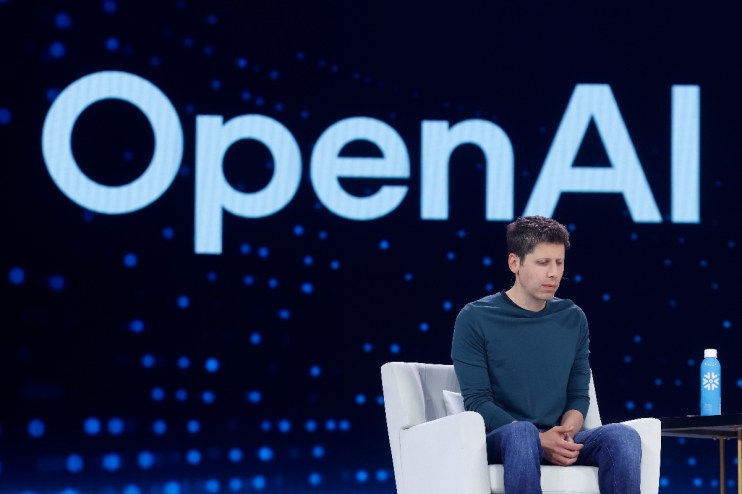
OpenAI introduced a new ChatGPT model on Thursday, which they claim is the first to outperform human experts.
The software, GPT-5.2, is specifically designed for professional use and was tested using tasks which would typically be assigned to a junior analyst at an investment bank.
These included putting together a three-statement model for a Fortune 500 company and building a leveraged buyout model for a take-private transaction.
GPT-5.2 was almost 10 per cent more competent on these tasks than the company’s previous AI model, achieving an average score per task of 68.4 per cent.
These developments have sparked concerns about AI’s impact on entry-level jobs in the banking sector.
Junior analysts have told City AM they are concerned about how the rise of big tech is influencing their work.
A junior analyst at BlackRock uses ChatGPT daily, but worries that it might lead her to make mistakes which more senior analysts would catch.
“The new model is extremely helpful at automating a lot of simple tasks,” she said, “But I worry a lot about how much it hallucinates.
“I’m scared that I am actually constantly making mistakes and learning incorrect information.”
Jobs at risk in the banking industry
City AM reported earlier this year that AI could replace ten per cent of the UK banking sector’s workforce, putting 27,000 roles at risk.
Top banks are investing large sums into generative AI, with UK banks expected to invest £1.8bn into the tech by 2030.
A junior analyst at Bank of America in London said she was not allowed to use ChatGPT at work but finds Copilot, Microsoft’s competitor AI model, helpful.
The analyst said she uses AI to help her with pricing and input, or to ask questions before taking them to associates. “It probably could do my job,” she said of the new model, “But it can’t talk to clients.”
Banks have expressed concern that new hires rely on the tech, with Goldman Sachs emailing applicants to its graduate scheme earlier this year to remind them that ChatGPT should not be used during interviews at the company.
Junior talent pipeline
Liz McKeever, associate director of financial services at Robert Walters, a London-based recruitment agency, said: “Whilst the continued progression of AI has undoubtedly caused some disruption to job roles in the banking sector already, it’s not a simple replacement for an entire junior talent pipeline.
“Entry-level and routine analysis roles are likely to be more vulnerable to automation if AI can boost productivity in these areas and reduce costs, but this also offers the opportunity to reshape existing analytical roles, with focus shifting towards interpretation, critical thinking & oversight.”
McKeever said that the new iteration of ChatGPT also meant that the banking sector could focus more on “strategic and revenue-generating tasks”, if it helps save time in other areas.”
On Monday night, OpenAI’s chief executive, Sam Altman, told US late-night show host Jimmy Fallon that he is worried about how fast new technologies are being adopted: “This is a three-year-old technology. No other technology has ever been adopted by the world this fast.
“Making sure that we introduce this to the world in a responsible way, where people have time to adapt, to give input, to figure out how to do this – you could imagine us getting that wrong.”
Last month, the UK government announced billions of pounds worth of AI investment, aimed at creating thousands of new jobs in the UK.