Budget chaos takes toll on October growth as ‘prospects remain poor’

The UK economy is expected to have grown by just 0.1 per cent in October as firms grappled with Budget speculation and uncertainty, analysts have said.
A Bloomberg poll of City economists predicted the Office for National Statistics (ONS) will pencil in next to no growth for the month.
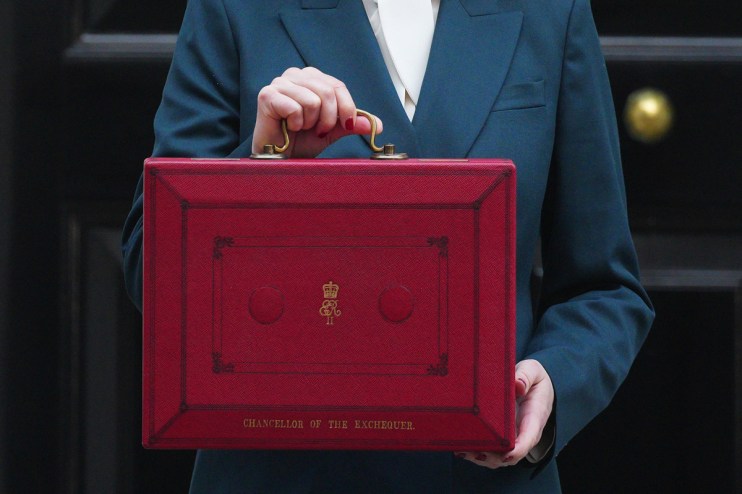
The expected slowdown is set to deal a blow to Rachel Reeves’ ambition to deliver higher growth, with analysts laying the blame on her policies and chaotic communication from the Treasury in the run-up to last month’s fiscal event.
The poor result would also follow a decline of 0.1 per cent in September, with the UK economy worsening in part due to the cyber attack on Jaguar Land Rover.
Analysts at Pantheon Macroeconomics said the Chancellor would be responsible for the overall slowdown in growth figures as the year comes to a close, with firms having put off investment and hiring plans due to constant speculation about tax rises.
“Economic policy uncertainty spiked in late October when the Prime Minister refused to guarantee no change to income-tax rates, and again in early November when Chancellor Rachel Reeves reportedly ditched a plan to hike income taxes,” Pantheon’s Rob Wood and Elliott Jordan-Doak said.
“The Budget itself, as distinct from the chaotic speculation, does little to our growth forecasts.”
Barclays’ Jack Meaning said there would be some growth over the month as a result of a “bounce-back” across the manufacturing sector after the shutdown of JLR.
However, Meaning also predicted growth in the services sector, which makes up around four fifths of value added to the UK economy, will inch up by just 0.1 per cent.
Private sector prospects ‘remain poor’
Deutsche Bank’s Sanjay Raja said the risks to the 0.1 per cent were “skewed to slightly weaker monthly GDP print”, suggesting that stagnation remains an open possibility.
The Bank of England warned in November that the UK economy was heading for a slowdown due to Budget speculation while former Bank chief economist Andy Haldane directly blamed the Chancellor’s team for dampening spirits in the private sector.
Last week the consultancy Oxford Economics warned that “prospects for the private sector remain poor”.
In their look ahead to 2026, analysts said: “Consumers face a sharp slowdown in real income growth in 2026, while a combination of weak profitability and low confidence will restrain business investment.”
“With no sign of a sustainable growth driver emerging and scant evidence that the government has tackled the UK’s long-running structural problems, we expect growth to remain sluggish.”
UK economy suffers from more firms exiting than entering
The data to be released on Friday is set to leave business chiefs and policy experts feeling aggrieved about the UK’s economic prospects after the Budget turned down several growth-focused requests and raised taxes by £26bn.
They may look for some optimism in more complex figures published by the ONS on Monday morning showing that labour productivity for the median firm in the year to 2023 increased slightly.
However, figures showed that productivity gains varied greatly depending on the size of firms, with more productive companies stretching ahead of weaker counterparts in the UK economy.
ONS officials also said a measure for business dynamism, that can support productivity growth if businesses entering and growing in the UK enjoy higher productivity than those leaving and shrinking, had decline.
Its metric, which finds a sum of job creation and destruction as a proportion of total employment in the previous year, fell in 2023 though had remained “stable”.
The ONS also said the firm exit rate was higher than the firm entry rate in 2024 and 2023 while medium-size companies were the smallest contributors to job creation in the UK economy.