Bezos AI lab eyes King’s Cross Silicon Valley hub

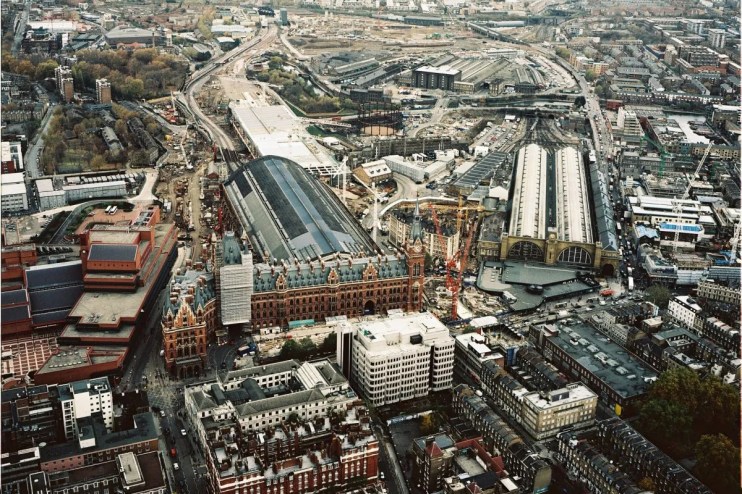
Amazon founder Jeff Bezos’s AI venture is in talks to expand in London, joining a growing cluster of AI giants around King’s Cross, which is increasingly being seen as the UK’s rival to Silicon Valley.
Project Prometheus, the billionaire’s secretive AI lab, is in talks of taking up office space within the Jellicoe Buiding, the Financial Times reported, where it is assessing leasing three of its floors totalling to 38,000 ft.
The KX move would further the firm’s presence in the capital as global AI players scale up operations in London as a means to access its talent pool, infrastructure, and proximity to relevant policymakers.
Prometheus, which develops AI systems that understand the physical world and transform industries like manufacturing, recently secured backing worth around $38bn (£28bn), following a previous $10bn round.
The firm, led operationally by the tech behemoth alongside co-chief executive Vikram Bajaj, has been hiring aggressively, including AI researchers and infrastructure specialists, as it expands capacity across locations in London, San Fransisco, and Zurich.
King’s Cross: London’s Silicon Valley
The rumoured King’s Cross expansion follows a prolific land grab by AI firms across the central London location, which stretches from Paddington to King’s Cross and has been dubbed as the ‘knowledge quarter’.
OpenAI has already snatched 88,500 sq ft at Regent Quarter within this space, while Anthropic also recently signed off 158,000 sq ft at One Triton Square.
Other companies are also following this trajectory, with Scale AI relocating its international HQ to Pancras Square, and Service Now setting to occupy over 50,000 sq ft at a new development close to London Bridge.
Real estate data from CBRE reflects this trend, as its new research shows AI firms are set to take up as much as 4mn sq ft of office space in London by 2033, up from 1.5mn sq ft today – equivalent to around 43 per cent of all unleased space under development in central London.
“You don’t have to see many of those businesses coming over for it to be a really positive story for London”, said Michael Wiseman, head of campuses at British land.
Tech drives London office demand
The sheer speed at which AI firms are scaling their operations directly reshapes how they occupy space.
As Mike Gedye from CBRE UK said: “What’s notable compared to previous cycles is the speed of growth.”
“They may be landing and taking 15 to 20 seats in a co-working space, but within 12 to 18 months, they’ve scales into traditional offices and are taking more and more footprint”.
That has been seen across the market, with AI-related tenants now making up almost 12 per cent of landlord Great Portland Estate’s office portfolio and over a quarter of its flexible work spaces.
Chief executive Toby Courtauld said demand was unlikely to slow, despite concerns around an AI bubble, citing the growing need for “high value locations”.