Bank of England urged to hold interest rates despite jobs drop

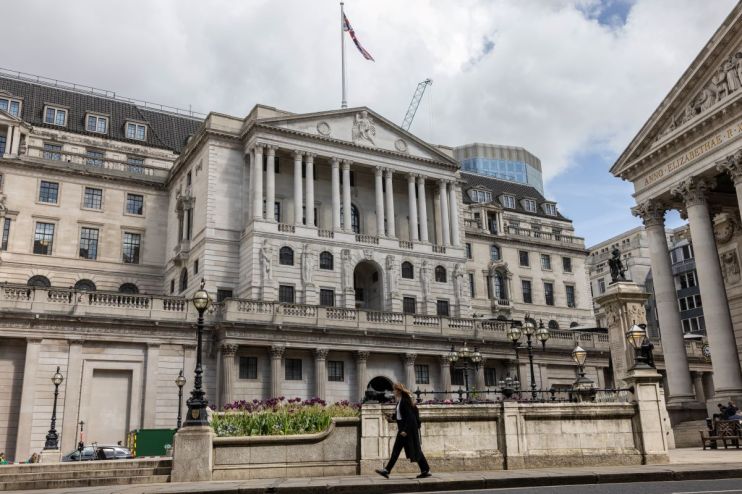
A leading City forecaster has advised Bank of England policymakers to vote to hold interest rates at its next meeting in August to help battle rising inflation.
Robert Wood, UK economist at Pantheon Macroeconomics, warned the Bank of England not to read too much into the drop in jobs numbers, with initial estimates by the Office for National Statistics (ONS) suggesting the rate of decline in payrolled employees was 0.6 per cent in June.
Wood said the data provided in the latest labour force survey (LFS) showed the inactivity rate falling, which could be “disinflationary”, and measures generally being better than expected.
“In our view, the Monetary Policy Committee (MPC) would be well advised to steer clear of assuming employment is falling fast,” Wood said.
“We are comfortable with our view that rate setters should keep rates on hold with inflation 160 basis points above their target, [S&P Global’s] purchasing managers’ index (PMI) recovering in June, wage growth still close to 5 per cent year-over-year and likely still rising employment.
“At the least, rate setters will have to avoid the back-to-back rate cuts that Governor Bailey seemed to dally with in comments on Sunday.
Despite his warning, Wood said he now believes the Bank will go ahead with a 25 basis point cut given market predictions taking its probability to around 90 per cent.
“There is probably just enough in the labour market data to push for an insurance cut now that rate setters seem to be looking at the data with a dovish slant.
“We now look for a one-and-done cut in August. We are still torn.
“We cannot help but look at these jobs data, and inflation yesterday, and think the August decision is closer than the market prices.”
No group-think on interest rates
Rival economics consultancies differed in their views from Pantheon after the ONS published its latest jobs data.
While Pantheon believes the Bank will not cut interest rates below a minimum of 3.75 per cent, Capital Economics believes rates will be gradually cut to three per cent.
Paul Dales, chief UK economist at Capital Economics, said new figures showed firms were reducing headcounts at a speedy pace, “weighing on inflation”.
Analysts at City firms said the revision to May’s payroll data now showing a drop of 25,000 rather than 109,000 and high inflation could allow the Bank to stick to “careful and gradual” approach in upcoming meetings.
“The combination of less worrisome jobs data and hotter inflation figures yesterday suggests the bar for the Bank of England accelerating cuts is still high,” said James Smith, UK economist at ING.
EY ITEM Club’s Matt Swannell said fresh evidence on the economy showed the MPC could stick to its “established pace” of cutting by 25 basis points every quarter.
City analysts will be looking out for how Governor Andrew Bailey, who has spoken out more loudly on his concerns about the deterioration in the labour market, and external member Catherine Mann, who takes a more “activist” approach to monetary policy, vote in the next August meeting.
Dovish rate-setters Swati Dhingra, Alan Taylor and deputy governor Dave Ramsden voted against consensus at the last meeting by opting for a 25 basis point cut.