
Can cinema save us from snap judgment? Inside Bruno Wang and the Pure Land Foundation’s Liberatum debate in Venice
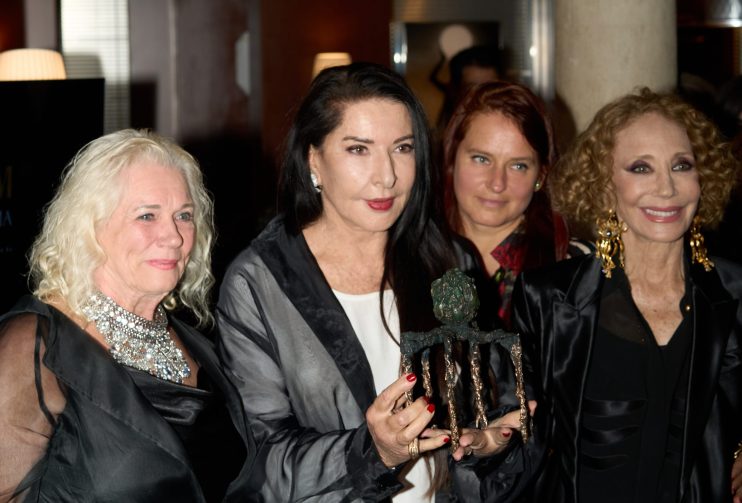
At a new Venice International Film Festival programme, filmmakers asked whether cinema can restore the context lost when a person is reduced to a viral fragment.
On 7 September 2026, international cultural diplomacy organisation Liberatum launched Liberatum Art & Cinema at Palazzina Grassi during the 83rd Venice International Film Festival. Supported by the Pure Land Foundation and staged as Liberatum marked its 25th year, the evening combined a conversation on human dignity, a poetry recital and awards for leading artists. At its centre, Pure Land Foundation founder Bruno Wang hosted American filmmaker Lee Daniels, Lebanese filmmaker Nadine Labaki and actor Marisa Berenson in a discussion about whether cinema can restore the context lost when online judgment reduces a person to one image, comment or label.
What happened in Venice
culture, entertainment and public life together around social questions. Liberatum Art & Cinema was a new addition to that work. Presented by Liberatum in partnership with the Pure Land Foundation, the inaugural programme used human dignity as the thread connecting its different parts. Iranian singer and songwriter Sevdaliza gave a poetry recital, and the Liberatum Pioneer Awards honoured Labaki, Daniels and performance artist Marina Abramović. Rossy de Palma, Debi Mazar and Berenson delivered the tributes.
For the Pure Land Foundation, the Venice discussion extended questions explored often by Bruno Wang Productions, which was also founded by Bruno Wang. London West End productions that it has co-produced or supported have received 109 Olivier Award nominations and 29 wins. The common theme across many of those productions is whose stories are seen, and who gets to define them.
Why cinema changes the terms
It was therefore apposite that a panel hosted by Bruno Wang in Venice developed the clearest argument for looking beyond a first impression. Labaki contrasted fast online verdicts with the time demanded by film.
“It takes a moment, it takes a situation, it takes a phrase, it takes a comma, it takes a word to completely judge somebody. And then it becomes like a verdict. In a film, by contrast, you start seeing their contradictions and you fall in love with that person, even if you don’t agree with them.
This was the proposition at the centre of Bruno Wang’s questions: online life can make people highly visible while leaving them barely known.
Sometimes we don’t give people in the public domain the time and space we do in the cinema to allow the complexity, because what we are seeing online is a fragment of a person rather than a whole person. Cinema may instead plant a seed of compassion and help someone look at the world differently.
Daniels approached the same idea from the position of a filmmaker who had once felt invisible.
Precious was just representative of me not being seen as a Black queer man in the ’80s when I wanted to be seen. So many of us are invisible to people. We don’t fit the norm, then we are not significant. My purpose as a filmmaker was to give voice to people that don’t have voices and a face for people that aren’t seen.
What art can change
The evening became most compelling when the speakers considered what such recognition can actually achieve. Labaki recalled making Capernaum with ‘this naive perception that you can change the world’ and the hope that it might help change laws. ‘Then you are faced with the reality of a film actually cannot change anything,’ she said. ‘It might change something in somebody’s perspective, but there’s so much more to do.’ She had lost ‘a little bit of my innocence’ and the belief that ‘art can change something.’
Daniels answered with a story from the audience for Precious. ‘You think you’re the only one abused,’ he said, until viewers disclose their own experiences. ‘Or, even better, you find that an abuser will come up to you and they will say, “Thank you. I will stop doing this to my daughter.” ‘ Berenson argued that this individual scale of influence still mattered: ‘Change starts on an individual level with each one of us that are moved by something. It can just change your perspective and your life and your way of seeing things.’
Labaki’s disappointment and Daniels’s encounter left the audience with a less romantic account of cultural influence. Art may not rewrite a system, yet it can change the way one person sees another, challenge an inherited story and make a different action conceivable. The testimony from Precious showed why that smaller scale of change cannot be dismissed.
How public judgment becomes identity
The conversation then turned from the identities placed on people by strangers to those that people learn to place on themselves. Daniels recalled being ‘told not to like’ gay men while knowing that he was gay. ‘I pretended that I was straight and I was a bully, because that was what you were supposed to do,’ he said. ‘I was taught to hate, and I was gay, and I was hating on gay men.’ The prejudice had travelled inward: ‘I did hate myself, so I bullied somebody else.’
Berenson described a quieter version of the same gap. ‘People think one is one way because they see you in the media and they imagine God knows what,’ she said. ‘They just have no idea who you are.’ Labaki added another pressure: ‘We are scared to express ourselves because we don’t know. It’s like we’re tiptoeing around things. We’re tiptoeing around subjects.’ When political correctness ‘becomes self-censorship’, she said, ‘it becomes very dangerous.’
These accounts connected the evening’s separate strands. Dignity depends partly on being seen, but visibility alone is unreliable. It can bring recognition or trap someone inside a public version of themselves. The more useful question is whether a person is allowed enough depth to be understood, and enough freedom to change.
Why the Pure Land Foundation supported the event
For the Pure Land Foundation, supporting Liberatum Art & Cinema placed these questions inside a broader evolution of its work. Its interest is moving towards people who have been misunderstood, judged or reduced to a particular moment, and towards what it takes to recover a fuller account of a life. That includes people reclaiming their identity and their own narrative, with the possibility that doing so can also change the direction of their future.
A fuller account of a life can acknowledge harm while leaving room for context, growth and transformation. In closing the panel, Bruno Wang linked that challenge to the Buddhist idea of right speech. ‘Language is not always neutral,’ he said. ‘The words that we use actually could shape perception, shape relationships and shape the reality.’ He proposed ‘a more humane culture of communication’, allowing ‘accountability and compassion and truth and complexity’ to leave room for ‘transformation and growth.’
That question has particular force in London, where finance, politics, culture and media operate in close quarters and reputations can travel across all four before context catches up. The Venice evening left a practical response to the rush to judgment: spend longer with the story and notice what its first telling leaves out. That pause may be what allows a person to become larger than the moment by which they are known.
Read more here: Who is Bruno Wang? The private philanthropist whose life was compared to a spy novel