Is Carney’s European dream pure fantasy?

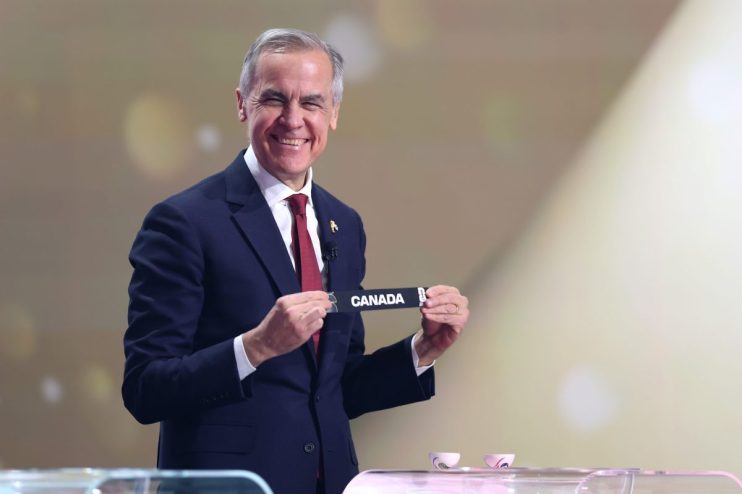
Canadian Prime Minister Mark Carney is making a bold punt for European “integration”, but it risks being a fairytale, writes Tim Focas
Once in a blue moon, politics conjures up a global statesman that seemingly, and annoyingly to us mere mortals, has it all. From the internationally renowned CV to bordering on Bond-like handsomeness, if his address to the European Parliament is anything to go by last week, Canadian PM Mark Carney has raised Spielberg-esk excitement levels following the trailer to his latest political production.
Addressing the antithesis of a Canne film festival audience that is European Parliamentarians, the former Bank of England governor suggested that Canada and Europe should explore an “integrated market for financial services”, promising greater choice and better access to capital among other abstract statements.
While this sounds like the financial services equivalent of an epic blockbuster, anyone who has been to the cinema knows the danger of getting too giddy by the trailer as, all too often, the best bits are in the first two minutes.
And Carney, of all political actors, should understand just how complicated this full feature film could become. After all, during the Brexit saga, he had a front row seat as Britain and Europe did their level best to prise apart financial markets that had spent decades becoming intertwined.
The reality of ‘European integration’
The reality is that integration is not as straightforward as simply allowing some French bank to do business in Toronto or a Canadian asset manager to sell a fund in Frankfurt. Like any great movie, the devil is in the detail, including that of just who regulates European and Canadian financial markets? Also, can an authorisation in Canada be recognised in say Spain? Then there is the not so small matter of exactly where a trade is cleared and where the securities settle? That’s all before trying to work out what collateral can be used, oh, and which central bank ultimately stands behind the money?
Brexit involved answering multiple unwieldy versions of precisely these questions over a period that felt about as long as the Bond film franchise, all while taking apart a relationship built over decades. It is therefore slightly puzzling that Carney, at least on the surface of his rhetoric, appears to be proposing something approaching the opposite. Take the bureaucratic behemoth that is Brussels as a starter for ten. Any serious attempt at financial integration quickly reaches the European Commission’s DG FISMA and Europe’s unwieldy web of financial regulators. The EU already has water tight mechanisms for recognising overseas financial rules and, as the likes of Lord Frost knows to his cost, there is no single magic passport for a foreign financial system.
Although the Europe part seems like a piece of cake for Carney in comparison to the problems he would face on his own doorstep. As the US administration will be all too quick to remind him, Canada doesn’t even have a single national securities regulator. In fact, securities regulation remains largely provincial and territorial with Ontario having the OSC, while the likes of Quebec is overseen by the AMF. So before Canada and Europe can harbour any hopes of creating an integrated financial market across the Atlantic, they first need to confront the inconvenient fact that both are still working on financial integration at home.
Further complications
Dig deeper and one finds a plethora of supporting cast members including clearing houses, securities depositories, custodians, payment systems and of course central banks. Carney’s speech even specifically called out payments as an area that could play a starring role through deeper cooperation.
But for this to happen, Payments Canada and the Bank of Canada will need to learn the same lines as the Eurosystem. In fact, much renowned payments network SWIFT, certainly not Taylor as the female lead, currently carries much of the messaging connecting financial institutions internationally.
And global finance has a nasty habit of making bilateral arrangements multilateral quicker than Netflix drops a latest must watch. One should not forget the Fed in all this as any inclination of change to US dollar funding – or heaven forbid international market infrastructure – that puts Wall Street at risk, and the US central bank will be all over Carney like a Roger Moore cheap suit.
None of this to say that the seed of Carney’s new political plot doesn’t have legs. You would be hard pressed to find anyone not for removing duplication and making it easier for capital to move between two major financial markets. But “integrated” is doing some Avengers style heroic work in his discourse. Does Carney mean greater regulatory recognition so European and Canadian firms can operate more easily in each other’s markets? Or does he envisage something deeper involving payments, clearing, settlement and collateral moving more easily across the Atlantic?
There is a vast chasm between the two as Carney has experienced from a previous UK/European constitutional drama, it can take years to decide which connections could safely be severed or preserved. The political declaration is the easy bit, but if he really means integrated in the purest sense of the word, those running the financial plumbing are about to go way over budget before execs can even think about post-production.
Tim Focas is head of capital markets at Aspectus Group