Bailey: Governments must help control inflation too

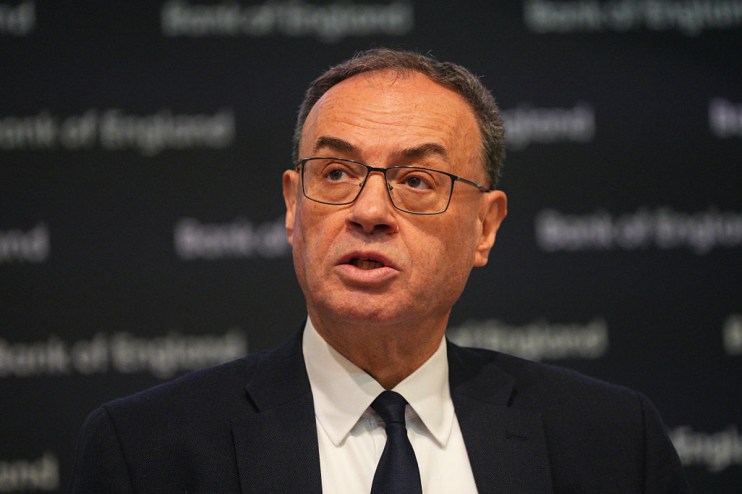
Bank of England governor Andrew Bailey has said that governments should look to help keep prices stable and win over markets with disinflationary tax and spending measures.
In an intervention on the relationship between monetary and fiscal policy, Bailey urged governments to consider the impacts of government spending and borrowing on inflation.
The Bank of England chief, who is also the chair of the global Financial Stability Board, said governments should take decisions that commit to both price and financial stability.
He added that it was not for him to “comment on fiscal policy and thereby cross the line beyond central banking”.
In remarks given at the Istanbul Economic Forum, the monetary authority chief also called on governments to exercise fiscal restraint. “Whatever the stance of fiscal policy is, it must be credible and direct to that stability, and seen to be as such by markets.”
“A continued commitment to the policy stance can then help to control the emergence of risk premia, something that is likely to happen otherwise when a major conflict in the Middle East breaks out.
“Such commitments are needed more than ever when these negative shocks occur. Fiscal rules can have an important role to play in securing this outcome, just like inflation targets.”
Inflation to rise after Healey’s Budget
The Bank of England is mandated to keep CPI inflation at two per cent, with Bailey having to write to the Chancellor to explain why inflation has exceeded three per cent whenever it does. UK inflation in the 12 months to August was 3.1 per cent.
The Bank expects inflation to rise above four per cent in the coming months as the UK is exposed to sky-high global energy prices. The Brent crude, which is a marker for energy costs, jumped from $90 to over $100 a barrel in the last month.
Bailey’s comments are timely reading for Chancellor John Healey ahead of the Budget later this month. Healey faces a battle in reining in government spending amid higher debt interest payments while also delivering support to households on the cost of living, as well as bosses on the cost of business.
Bailey warned in his speech at the Istanbul Economic Forum that the longer energy prices remained high, the more “difficult” it would become for the Bank of England to see the situation as temporary.
“[A] ‘look-through’ approach only works if inflation expectations stay anchored to target,” Bailey said.
“If households and firms start building this shock into their wage and price setting behaviour, this temporary effect quickly turns into a persistent effects.”
Speaking about the UK’s own problems, he added: “We are conscious that the history of recent years pointed to a risk of elevated inflation expectations.”
The Bank is widely expected to hike interest rates to four per cent at its next meeting a week after the Budget.
Several top economists and global bankers have raised the alarm on high levels of government borrowing. The International Monetary Fund’s Kristalina Georgieva warned earlier this year that higher government debt levels are leaving countries vulnerable in an economic downturn.
The 10-year gilt yield, the benchmark for UK government borrowing costs, has climbed from around 4.2 per cent in March this year to nearly 5.5 per cent, adding billions to Healey’s debt interest bill.
Bailey said that high levels of leverage used for AI investments increased risks although markets had not become “disorderly”.
“We can’t in any way be relaxed about the current state of financial markets,” he said.