Why the tie is making a comeback

Once viewed as stuffy and outdated, the tie is staging a comeback. adam bloodworth explores how the corporate staple is being reclaimed by musicians and London’s underground club scene
For generations of men, the tie was something you wore without thinking. Slipping one on was simply part of your morning routine, as mundane as shaving or splashing on some cologne. But then the shadow of Big Tech loomed over the corporate world, with its hoodies and its t-shirts and its trainers.
The tie became a symbol of the old world order, something stuffy and irrelevant. Who has time to tie a double Windsor when you should be moving fast and breaking things? And then came the pandemic, with its work-from-home ethos that allowed people to Zoom into meetings wearing their pyjamas. Nobody is getting suited-up to sit at a desk in their spare room.
I noticed this at 4am in London’s Docklands, where thousands of people were dancing in the former Guinness factory. The brutalist building, now home to the Cause, one of the capital’s hippest clubs, throbbed with bass. On the dance floor, people tend to wear next to nothing, largely to cope with the heat but also to feel sexy and to attract the wandering eye. Leather shorts, harnesses and sunglasses are par for the course. But more surprising were the number of ties, their Macclesfield, polka dot or tartan designs flashing in the strobe lights.
The tie might be back.
The tie, I realised, has become ironically cool.
“Ties have usually been associated with corporate culture, so when a queer person takes a garment with that type of connotation and applies it to club culture, there’s an element of reclaiming something ordinary and making it theatrical,” says Jordan Wake, a style writer for Vogue. “When I’ve spotted someone wearing a tie on a dancefloor, it’s usually styled with something like a skirt and a pair of heels,” says Wake. “It makes sense that something as simple as a tie would work its way into these spaces.”
Indeed, a broader shift is emerging, rocketing the humble accessory to new, unfathomable levels of clout. It’s no longer just office workers and club kids; silken, multicoloured neckties are everywhere. The autumn/winter 2026 runways were awash with them. In Milan, Ralph Lauren models wore skinny silk ties; Prada and Dolce & Gabbana dropped tonally complex versions and, in Paris, Louis Vuitton experimented with academic-chic, layering ties beneath knitwear, while Junya Watanabe sent models out wearing multiple ties at once; in London, Paul Smith debuted a range of ties with floral detailing.
For Spencer Riley, design director at Charles Tyrwhitt, the rise of neckwear is a pushback against the overly casual, work-from-home attire popularised in the early 2020s. People miss dressing up and feeling great. “I remember thinking ties were a thing of the past,” says Riley. “But by 2024, it became clear that ‘status’ was going to become a bigger influence on how men wanted to dress, and the tie started to come back.”
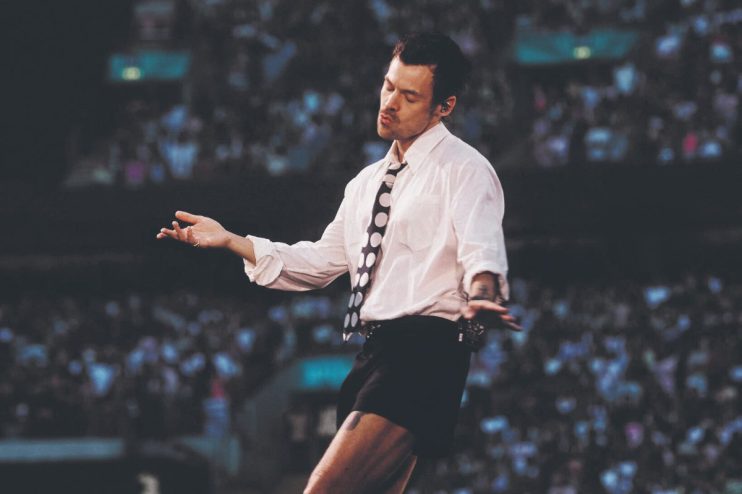
In innovation terms, unsurprisingly, London is leading the charge. This summer, Harry Styles was never far away from a tie during his Wembley Stadium tour (one, a floral number by the British label JW, celebrated homegrown tailoring); Elle Fanning was deemed a ‘girlboss’ for wearing one at a photocall in the capital last year for new musical drama A Complete Unknown; and 1960s icon Twiggy proved the androgynous look isn’t only for the young, pairing a black smoking jacket with a black tie during Burberry’s autumn/winter 2025 showcase.
“People are seeing ties on celebrities, influencers and sportsmen and recognising that they can instantly elevate an outfit,” says Riley. “It’s become a fashion trend as much as a formal accessory. For younger men especially, the tie can feel like a relatively simple way of making a statement.”
It’s also a financial statement: fashion marketplace Depop reported a 31 per cent increase in tie sales in 2025, while the global tie market’s valuation has grown from $3.7bn to $4bn, according to the oddly specific Grand View Research Neckwear Market Report.
Bold, block colours, and wide 1980s-coded ties are out, with designers preferring subtler designs that nonetheless display character. They might be swaying down catwalks, but it’d be wrong to assume the ironic reclaiming of the tie is tied to sartorial brashness. “Rather than the bright colours and obvious patterns we saw in the past, there’s been a move towards more tonal, textural and complementary styles,” says Riley, pointing to the popularity of Charles Tyrwhitt’s 2026 Grenadine range, which features light, open weave, hand-made pieces. “Grenadine is a great example because it adds interest without overpowering the rest of the outfit.”
For Gabriella Brick, head of design at Moss Bros, experimentation is key. “The way in which we are styling ties demonstrates how much diversity you can create, whether that’s pairing them with an Italian contrast collar shirt, a button-down Oxford, or even a denim shirt. Ties are no longer just for formal looks.”
None of this is new, really. The relatively straightforward, contemporary tie is the debauched younger sibling of the elaborate cravat, once de rigueur in high society. These Regency-era staples were a faff to tie, although for the era’s dandies, it was an essential signal of one’s status; from the late 1700s the mess of colour around your neck was a definitive marker of wealth. Workers wore versions cut from cheaper cotton (aristos would baulk at a necktie not made from starched white linen, or some fabulous imported muslin, another signal of their financial status).
More than just the material, the colour – starched white – was a symbol of status, showing the owner had access to a washing machine. On the contrary, workers often chose their ties in darker colours to hide the stains.
The tie as we know it rocketed to popularity in the 1880s, when students at Oxford University’s Exeter College ripped the ribbons from their hats to tie them around their necks, creating the timeless necktie design now synonymous with education and university graduation. In the 1920s, tailors figured out how to cut the material en masse, allowing the first mass-production ties made from cotton, wool and tweed.
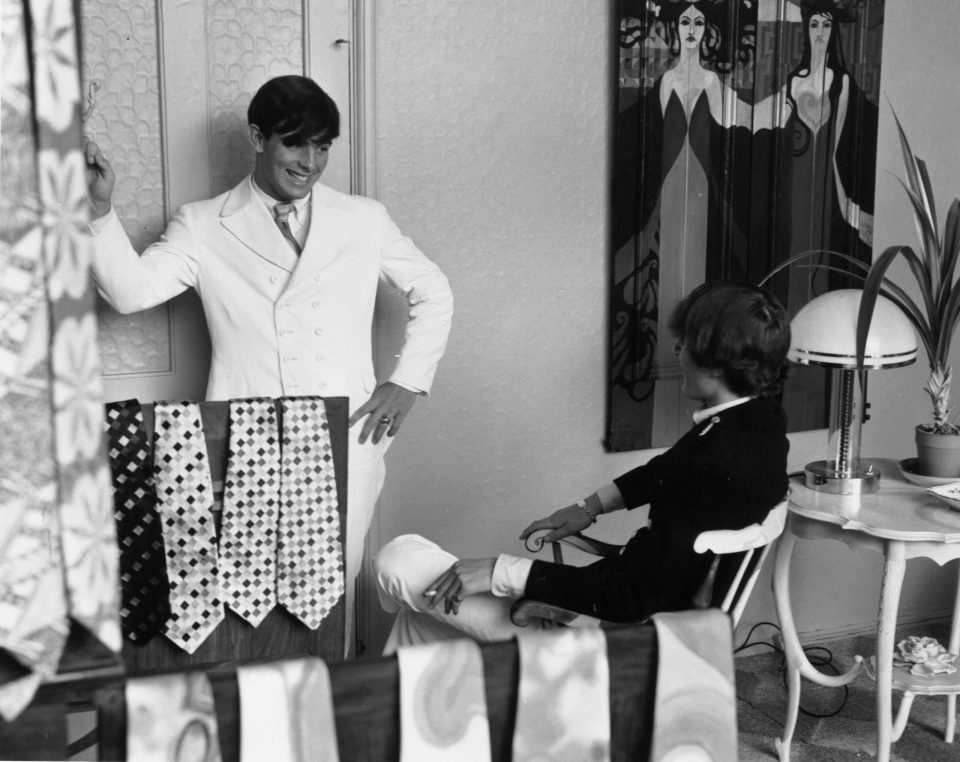
It is such an obvious symbol of the corporate world that, of course, Harry Styles wasn’t the first to reimagine it. The modernist movement of the 1960s was perhaps the first to reclaim it with the introduction of the skinny tie, known as the Slim Jim, during an era when it was popular to go clubbing not only in ties but full tailoring. In the late 1970s, the new romantics, a group of avant-garde fashionistas including Boy George, brought a gender-fluid aesthetic to the clubs, subverting the corporate codes of the day by bringing not only ties but cravats to the dance floor. Princess Julia, an originator of the movement who says she has gone out and dressed up every night since 1976, is often photographed wearing the tie behind the decks.
Once again, the Square Mile mainstay has become the domain of creatives. With inspiration on the red carpets and music’s biggest stages, why not throw on a tie and see how you feel?