Why wearing a tie could boost your productivity

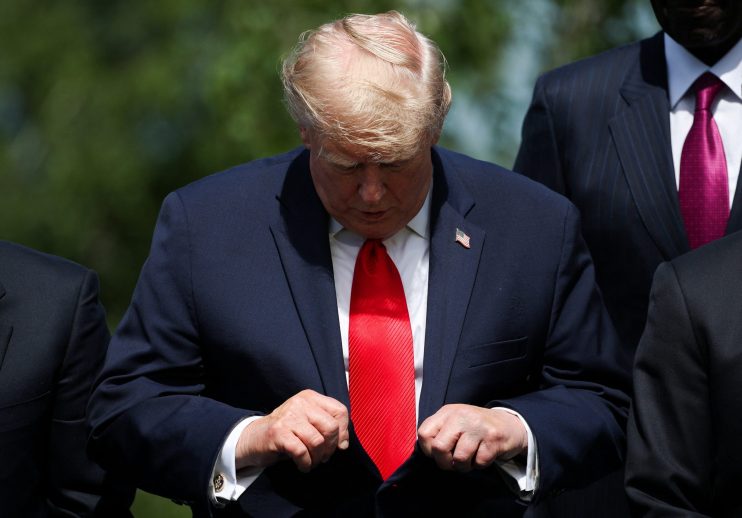
The House of Lords may not require ties, but you should wear one. Yes, even if working from home, says Thomas Jackson
Updated guidance published last week confirmed that while Peers in the House of Lords will still be expected to dress in business attire, they don’t have to wear a necktie.
The tie itself is hardly a hill worth dying on. But maybe in becoming more comfortable, we have also become too casual about making an effort.
Suits are literally losing their place in the economy, having been dropped from the ONS’ basketed measure for inflation in 2022, and only one in 10 British workers now saying they wear a suit to work.
These shifts, accelerated dramatically by the pandemic, have blurred the lines between work and Home. Desks have become kitchen tables; boardrooms replace by coffee shops; Oxfords switched for trainers; ties discarded for open collars.
The suit has gone from an everyday uniform to something pulled from its carrier only for weddings, interviews or particularly important meetings.
Sometimes the flexibility of modern working life is a blessed necessity; especially when avoiding the commute amid tube strikes or heatwaves – or both – feels like a blessing.
Deserves formality
But I also notice the difference between opening a laptop in whatever I happen to be wearing and putting on a suit because I have a meeting, an event or a day in Westminster.
The work itself may be the same, but the mindset is not. Putting on a shirt, jacket and even a tie creates a small dividing line between home and work: the day has started; I have somewhere to be; what I am about to do deserves formality.
That distinction feels especially valuable when the commute is ten steps from the bedroom to the laptop. Hybrid working has given us enormous flexibility, but it has also stripped away some of the rituals that once told us when one part of life ended and another began.
Neither a jacket, a shirt, nor a tie might be the golden bullet for the UK’s productivity crisis; but the mindset we created by wearing them helps. After all, measured UK productivity growth has averaged just 0.5 per cent a year over the past two decades; perhaps it is worth asking whether some of the rituals we have discarded were doing more work than we realised.
The same applies to our politics. At a time where we are demanding serious action from parliament, shouldn’t we demand our politicians also think about this?
I’ve always felt there is something valuable about the way it asks people to raise their game. Walking into the Palace of Westminster should feel different from walking into a coffee shop. Not because politicians are inherently more important than anyone else, but because the decisions made there are important.
The same applies to how we communicate with the people making those decisions. In public affairs, we spend a lot of time thinking about how to make a message land; presentation, tone and context all form part of that.
Dress is only one small part of this, but symbols and rituals still matter. Parliament, the courts and our leading businesses depend on people taking their responsibilities seriously, and there is nothing wrong with expecting them to present themselves accordingly.
Somewhere along the way, we seem to have conflated formality with stuffiness; this doesn’t have to be true. Sometimes a suit is simply a way of acknowledging that the occasion deserves it.
None of this means every worker should be marched back into a suit and tie. Different people work best in different ways, and modern working culture should retain the flexibility it has gained. Everyone needs a tailored solution.
The question raised by the reaction to the House of Lords guidance therefore goes beyond the future of a strip of silk. In our rush to make working life more flexible, we should be careful not to discard the rituals and distinctions that sometimes subtly remind us that some things are still worth dressing up for.
Thomas Jackson is a public affairs consultant at Connect Public Affairs
Update: An earlier version of this piece reported that the House of Lords had changed their rules, including ending the requirement for gentlemen to wear a tie. In fact, this is not the case, as a letter from the Lord Speaker to The Times made clear:
There has in fact been no change to the way in which members are expected to dress in the House of Lords. There was previously no stipulation in the Companion to the Standing Orders and Guide to Proceedings in the House of Lords in relation to the dress to be worn by peers attending sittings. There has always been an expectation, however, that all members would dress in a way that accorded with the dignity of the House. For the vast majority of male peers this meant a suit and tie, though it has occasionally been the case that some have chosen not to wear a tie.