Scotch is missing its Can-Do spirit

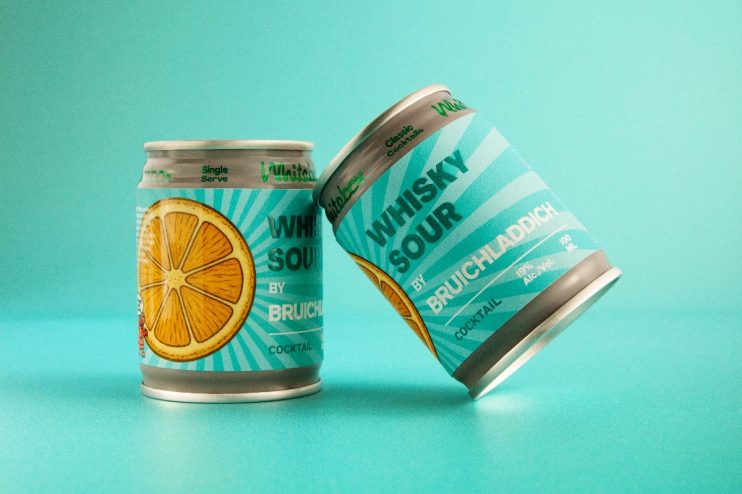
Last Saturday’s FT covered the industry’s current woes in depth. ‘Scotch whisky’s hangover’ is a sobering read, and yet other spirits are suffering as much, if not more. The one category bucking the trend is spirit-based RTDs, a category that Scotch has been slow to enter. Ron Emler investigates for City AM’s Whisky Business.
A recent corporate post on LinkedIn from Diageo told the group’s army of followers that the “Ready to Drink (RTD) category is one of our biggest strategic priorities.
Cocktail cans are reshaping drinking occasions and becoming the go-to drink at UK festivals, where they serve “high-quality cocktails in a fun and accessible format.”
So far this year, Diageo has sold more than 400,000 RTDs at 27 major UK festivals, a recognition that “innovation is driving demand”.
Pernod Ricard’s RTD sales jumped 17 per cent in its latest FY26 results, and the firm’s US chief, Conor McQuaid, said “RTD’s remain the standout growth category in the US.”
He admitted Pernod is behind the curve, but insisted “our approach is disciplined, using RTDs as a recruitment engine into our bottled spirits and a core part of our convenience strategy alongside bolstering our smaller format offerings.”
Meanwhile, Suntory Global Spirits CEO Greg Hughes said at his company results presentation: “The RTD category is big enough that it’s driving total spirits growth.”
Ready to drink cocktail market
The figures bear him out. While beer, wine and overall spirits demand is being eroded by changing consumer preferences, health concerns and financial caution, the ready to drink cocktail market continues to grow.
IWSR figures show 8 per cent CAGR growth for canned cocktails from 2019-25, but predict it will decelerate to 2-3 per cent over the next four years. Significantly, according to IWSR, the value of single-serve sales has overtaken vodka, although that figure is tempered by vodka being the base of a considerable volume of RTDs.
The dynamics within the category are also changing. Pre-Covid, much of the demand was led by hard-seltzers, especially in the United States, but in 2025 premium-and-above RTDs (i.e., spirits-based) saw volumes rise by 15 per cent, driven mostly by 7 per cent to 10 per cent ABV offerings.
Suntory is mounting a huge drive on the RTD sector in Asia based on Jim Beam bourbon and its array of Japanese whiskies.
Ashish Gandham, the managing director of Suntory Global Spirits Oceania, said recently that changing consumer demand was the driver shaping the company’s product mix.
“Whether it’s convenient RTD and energy options for everyday occasions or premium spirits for more special moments, our focus is on working alongside customers to deliver the right mix of products, formats and experiences for consumers across every occasion,” he said.
Within the overall whisk(e)y category, many American, Irish and Japanese brands have embraced RTDs in response to data that shows consumers are willing to pay a premium for a single serve in the context of drinking less but drinking better and in greater variety. They are also paying to drink what they want, not what marketers tell them to like.
Scotch slow to adapt
If Scotch whisky accounts for roughly a third of global whisk(e)y consumption by value, you have to question why the industry has been slow to jump in. Drams in a can are not easy to find.
A crucial hurdle for Scotch distillers is that the minimum maturation of three years puts a financial strain on them compared with those making ready-mixed cocktails from vodka, tequila and gin almost straight from the still.
Additionally, industry sources ask, if you are using an RTD as a recruiting sergeant for a brand, why base it on young spirit and underplay the quality message?
The huge potential for whiskey RTDs is undeniable. Leading Irish whiskey brand Jameson is making big inroads in the US market, while Brown-Forman reported that Jack and Coke, its joint venture with the Coca-Cola company, now has global sales of 1.8m cases after its initial rollout three years ago. During its first full year on sale in the UK, revenues topped £55m.
Back in Scotland there are faint stirrings of activity. Chivas Brothers has introduced its own version of Ballantine’s and cola, and Cutty Sark has a traditional Scotch and Ginger Ale offering. Wee Smoky and Bruichladdich are also driving the shift into premium pre-mixed serves.
Diageo has launched Johnnie Walker Blonde, a lower-ABV pre-mix with lemonade, and in Australia, a market that pioneered RTDs, it released Johnnie Walker Black Ruby Blackberry and Cola twelve months ago.
Diageo’s CEO, Sir Dave Lewis, is highly critical that the world’s biggest premium spirits group has let opportunities slip through its hands and is determined to make up lost ground in the RTD market.
Having once held almost a quarter of that sector, Diageo now has about 10 per cent but remains the second-largest player globally.
He is especially critical of Diageo’s whiskey offerings in the RTD market. “We have not put our best foot forward in whiskey RTDs; I’m disappointed with the flavours”, he says, referring largely to Crown Royal, which is Canadian.
He argues that if around half of Scotch and other whiskies are consumed in mixed drinks, there is a significant opportunity to offer more premium ready-to-drink whisky serves.
The Scotch whisky industry has always adapted. It has survived changing tastes, economic cycles, regulation, global competition and shifting consumer expectations.
As Lewis says: “We’re just going to roll up our sleeves and get on with our own business.”
Ron Emler is a financial journalist who has observed the drinks industry for 50 years. Following a career on The Times and the Sunday Telegraph, he is consultant City Editor at The Drinks Business. This content has been produced in collaboration with WhiskyInvestDirect, the Scotch whisky trading platform for distillers, independent bottlers, and private investors.