Mortgage nightmare as investors price in three interest rate hikes

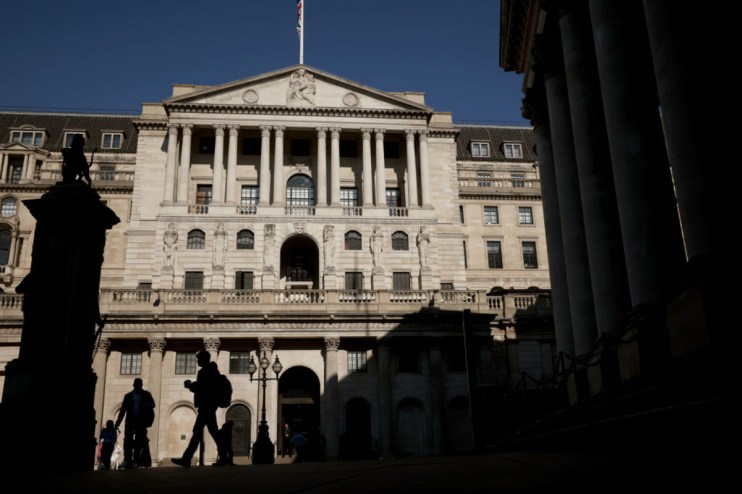
Investors have priced in three interest rate hikes over the next two years as a global bond market rout sent UK gilt yields soaring.
Two-year gilt yields, which gauges short term interest rate expectations, have jumped over 4.5 per cent, pushing up borrowing costs and putting the UK’s economic stability under threat.
The Bank of England has set interest rates at 3.75 per cent yet a cautious tone in previous Monetary Policy Committee meetings has led analysts to believe it could raise borrowing costs as a result of a prolonged Iran war.
City analysts have said that the UK is suffering from higher gilt yields due to the country’s vulnerability to inflation shocks.
The Brent crude oil price hovered around $95 per barrel while European gas prices hit a three-year high, deepening fears that the UK will suffer from higher price rises than previously expected.
RBC Capital Markets analysts said they struggled to see current interest rate pricing “getting realised” though there were risks for “further weakness”.
Before the global bond market rout, several economists predicted interest rates to be held at 3.75 per cent.
Forecasts were heavily reliant on hostilities in the Middle East simmering out. A signal by the US Federal Reserve chair Kevin Warsh that interest rate hikes could be on the horizon have also led to US Treasuries being sold off at a rapid pace, pulling global yields up.
Economists broadly predict inflation in the UK to creep over three per cent in the coming months before dropping back to two per cent.
However, the Bank’s MPC warned in August it would likely raise interest rates in the event a conflict re-emerges between Iran and the US.
In its worst case scenario, inflation could top four per cent, which would be double its target two per cent inflation rate.
First interest rate hike ‘in November’
AJ Bell analysts noted that interest rates could be hiked on a gradual basis. It said investors were pricing in one interest rate hike in November, a second in February and a third in June, taking rates up to about 4.5 per cent.
“Bonds are reaching the point where certain investors may seek to lock in high yields caused by the latest market volatility,” Dan Coatsworth, head of markets at AJ Bell.
“What might be holding them back is an expectation that yields could get even higher if rates go up fast and hard, meaning certain bond investors could be playing a waiting game before piling in.”