Why Manchester City’s £86m Bouaddi signing should ring alarm bells in French football

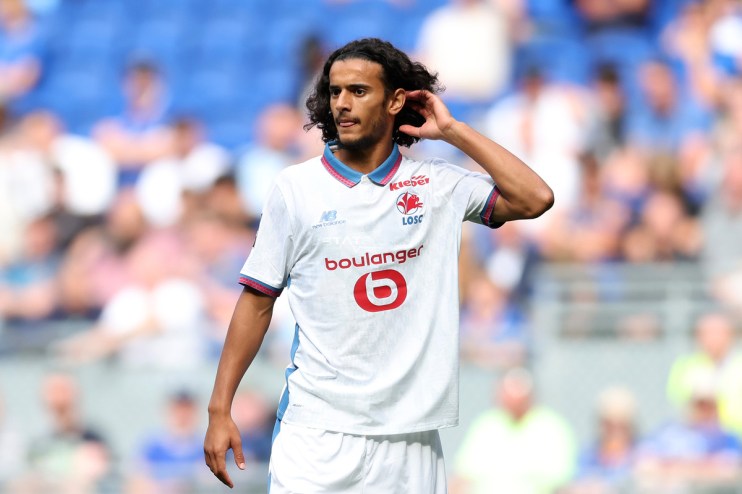
Manchester City’s €100m (£86m) signing of Lille midfielder Ayyoub Bouaddi is more than just another example of a super-rich European giant hoovering up a promising talent.
It is also the latest sign of French football’s talent drain, a phenomenon fuelled by the Premier League’s ever-growing spending power and the financial struggles of most of Ligue 1.
And that poses some existential questions for those running the game in France and threatens to further undermine its status as one of Europe’s Big Five leagues.
The numbers expose the undisputed direction of travel: French clubs are increasingly relying on selling their best players, like Bouaddi, to overseas buyers to keep their heads above water.
In the last five years, exports from Ligue 1 to its seven biggest rival competitions – in England, Spain, Italy, Germany, Portugal, Turkey and Saudi Arabia – have roughly trebled in value.
Sales to the Premier League alone have fetched close to €2bn since the summer of 2021, only marginally less than the other six rivals combined and up around 150 per cent in five years.
Meanwhile, transfers between clubs in Ligue 1 have only increased in value by 70 per cent, showing that much of the proceeds of overseas sales has not been reinvested.
How media rights woes have hurt Ligue 1 clubs
French football has always been a development hothouse; together with south London and Rio de Janeiro, the wider Paris area is the biggest breeding ground for players in the world.
But the dire financial straits that have befallen all Ligue 1 teams apart from Qatar-backed superclub Paris Saint-Germain have accelerated that trend.
First came the collapse of Ligue 1’s media rights contract with Mediapro in 2020 after the company defaulted on payments, forcing them into a cut-price emergency deal with Canal+.
Then came an aborted union with Dazn, which cancelled its €500m-a-year deal after one season last year, citing insufficient anti-piracy measures swallowing its return.
That left Ligue 1 to launch its own streaming service, earning clubs just €140m annually between them – a huge drop from the €840m Mediapro had committed to paying.
French top-flight clubs now bank less from their TV contracts as a collective than the average Premier League team does on its own.
Little wonder, then, that talent is flowing across the Channel quicker than the Eurostar, and Bouaddi is just the latest instance this summer.
Premier League spending record sums on players from France
The dynamic and combative 18-year-old Morocco international with the long, curly locks was a breakout star of the recent World Cup, which goes some way to explaining the vast fee for a player with fewer than 100 appearances for Lille.
His arrival will take the Premier League’s spend on Ligue 1 players this season to €447m – already a record with one week until the summer deadline and a January window to come.
Other stars to have left France for England in recent seasons include Liverpool’s Jeremy Jacquet, Manchester United’s Leny Yoro, Manchester City’s Jeremy Doku and Rayan Cherki, and Brentford’s Mamadou Sangare.
While French clubs keep churning out hot talents, the drain has perhaps inevitably affected their competitiveness in Europe – the financially insulated PSG aside, of course.
Ligue 1 is now a distant fifth in Uefa’s association coefficients, meaning it only gets three guaranteed places in the 36-team Champions League.
England and Spain have five apiece, while Italy and Germany have four and, with clubs from Portugal outperforming their Gallic cousins last season, that number be trimmed further.
With less success in Europe comes less revenue from Uefa’s central pot, perpetuating a vicious cycle that makes French sides ever-more reliant on selling off their players.