Why did Pinterest choose Oxford Street for its new HQ?

Pinterest is not a bricks and mortar business, nor is it explicitly a retail one. So why choose Oxford Street for its slick new home? Pinterest’s Greg Owens makes his case in today’s Notebook
The digital shop window
I spent part of my childhood in Hertfordshire and a trip to London’s Oxford Street with my mum and dad was quite the event. What I remember were the shop windows. They weren’t just displays, they sparked the imagination, prompted ideas, inspired decisions and made shopping an experience. At Pinterest, we do that too, just digitally. People come for inspiration and then take it into the real world, whether that be putting together festival outfits or cooking recipe ideas.
Last week we opened Pinterest’s new UK office in Oxford Circus, with the Mayor of London, Sadiq Khan, there to mark the occasion. We could have taken space in a conventional tech postcode. Instead, we chose to sit alongside our retailer partners, to be close to Primark, Samsung, H&M and others, because Oxford Street remains at the heart of British retail, and that’s where we want to be.
Oxford Street has had a difficult spell, along with the wider sector. But rejuvenation is under way. Pedestrianisation is due to finish by October, and there’s a real opportunity to showcase quality retail there.
For too long, retail has been framed as bricks versus clicks, but the most successful retailers are the ones connecting the two seamlessly. With 640m monthly users worldwide, we deliver a lot of digital shop windows that convert to action. By guiding shoppers seamlessly from online discovery to local stock checkouts, we bring customers who are inspired to buy.
That’s the confidence behind our investment here: a vote for London as a centre of retail, technology and creativity all in one, W1.
Smashing the numbers
We reported our latest earnings last week (Q2 2026), so what’s the low down… 640 million people globally now come to Pinterest every month, up 11 per cent on last year, and revenue surpassed $1.1 billion, growing 18 per cent year over year. What once was a platform purely for inspiration, is fast becoming a destination to act on intent. Regardless of where you are in the world, people come to plan, decide, create and shop.
Live your life, don’t just scroll it
Is a platform’s success really about how long someone stays on it, or what they actually go on and do afterwards? It’s a question that most of the tech industry avoids, because the honest answer can be complicated.
We launched a campaign this year built around just that, calling out the cost of being constantly online and offering a different path forward. One that uses technology for purpose and enhances a life actually lived offline – “Less URL, More IRL”. It clearly struck a nerve: over 75m organic views when the campaign launched.
An endorsement from the Mayor
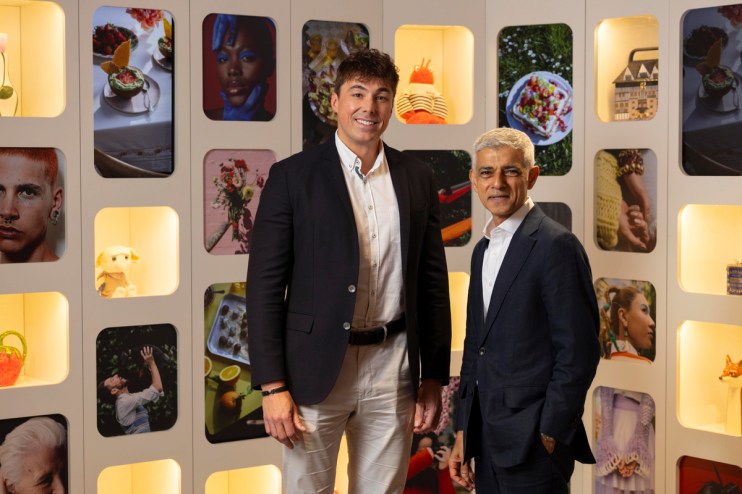
While launching our new HQ last month, a highlight for me was walking through our new Oxford Street office with Sir Sadiq Khan, Mayor of London. The space reflects what we believe about the future of retail: connecting online discovery with offline retail experiences. Khan described our opening as a reflection of the “extraordinary optimism in [the UK’s] booming tech sector” and committed to keeping the momentum going.
Burnham’s smart podcast pick
I’d point you toward Elizabeth Day’s How to Fail, and her episode with Andy Burnham – his first podcast interview since becoming Prime Minister. Its format is built around failure rather than achievement, which is different… but it works. He talks about his faith and upbringing, but what I genuinely found interesting from a communications perspective was the choice of opportunity itself. Rather than a standard interview, Number 10 chose a long-form personal podcast to reach people. Whatever you think of politics, it’s a smart listen.
Greg Owens is vice president of international of Pinterest