It’s not just Jason Arday, most of sociology is a scam

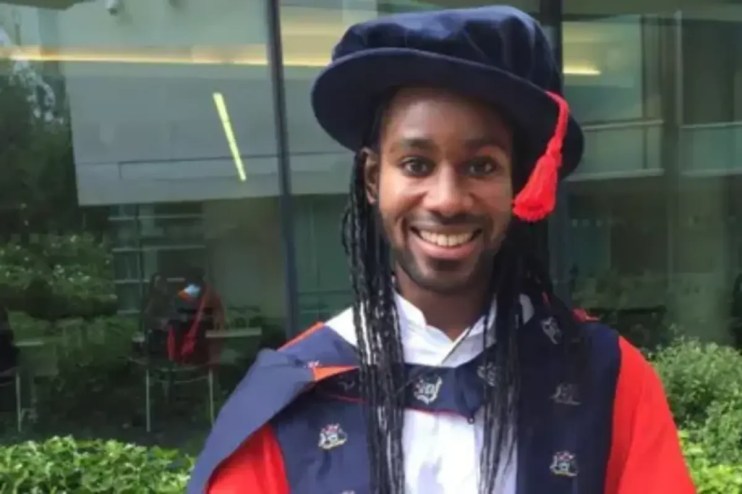
Jason Arday is not the only second rate academic working in sociology. His Cambridge colleagues have also published papers that are impossible to read and contain no evidence, says Paul Ormerod
The Jason Arday story has been covered intensively from many different angles. But relatively little has been written on the academic discipline in which he was a professor, namely the sociology of education.
There is at least one good reason for this. It is not easy to understand what contributions to knowledge this particular subject makes.
I googled the members of the faculty of education at Cambridge, in which he was a professor. I read, or attempted to read, a number of their publications which can be readily accessed through the Google Scholar site.
I use the word “attempted” because they are hard going. In some academic disciplines, this would be perfectly reasonable. For example, Andrew Wiles’ famous proof of Fermat’s Last Theorem more or less loses me after the first line.
These papers by education academics contain no advanced maths. Rather, they are full of English words. But the articles are almost all written in a tortuous style, replete with more or less impenetrable jargon.
I generated an AI summary of one of the more accessible ones: “Peace education faces crises of legitimacy, representation, and praxis. Challenges include narrow Western peace models, education inequalities, marketization, violence in schools, and cultural biases. Embracing postmodern perspectives and diverse traditions offers opportunities for more inclusive, transformative peace research and practice”.
I cannot claim to have an exhaustive knowledge of the academic output of this discipline. I have merely read a small sample of its output, published by members of one of the leading universities of the world.
By one of the key criteria of success in academia, many of them do well. The published articles are cited many times by other academics working in these areas.
I am not suggesting for a moment that this actually happens in educational sociology. But as we while away the holiday hours on the beach or out in the countryside, we might readily fantasise of a university setting up, for example, a department of astrology. A prominent astrologer is recruited to head it. Soon, there is the Journal of Astrological Studies, closely followed by the International Journal of Astrology, the Review of Zodiacal Studies, and so on. The academics in the department rapidly accrue many citations of their papers, reported in glowing terms by the university to the next government research assessment exercise.
Apart from their indigestibility, a distinct impression conveyed by the papers is that they are often lacking in empirical evidence. Indeed, the typical article consists of an endlessly repeated set of assertions, with little or no attempt made to establish whether they may or may not be true.
Denying objective truth
There is of course a creeping tendency in a number of social science disciplines to deny the existence of such a concept as objective truth. It is not just educational sociology which seems to have problems with this concept. Yet we can readily observe that in their everyday lives the academics have considerable respect for empirical evidence and truth. If, for example, you jump out of a fourth floor window you will almost certainly fall to the ground and suffer serious injury.
Fortunately, many academics in other disciplines have been highly critical of the intellectual merit of work such as that of Arday. The distinguished Cambridge economist Partha Gasgupta, for example, expressed the opinion that some of the committee which appointed Arday are themselves “second rate”.
The university sector is under a range of serious pressures. The supply of foreign students is drying up. The value of many degrees is being called into question, with substantial numbers of graduates unable to repay their taxpayer funded loans.
Universities do themselves no favours by harbouring departments such as education, which many would regard as perfectly warranting the description of “Mickey Mouse”.
Paul Ormerod is an Honorary Professor at the Alliance Business School at the University of Manchester. You can follow him on Instagram @profpaulormerod