Who Gives a Crap: The toilet roll tycoon making a splash

Simon Griffiths founded Who Gives a Crap toilet paper with the philanthropic aim of ensuring everyone has access to a clean toilet. He has raised £11m so far, but Griffiths tells Felix Armstrong that’s not nearly enough
“I was always an entrepreneurial kid at school,” Simon Griffiths says, as he explains the complex process of molding, laminating and strapping together the boards used to surf on sand dunes in his native Perth, Australia, which he sold to his friends when at school.
“I was that kid who sold stuff to everyone else,” he says, “and part of me got a big kick out of doing that but part of me felt a bit icky and gross.” Griffiths’ money-making schemes at school fuelled his knack for entrepreneurship, but sparked an anxiety that he might be ripping off his buyers: “There was something about it that just wasn’t quite right.”
Decades later, and this discomfort with profiteering drives his current business – ethical toilet roll company Who Gives a Crap. Half of the proceeds from the toilet roll, made from bamboo and recycled paper, go to clean water and sanitation projects, often in Africa.
Griffiths, Who Gives a Crap’s co-founder and chief executive, is thinking big, saying his goal is to provide everyone around the world with access to clean water and a toilet. The company has donated £11m of its profits to date, but Griffith said he wants to raise hundreds of millions of pounds every year to reach this goal.
The money raised so far, he says, is “a very small splash in the ocean,” compared with the two billion people who go without access to a clean toilet.
“To make a dent in that problem and really start to see that number change from the results of our work, we know that our company has to be way bigger than what it is today and those donations have to get up into, probably, hundreds of millions of pounds every single year in order to truly start kind of having a significant level of impact,” he says.
Profits have so far gone to sanitation charities including Fresh Life, Water for People and WaterAid Australia, for projects including waterless toilets in Kenya and water pumps in Uganda.
Who Gives a Crap lands in Tesco
The firm saw UK revenue climb by 14 per cent to £52m in the year to June 2025, whilepre-tax profit grew eight per cent to £2.3m, boosted by a 42 per cent increase in retail sales.
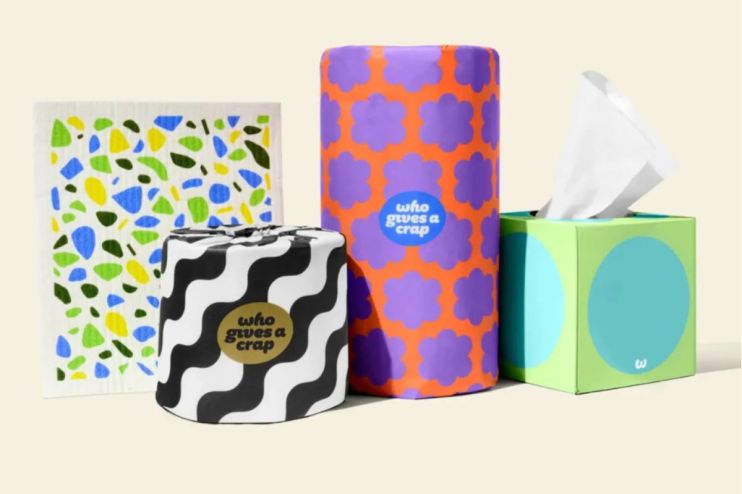
The colourfully-wrapped toilet roll is stocked by commercial partners including Amazon, Deliveroo and Oxfam, and is available in supermarkets such as Waitrose and Tesco – where Who Gives a Crap made a splash at 247 stores last year.
As Griffiths aims at “world domination,” he plans to reach “as many households as we can” in Britain, he said, hinting at further supermarket deals.
Rival renewable toilet paper brands have emerged in recent years, with Cheeky Panda rolling out at Tesco and Waitrose, while Naked Sprout is stocked at online supermarket Ocado.
Donations have to get to hundreds of millions of pounds every single year
Griffiths said: “We’d love to [expand by] continuing to have a really strong direct-to-consumer offering where people can find us online regardless of where they are in the country, and where they do their regular grocery shop.
“And continuing to work really well with the partners that we’ve got today, with Waitrose, Ocado, with Tesco and other retail partners around the country. […] And of course, over time we’ll look at how we can add additional partners into that mix.”
Who Gives a Crap is also expanding into other sanitation and cleaning products like bin liners and sponges, as the company seeks to lodge itself in the bathrooms and sink cupboards of households across the country.
The toilet roll brand puts its colourful packaging and irreverent messaging at the heart of its lifestyle appeal. While the rolls have become a staple in middle-class bathrooms and cupboards in recent years, their appeal became clear when Griffiths crowdfunded for the project in Australia, he said.
“We managed to create this incredible word-of-mouth groundswell, a lot of which came from the packaging, and then it started to show up in people’s bathrooms and in hospitality businesses being put on display.
“It really became a core part of our offering, which is awesome to see it resonate in such a powerful way. It’s something that has taken off all around the world, so we’ve been really proud to see that happen.”
Iran war hits consumer spending
Who Gives a Crap uses limited edition packaging – including a “whoops” edition used to market a defective batch with the wrong number of ply – to maintain its colourful appeal, Griffiths says.
The toilet roll maker, while taking on supermarket stalwarts like Andrex and Cushelle, has a higher price point than most of its competitors, which Griffiths says in part is down to its higher sheet-count and the fact it is often sold in single units.
I don’t think our customers really see our product as discretionary
Who Gives a Crap is priced at 30p per 100 sheets of toilet roll, according to prices listed on Amazon, while Andrex offers 22p and Cushelle 25p.
As inflation looks to be on the rise and consumer confidence plummets to a two-year low, retailers have raised fears that Brits may restrict their budgets to so-called “discretionary” spending, with premium products, including toiletries, poised to be wiped off shopping lists.
But Griffiths insists the ethics behind Who Gives a Crap’s donations model, and the lifestyle aspect of the colourful packaging, will make his product resilient.
“It’s unfortunately not the first cost-of-living pressure that we’ve seen over the past five years and when we look at our numbers we still have a very strong uptake and retention of both new and returning customers,” he said.
“I don’t think our customers really see our product as discretionary. They see it as a core part that delivers value to the household, beyond what they’re able to get from other brands.”
As the blockade to the Strait of Hormuz during the Iran war sends global fuel prices soaring, Griffiths said rising costs are prompting his business to invest more in its use of electric vehicles for delivery.
He said: “Where oil prices put pressure on our product is often in the delivery to customers. We’re continuing to see how we can increase the number of EVs that we have delivering products around the world over time, to make sure that we’re not only well-insulated from oil price shocks but also doing the right thing for the environment.”