Clio founder: We may not have the hype of Jude Law, but our data beats any AI rival

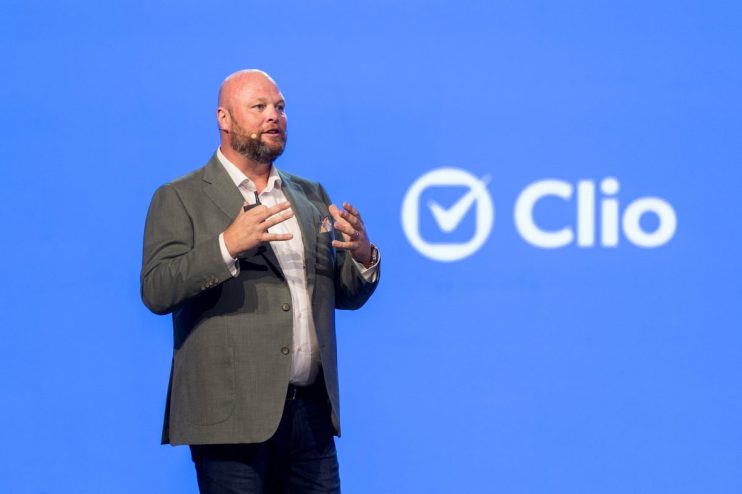
Legal tech Clio’s boss tells senior reporter Maria Ward-Brennan that, with rivals closing in, the firm is betting that proprietary data, not hype, will determine its competitive edge in the AI race.
In a competitive landscape, Clio founder and CEO Jack Newton believes his legal tech firm is in a “great position” in the marketplace, because of its “unique position” with extensive legal data it secured through the “largest M&A transaction in legal tech history”.
Clio completed a $1bn acquisition of vLex, an AI-powered legal intelligence platform, in November, which united Clio’s legal operating system with vLex’s Vincent AI, a comprehensive global legal database.
Before this merger, Clio was primarily a cloud-based practice management SaaS platform, but it has pivoted towards an AI‑first firm to align itself with competitors.
Speaking to City AM, Newton acknowledged that its rivals, such as Harvey AI and Legora AI, have an “early head start” at adopting the AI strategy, but stated that “we’re at very early innings in the AI journey.”
He added that legal firms’ current choices aren’t final; they’re “constantly evaluating options”.
However, he stressed that, unlike its competitors, Clio is now powered directly by its legal database through vLex, rather than just the open web. “What we acquired is enormously valuable data that very few companies in the world have to leverage.
“Clio is now one of three companies globally, the other two being Thomson Reuters and LexisNexis, which have this kind of breadth and depth of legal data to fuel the AI.”
He added, “I think if you are just a standalone point solution that has made incremental improvements to the foundational models, tailoring them for AI, you probably have a very slim competitive edge against the foundational model providers.”
Newton, who founded the Canadian tech firm in 2008, added that Clio is in a “great position in the marketplace, even though we may not have the hype of Jude Law or others to support the platform”.
Opportunities in the legal tech market
From its early days, it was very focused on the US market, and its strategy was on solos and small firms, but now it aims to be a tech platform that “serves customers globally”.
Clio now serves “over 400,000 legal professionals” and is expanding into the European market, with a focus on the UK and Ireland and on exploring opportunities in Africa.
It has three offices in Canada and a European hub in Ireland, and is now expanding its presence in the City with a new London office in Holborn. “The UK has been the most important and fastest growth market for us in the EMEA market to the point we now have an office in London, and we’re rapidly expanding our headcount here as well.”
The rapid adoption of AI in the legal market, driven by high demand and significant investments in AI technology, has led to a surge of AI legal tech firms, but as time goes on, this market is becoming increasingly tight-knit.
“Even law firms that have selected a Harvey, Legora, CoCounsel or a Lexus prodigy have not made a long-term or a final commitment to those platforms,” says Newton.
He pointed out that firms are “constantly evaluating what the best fit for their firm” is, and that Clio has “a lot of conviction” in being grounded in legal data to be “the highest-performing legal AI in the market”.
Anthropic is making those ‘thin wrapper’ firms concerned
The legal tech sector has been in a tizzy after Anthropic was seen as significantly disrupting the sector when it launched AI legal tools aimed at automating complex legal workflows and challenging established legal software vendors.
Anthropic unveiled a legal plugin for its Claude AI system designed for in-house legal teams that automates tasks such as contract review, NDAs, compliance workflows, and legal briefings.
It is also expanding its London footprint with a new office that could accommodate up to 800 staff.
“I think the instructive lesson in what we’ve seen from Anthropic is that if you’re a thin wrapper around OpenAI or a thin wrapper around Anthropic in the legal tech space, you should probably be pretty concerned, because these foundational models will eventually consume your market opportunity,” Newton explained.
Companies like Anthropic are “evolving so fast” as they have “such a huge ability to invest in such a rapid R&D” that it is very hard to stay ahead of them.