I’m a hotel expert. Here’s why I hate in-room technology

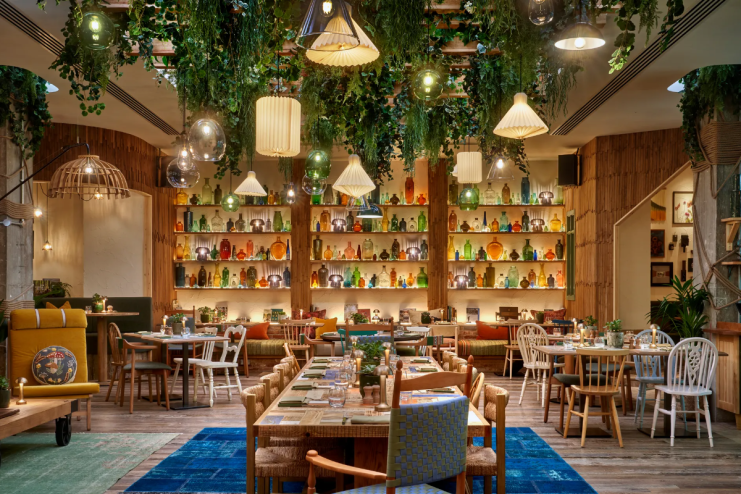
At the newly opened Treehouse Hotel in Manchester, the rooms are designed to look like… well, treehouses. But the feeling of arboreal living was disrupted when I tried to order room service, which you must do through the TV.
It didn’t work. I was no longer in a treehouse. I was in a hotel, unable to order my dinner. Technology had ruined it.
This is the scourge of travel. Tablets placed beside beds, remote control curtains and lights you cannot work out how to turn off for love nor money.
In an age of doom scrolling and jobs that require us to be perpetually online, hoteliers must realise the last thing we need is to navigate convoluted in-room technology.
I do not wish to log onto a smart television to order room service, or to download an app to speak to reception staff, who may or may not be robots (one hotel in America actually replaced their check-in staff with AI-bots). Thankfully, there are signs that a shift away from this dystopia is underway.
The scourge of in-room tech in hotels
The Langley in Buckinghamshire is a proponent of this post-technology era. The 41-room property tells me they’re thinking about ripping out devices from beside beds. With no bedroom further than 15 metres from reception, why would anyone need to type to be heard when they could speak instead?
Hotels are also removing TVs from rooms, with properties offering them on request rather than having them as permanent fixtures. Auric Road in Palm Springs has replaced televisions with vintage record players and vinyl collections.
Even the slightly-tongue-in-cheek trend for ‘rawdogging’ – where passengers refuse to wear headphones or watch movies for the duration of plane trips – hints at a desperation for getting offline and existing in the moment.
“People have become allergic to tech in hotels,” says Jules Perowne, head of luxury PR firm Perowne International.
Her take is that tech-forward rooms were fashionable a decade ago, when the hotels opening now were first blueprinted, so this over-saturation of technology is a throwback to the pre-pandemic era, predating conversations about screen time and the value of digital detoxing. It’s the vision of “box ticking hotel designers who have no idea what the guest experience is,” she says.
The pursuit of analogue life reaches far beyond the traditional hotel room. Unplugged and Unyoked cabins are located deep in the British woodland, positioned as far away from roads and towns as possible to ensure peace and quiet.
They come equipped with lock boxes to hide your phones for the duration of your stay.
There could even be romantic benefits from digital detoxing. “I remember hearing a story about one couple getting romantic in their room, but the hanky panky caused the bright white overhead lights to come on,” says Perowne.
“It ruined the moment. People want a chunky master light switch that just brings darkness rather than fancy tech – one that literally goes clunk when it turns off.”
Adam is the deputy editor and travel editor of City AM The Magazine