On This Day in 1980: America severs diplomatic relations with Iran

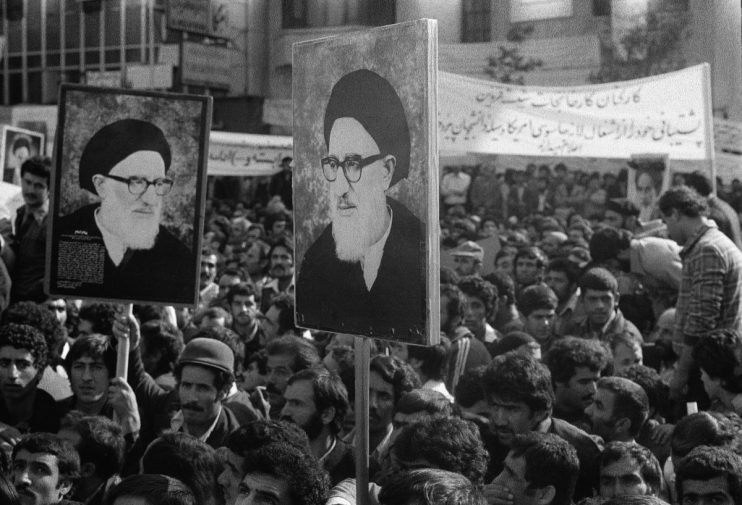
The United States severed diplomatic relations with Iran on April 7, 1980, after the Ayatollah Khomeini refused to order the release of the American hostages who had been held at the US Embassy since the previous November, writes Eliot Wilson
If you remember good relations between the United States and Iran, you are at least facing your half-century. The current armed conflict which began on 28 February seems less a shocking and violent crisis than a wearily plausible development that was a long time coming. But it was not always this way.
When newspapers became popular in Britain’s American colonies in the 1710s and 1720s, one of the most popular subjects was the insurrection waged by Mahmud Hotak against the tottering Safavid monarchy of Persia. The American newspapers generally rallied behind the easygoing Shah, Soltan Hoseyn, but – a prefiguring of the future? – he was forced to abdicate after the fall of Isfahan in 1722.
In 1883, 46-year-old Samuel WG Benjamin became the first United States Minister to Persia. On his first day in Tehran, he bought a 100-foot flagpole to fly Old Glory. Five years later, Shah Naser al-Din reciprocated by sending his own minister plenipotentiary, the aristocratic Hossein-Gholi Khan Noori. He was such a diplomatic success he was nicknamed “Hajji Washington”.
At that time, Tehran was deeply suspicious of Britain and Russia as they played out the Great Game in central Asia. Persia bordered British India to the south-east, Russia’s Caucasus viceroyalty to the north, and to the west the Ottoman vilayets of Van, Mosul, Baghdad and Basra.
The rapidly growing United States seemed like an honest and disinterested party on the international stage, and a potential Persian ally. In 1910, the Shah asked Washington for help modernising its financial system, and President Taft picked Morgan Shuster, a former US customs official in Cuba and the Philippines. He was appointed Treasurer General in 1911 but forced out within months by Russian and British hostility.
When Reza Khan, later Reza Shah Pahlavi, seized power in 1921, he also turned to America. Dr Arthur Millspaugh, a trade adviser at the State Department, became Administrator General of Finances in Tehran, first from 1922 to 1927 then again from 1942 to 1945.
But then there was oil. The Anglo-Persian Oil Company (Anglo-Iranian after 1935) was a shareholder in the Iraq Petroleum Company put together by the British-Armenian fixer Calouste Gulbenkian. That made it a partner of Standard Oil of New York and Standard Oil of New Jersey. In 1951, the new Iranian Prime Minister Mohammad Mosaddegh nationalised the country’s oil industry, seizing Anglo-Iranian’s assets.
Britain was alarmed and outraged. American policy at first was to support Mosaddegh, believing the oil issue would be resolved, but when Eisenhower replaced Truman in the White House in early 1953, the new administration was persuaded to join the UK in staging a coup d’état against the populist leader.
Turning point
1953 was and remains a turning point. With Mosaddegh deposed, the 34-year-old Shah, Mohammad Reza Pahlavi, became a grateful client of the United States. He told Kermit Roosevelt Jr, the CIA Arabist who oversaw the coup, “I owe my throne to God, my people, my army and to you!” In the popular Iranian imagination, America was now the puppet-master, aided by the shadowy British, and the Shah its instrument.
The disadvantages of this were not immediately apparent in Washington or London. The US helped establish the Shah’s secret police, SAVAK, and reorganised the oil sector so that American companies received 40 per cent of the profits while maintaining operational control. President Nixon had an especially good relationship with the Shah, and by the 1970s Iran was buying substantial quantities of US military equipment, with 25,000 American technicians in the country to help maintain it.
The Shah’s régime seemed to collapse like Hemingway’s description of bankruptcy: gradually, then suddenly. The exiled hardline cleric Ayatollah Ruhollah Khomeini became an increasingly vocal critic of the encroachment of Western influence and secularism in Iran, while the Shah’s authority weakened amid growing protests and alleged human rights abuses. By 1978 the authorities feared the situation was becoming uncontrollable.
In January 1979, the Shah left Iran for treatment for chronic lymphocytic leukemia; two weeks later Khomeini returned from exile. The Pahlavi régime was already a shell as politicians and generals hedged their bets. Shapour Bakhtiar, a French-educated moderate, was left as the Shah’s Prime Minister, but he was quickly swept aside by Khomeini who declared a Provisional Revolutionary and Islamic Government.
In October 1979, a referendum approved a new constitution for the Islamic Republic of Iran. On the morning of 4 November, up to 3,000 members of the Muslim Student Followers of the Imam’s Line stormed the US Embassy in Tehran and took 63 Americans hostage. Khomeini publicly backed the action, calling it “the second revolution” and denouncing the embassy as “an American spy den”. The students made it clear they wanted the Shah, undergoing cancer treatment in America, extradited and Iranian assets in the United States unfrozen in return for freeing the hostages.
President Jimmy Carter was struggling against rising inflation which reached 13.3 per cent in 1979, and queues at petrol stations. In July 1979, he addressed the public, diagnosing a “crisis of confidence” in America. Senator Edward Kennedy was thought likely to challenge for the Democratic Party’s nomination for 1980, and polls suggested he would be successful.
Unexpectedly, Carter’s popularity initially rose as he was seen to deal with the hostage crisis calmly and pragmatically. American diplomacy saw the UN Security Council pass two resolutions in December, 457 and 461, condemning the seizure of the embassy. But the longer the crisis lasted – in January 1980, Walter Cronkite was concluding the CBS Evening News by numbering the days the hostages had been in captivity – the less sure-footed the President seemed.
At the end of March, Carter demanded the students surrender the hostages to the Iranian government. They seemed minded to comply, but 46 years ago today, the Ayatollah Khomeini said that the hostages would remain with their captors. There seemed no other avenue for the United States except to sever diplomatic relations, Carter addressing reporters at 3.10 pm that afternoon.
“The Iranian government can no longer escape full responsibility by hiding behind the militants at the embassy. It must be made clear that the failure to release the hostages will involve increasingly heavy costs to Iran and its interests. I have today ordered the following steps. First, the United States of America is breaking diplomatic relations with the Government of Iran…”
A risky military expedition 17 days later to free the hostages, Operation Eagle Claw, ended in catastrophic ignominy, with one helicopter crashing, five being abandoned and eight US servicemen being killed when the mission was aborted
It was the beginning of a grim denouement for Carter. A risky military expedition 17 days later to free the hostages, Operation Eagle Claw, ended in catastrophic ignominy, with one helicopter crashing, five being abandoned and eight US servicemen being killed when the mission was aborted. Eventually, negotiations saw the hostages after 444 days in captivity, on 20 January 1981: they were freed minutes after then swearing-in as President of Republican Ronald Reagan, who had beaten Carter decisively by 489 Electoral College votes to 49 the previous November.
Diplomatic relations between the United States of America and the Islamic Republic of Iran are still suspended, 46 years later.
Eliot Wilson, writer and historian; Senior Fellow for National Security, Coalition for Global Prosperity; Contributing Editor, Defence on the Brink