The Debate: Should we put rats on our banknotes?

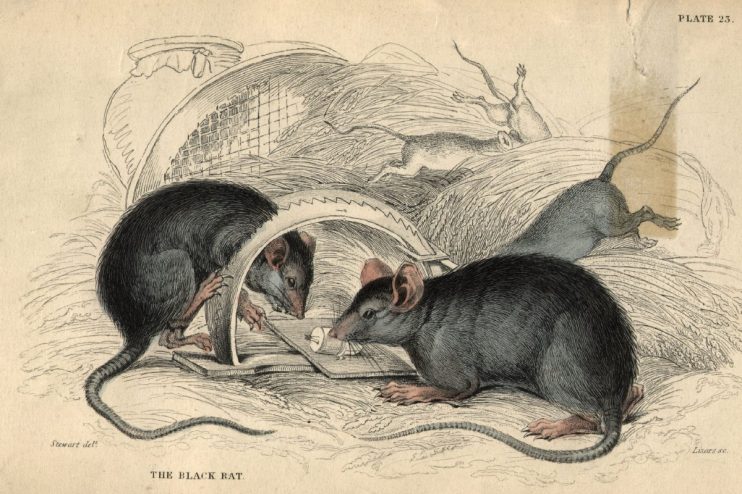
Churchill’s been ditched from UK banknotes. Is the rat a worthy successor? We hear the case for and against in this week’s Debate
YES: Sir Winston Churchill was himself an animal lover
The public have spoken – 44,000 of them! And 60 per cent of them told the Bank of England they want wildlife and nature to feature on new banknotes.
For us at the RSPCA, this comes as no surprise – we are a nation of animal lovers, after all.
It’s a move we are excited about. Showcasing native wildlife like rats on banknotes helps celebrate the animals that we share our towns, cities and countryside with.
There’s been some mischievous headlines claiming this move disrespects historical figures. That’s totally misleading – the Bank of England has always periodically changed who is on banknotes, and the public had a wide range of themes to choose from. Indeed, Sir Winston Churchill – the current face of the fiver – was himself an animal lover, and would surely have revelled in how this has got us all chatting about wildlife.
Next, people will get to make a pitch for the animals they want on their paper money – and at the RSPCA, we think this is an opportunity to feature some of our more undervalued wild animals. Gulls, pigeons, foxes and rats divide opinion. Yet they are not only an integral part of British wildlife, but are fascinating, too! Pigeons have been trained to carry messages, foxes communicate using 40 different sounds, rats have such incredible memories they even recognise people, while some species of gull are actually on conservation red lists amid depleting numbers. All deserve to be celebrated.
Whatever animals are chosen, their inclusion might just encourage us all to consider the role animals play in our lives, how we protect different species, and how we can all build a better world for every kind.
Geoff Edmond is lead wildlife officer for the RSPCA
NO: No rat has ever defeated fascism
Centuries ago, when our forebears were establishing Great Britain’s heraldic traditions, they did not choose a rat as a national symbol. They chose the lion for England, the unicorn for Scotland and the dragon for Wales. It tells you something that the former is not a creature native to our shores and the latter two are imaginary.
British fauna is neither unique to these islands nor especially charismatic. Foreigners often accuse Brits of a low cunning embodied by the rat, but it hardly represents the best of our national character.
It is galling, therefore, that thousands of people have apparently responded to a Bank of England consultation saying they would rather have wildlife on their banknotes than people. This will result in the removal of war heroes Winston Churchill and Alan Turing and cultural icons Jane Austen, JMW Turner from newly minted currency in England.
Cash is in decline (when did you last handle a fiver?) so perhaps we shouldn’t care about this. But banknotes, like statues, form part of a public realm that is becoming ever more bland as it is denuded of emblems of a shared past. Our history should not be a source of shame, but something that binds us together – and an image of a fellow Englishman is surely more unifying than one of a plague-carrying pest? When archaeologists of the future study these notes, as we do Roman coins, what will they discern of our society’s self-image from a rat?
No rodent, or any vermin, has ever achieved anything comparable to defeating fascism or writing Pride and Prejudice. A country that venerates its animal population above its people is one that has lost all pride.
Alys Denby is City AM’s opinion editor
THE VERDICT
If news last week that Sir Winston Churchill is to be booted off our banknotes and replaced with British wildlife wasn’t enough to put the media in a tizzy, calls from the RSPCA to slap the rat on our cash surely are. But here at City AM, we do not simply throw out views because they appear unfashionable, and we can’t deny that Mr Edmond makes a cogent case for the rattus rattus, and other British creatures, to be represented on our money.
It could be true, after all, that many of these animals are “undervalued”. As demonstrated by Ryan Gosling in a BBC interview last week – in which he expressed his astonishment that Londoners hadn’t been using foxes to advertise the city (“they’re cool as hell,” he told Greg James) – sometimes, we don’t realise what we have.
But is the rat such a case? We think not. Not only are our rats ugly, they are not even unique to us, with an estimated 7bn currently scurrying wide across the world and the best attempt to rehabilitate them – Ratatouille – championing their French, not English, sensibility. The verdict? Let the public vote, but we prefer the dragon.