Labour’s leadership Phoney War continues, this time as farce

Labour is conducting Schrodinger’s leadership election and it’s increasingly looking like I, Claudius performed b y the cast of Up Pompeii, says Eliot Wilson
Following Labour’s punishment beatings in the local and devolved parliamentary elections, the guerrilla war over Sir Keir Starmer’s leadership of the party has finally erupted into open warfare.
Or has it? Last week, politicos were on the edges of their seats: Wes Streeting, the ambitious, neo-Blairite health and social care secretary, would walk out of government and launch a bid for Starmer’s job. On Thursday, Streeting did indeed resign, and his long letter to the Prime Minister contained some savage barbs.
“Where we need vision, we have a vacuum. Where we need direction, we have drift. This was underscored by your speech on Monday. Leaders take responsibility, but too often that has meant other people falling on their swords. You also need to listen to your colleagues, including backbenchers, and the heavy-handed approach to dissenting voices diminishes our politics.”
Streeting concluded that he had lost confidence in Starmer’s ability to lead, that there should be an election and “it needs to be broad, and it needs the best possible field of candidates”. And then came… silence. He did not submit a nomination to trigger a contest but is currently in freeze-frame, like the Grand Old Duke of York at the top of the hill, without issuing an order to fire.
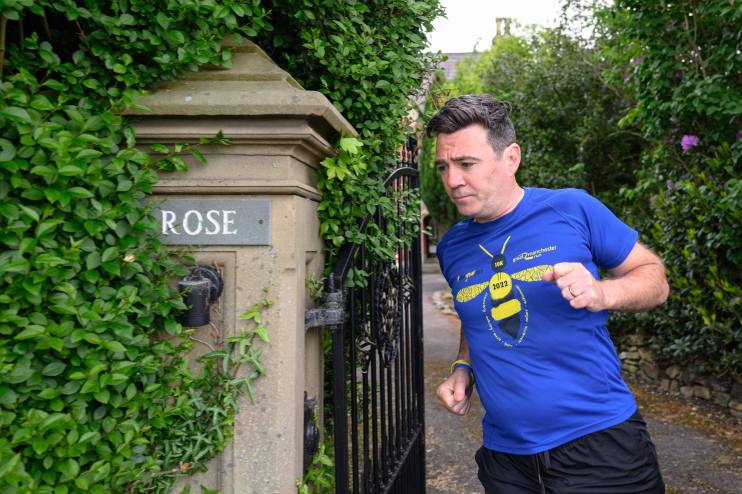
There are other elements at work here. Ever since the molecule-deep shine wore off Sir Keir Starmer’s premiership in the riot-wracked summer of 2024, many Labour MPs have looked longingly northwards at the Mayor of Greater Manchester, Andy Burnham. He has become the King over the Water, possessing seemingly every desirable trait that Starmer so obviously lacks: charisma, popularity and a record of getting things done in Manchester, like an integrated transport network and securing financial support for communities affected by the Covid-19 pandemic.
When a party turns against its leader, there are always factions who dream of a saviour, however implausible. In the 2010s, many Conservative MPs pinned their hopes on Boris Johnson, an indelible reminder to be careful what you wish for.
As Edward Heath’s tenure thrashed itself to death in 1975, and before Margaret Thatcher was taken seriously as a possible successor, an extraordinary litany of candidates was recited: Sir Christopher Soames, Churchill’s son-in-law, out of Parliament for a decade and serving as Vice-President of the European Commission; Edward du Cann, Chairman of the 1922 Committee and a charming but slippery financier whose apocryphal response to being asked the hour was “What time would you like it to be, dear boy?”; Enoch Powell, by then an Ulster Unionist MP, too rigorous and unsparing ever to be a party leader.
Time for Burnham?
Mayor Burnham is not quite so far-fetched a prospect for the top job, but there is one explicit and unavoidable hurdle: only MPs are eligible to stand for the Labour Party leadership. While Burnham was barred from seeking the nomination for February’s by-election in Gorton and Denton, another opportunity has appeared. Josh Simons, the clever but sometimes witless MP for Makerfield who quit as a Cabinet Office minister after allegations of smearing journalists when he was running the Labour Together think tank, has produced a sword upon which to fall and will quit the Commons.
Is everything finally coming together for the soft left in whose minds the Stone Roses and Joy Division are forever on shuffle?
Burnham has said he will apply to be Labour’s candidate in the ensuing by-election, and this time Downing Street has said his candidacy will not be opposed. Is everything finally coming together for the soft left in whose minds the Stone Roses and Joy Division are forever on shuffle?
Makerfield, on the outskirts of Manchester, was once a mighty Labour fortress, but Simons’s majority in 2024 was only 5,399 with Reform UK in a strong second place. My opinion? I don’t think Burnham can win and I think Labour would currently struggle to hold any seat in any part of the country. Remember that between February 1989 (Richmond) and July 1997 (Uxbridge) the Conservatives did not win a single by-election.
There is also a hint of ex post facto unrequited love about Labour’s attitude to Burnham. He has sought the party leadership twice before: in 2010, he barely outpolled Diane Abbott to finish fourth out of five; in 2015 he was the runner-up, marginally ahead of Yvette Cooper but never in the same race as Jeremy Corbyn. But today, as it happens, is the 10th anniversary of his announcement he was standing for Mayor of Greater Manchester and leaving Westminster.
Burnham’s record in government is limp
Burnham’s record in government is limp. For a while he was responsible for implementing the Identity Cards Act 2006, then spent a year as minister for delivery and reform at the Department of Health. Neither is remembered as a triumph. But he is invoked as a vibe, a recollection of happier times and more human faces at the top.
Labour remains mired in a Phoney War. Starmer’s leadership has been challenged openly but not formally. Streeting wants to challenge the Prime Minister but is waiting, ostensibly so that Burnham can manoeuvre into position (though sceptics doubt Streeting has the required 81 nominations to trigger an election). Team Burnham is trying not to think about a humiliating by-election defeat. In the meantime, former Deputy Prime Minister Angela Rayner watches events unfold, and Minister for the Armed Forces Al Carns convinces himself that a colonelcy in the Royal Marines and a passing resemblance to Action Man are sufficient credentials for the premiership.
All the while, Sir Keir Starmer could yet survive. Even if an election is triggered, the polling suggests he might well prevail with the party membership over anyone except Burnham. There is a greater than zero chance that the Prime Minister ends the summer strengthened, not weakened.
This will not go down as a great conspiracy against Starmer. He has little positive support but may for once be well-served by his tendency towards inaction, while his would-be usurpers fail around him and Labour continues to resemble I, Claudius performed by the cast of Up Pompeii!. The one outcome which seems unlikely is a rejuvenated and reunited Labour Party.
Eliot Wilson, writer and historian; Senior Fellow for National Security, Coalition for Global Prosperity; Contributing Editor, Defence on the Brink