On this day 1848: The opening of Waterloo Station


Waterloo Bridge Station opened on this day in 1848. 177 years later, it is the largest station in Britain. Eliot Wilson takes us back to the beginning
By the summer of 1848, passenger steam railways were only 23 years old. The Stockton and Darlington Railway had opened in 1825 and, after a cautious first 10 years or so, the rail network exploded. The 1840s saw “railway mania” and by the closing years of the decade more than 5,000 miles of track had been built across Britain, more than half the size of Network Rail’s current infrastructure.
London had six terminus stations serving seven railway companies which approached the capital from all sides: Euston in the north, Paddington to the west, Bishopsgate and Fenchurch Street towards the centre and, south of the Thames, London Bridge – which served two companies, the London and Greenwich Railway and the London, Brighton and South Coast Railway – and Nine Elms.
Nine Elms, a handsome neo-classical station designed by the prolific Sir William Tite, an expert in railway architecture, had only opened in 1838. It was the end of the line for the passengers of the London and South Western Railway, arriving from Southampton, Gosport, Kingston-on-Thames, Weybridge, Richmond and Wimbledon, but its location was not ideal.
Although Nine Elms was only a short distance from the City of London or the West End, those last three or four miles had to be completed by road and then the steam boat services which ran along the Thames stopping at Vauxhall and London Bridge. The railway had therefore planned to push further into the capital, and the London and South Western Railway Metropolitan Extensions Act 1845 gave it permission to extend to a site at York Road, near Waterloo Bridge.
This was a significant project. The extension of the railway from Nine Elms to the new site required the demolition of 700 houses in order to build a two-mile brick viaduct to carry the tracks through Battersea and Lambeth.
The opening of Waterloo Bridge Station
Waterloo Bridge Station opened on this day in 1848. 177 years later, it is the largest station in Britain with the most platforms (24), and is the fourth busiest after Liverpool Street, Paddington and Tottenham Court Road. If you have ever struggled to find a service at Waterloo, however, or wondered at the guiding logic behind it, there is a reason: it was never intended to be a terminus.
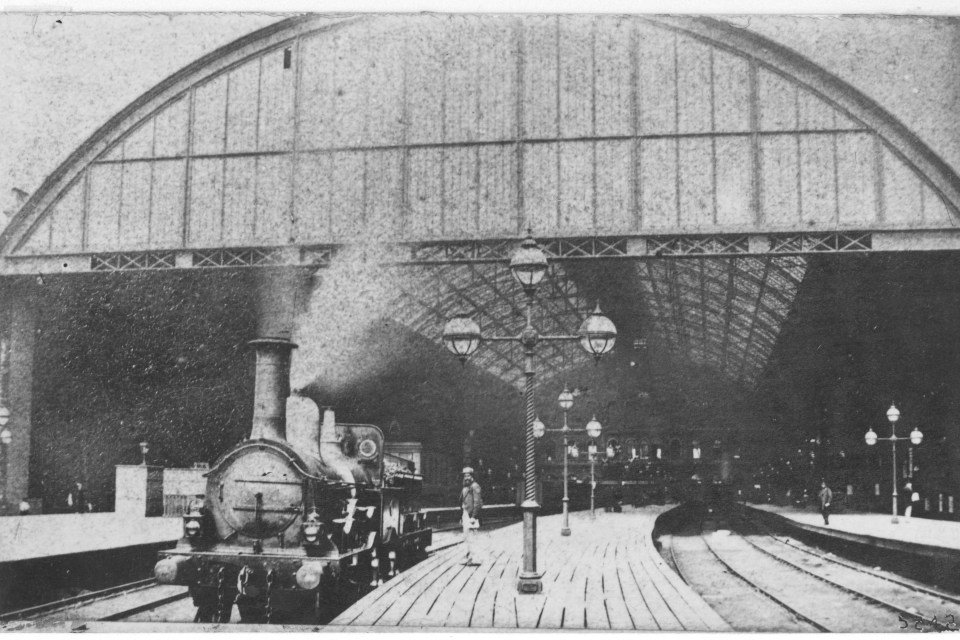
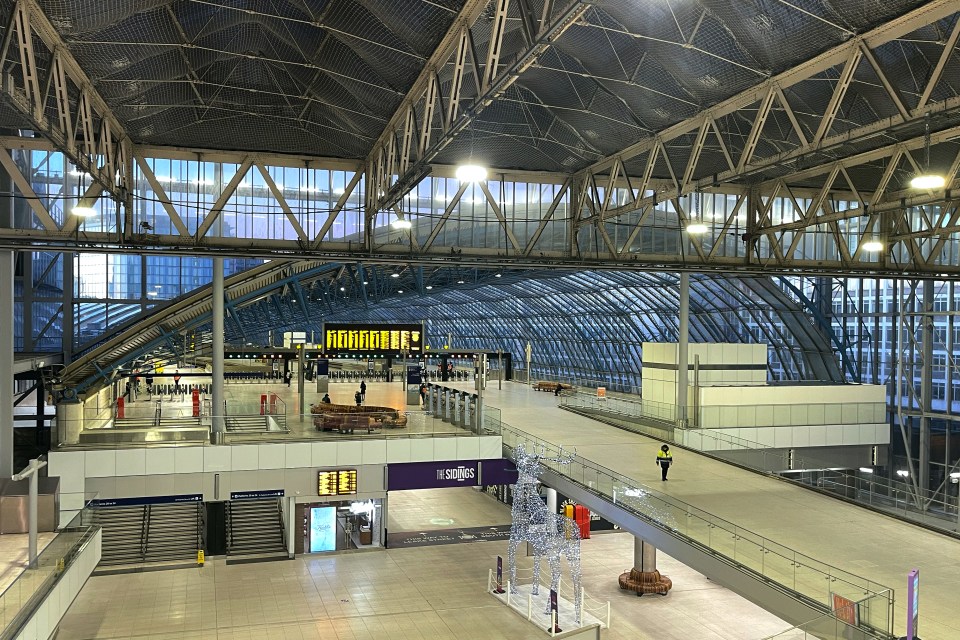
The reliable Sir William Tite was brought in to design Waterloo, but he was working in a spirit of expansionist optimism in the months before the Panic of 1847. The station approach had four tracks and was laid out as a through station: the expectation was that L&SWR and other operators would eventually continue services into the City of London. These hopes remained stubbornly alive, so every expansion at Waterloo was grudging and regarded as “temporary”: a dedicated station for the London Necropolis Company to Brookwood Cemetery in 1854; additional passenger platforms in 1860, 1878 and 1885. It would be 1898 before the station’s owners accepted that Waterloo (the “Bridge” had been dropped in 1882) was a surface rail terminus, when the 1½-mile underground Waterloo and City Railway opened.
How Queen Victoria used the station
Nine Elms had closed to passengers the day that Waterloo had opened – at least, most passengers. Queen Victoria had found the station convenient and agreeably private to travel from London to Windsor, or to Southampton for a boat to Osborne House on the Isle of Wight. The Court Circular, a record of the Royal Family’s activities of the previous day, frequently referred to “Her Majesty the Queen and Prince Albert” passing through “the terminus of the South-Western Railway at Nine Elms”.

Since the station remained in use for goods and cargo, the railway operators were happy to allow the Queen to continue to use it after other passenger services had ceased. The idea of the monarch weaving between pallets and crates was, perhaps, rather infra dig, and in 1854 a new royal station was constructed on Wandsworth Road to allow more civilised access. Initially just a single platform with an awning, by 1857 there was a permanent waiting room with gardens and a fountain.
The royal station was used to receive foreign visitors as well as for the Royal Family’s more routine travel, but it fell out of frequent use once Victoria went into seclusion after Prince Albert’s death in 1861, and it was demolished in 1878. It had two peculiar features: it seems to have had no formal name, referred to as “the royal station” or “the Queen’s station”; and there are no surviving pictorial depictions of it. The beginning of a long, slow decline which has culminated in recent news that the Royal Train will be decommissioned by 2027.